
Views: 222 Author: Tomorrow Publish Time: 12-13-2025 Origin: Site


Content Menu
● How Countertop Dishwashers Work
>> Key Features
● Can You Use Pods in a Countertop Dishwasher?
>> Step One: Read the User Manual
>> Step Two: Verify Water Temperature
>> Step Three: Adjust Quantity for Compact Loads
● Benefits of Using Pods in Countertop Dishwashers
● Drawbacks and Limitations of Pods
● How to Properly Use Pods in a Countertop Dishwasher
● Common Problems When Using Pods (and Solutions)
● Pod Alternatives for Countertop Dishwashers
● Best Dishwasher Pods for Countertop Models
● Maintenance Tips When Using Pods
● Environmental Impact and Eco-Friendly Options
● Advanced Tips for Better Washing Results
● FAQ
>> 1. Are dishwasher pods safe for all countertop models?
>> 2. What should I do if a pod doesn't dissolve completely?
>> 3. Can I cut pods in half to adjust detergent strength?
>> 4. How many pods should I use per wash cycle?
>> 5. Are there pods designed specifically for small dishwashers?
Countertop dishwashers have become an increasingly popular solution for modern living spaces. Compact, efficient, and convenient, they offer the functionality of standard dishwashers without the need for built-in installation. They are perfect for apartments, dorm rooms, recreational vehicles (RVs), or small households that don't generate a mountain of dirty dishes. Yet one of the most common questions new owners face is this: Can you use pods in a countertop dishwasher?
The answer is mostly yes, but with some important conditions. This guide explains how dishwasher pods work, when and how to use them in your compact machine, what alternatives exist, and how to ensure the best cleaning performance without damaging your appliance.

A countertop dishwasher functions similarly to a full-sized unit but is built for portability and efficiency. It connects directly to your kitchen faucet or a water reservoir, depending on the model. Despite their small size, these appliances include spray arms, heating elements, and filtration systems—everything you need for spotless dishes.
- Compact size: Typically fits 4–6 place settings.
- Portable design: Easy to move and install without plumbing modifications.
- Water efficiency: Uses around 2–3 gallons of water per cycle.
- Energy saving: Most models carry Energy Star certification.
- Cycle customization: Includes multiple wash modes like heavy, eco, quick, and glassware settings.
Because countertop dishwashers have smaller chambers and reduced water volumes, they react differently to detergents designed for standard dishwashers. That's why it's important to understand how pods behave inside the unit.
Dishwasher pods, also known as detergent packs or capsules, are small, pre-measured units of concentrated detergent. Each pod contains several components—cleaning agents, enzymes, surfactants, and sometimes rinse aid—encased in a water-soluble film made of polyvinyl alcohol (PVA).
When you start your dishwasher, the film dissolves on contact with water, releasing the detergent into the wash chamber. Enzymes in the formula target starches and proteins, while surfactants lift grease and oil. Rinse aids help water slide off dishes smoothly, preventing spotting and enhancing shine.
There are three primary types of dishwasher pods:
1. Detergent-only pods: Contain only cleaning agents and basic surfactants.
2. All-in-one pods: Include detergent, rinse aid, and often water softening salts.
3. Eco pods: Made with plant-derived ingredients and biodegradable films.
Pods are convenient, precise, and less messy than powders or liquids, but their strength and design can sometimes be too powerful for smaller dishwashers.
Yes, you can use pods in a countertop dishwasher, but only if the manufacturer allows it and proper usage guidelines are followed. Smaller dishwashers have lower water volumes and shorter cycles, which can affect how well pods dissolve.
Manufacturers such as Danby, COMFEE', Farberware, hOmeLabs, and BLACK+DECKER provide specific recommendations in their user manuals. While most models support pods, others require liquid or powder detergent for optimal performance. Always check your manual first—using unauthorized products could void your warranty.
Most commercial pods are engineered to dissolve fully in temperatures above 120°F (49°C). Countertop dishwashers sometimes rely on your home's hot water supply instead of pre-heating internally, leading to cooler washes that might leave behind undissolved residue.
If your wash cycles are cooler, consider low-temperature pods or eco pods, which dissolve more easily.
Standard pods are dosed for full-sized dishwashers using 4–6 gallons of water per cycle. Because countertop dishwashers use much less water, a full pod may sometimes be excessive. Overdosing leads to cloudy glassware, soap residue, or bubbly suds overflow.
If your dishes look filmy or your machine struggles to rinse completely, use half a pod or switch to liquid detergent, where you can better control dosage.
- Ease of use: Pre-measured and mess-free.
- Time efficiency: No need to measure liquid detergent or clean spills.
- Consistent results: Each pod delivers exactly the same amount of detergent.
- Improved hygiene: Individually sealed pods prevent moisture contamination.
- Storage convenience: Compact and long-lasting.
Pods are particularly desirable for busy individuals, students, and travelers who want to simplify cleanup with minimal manual effort.
While dishwasher pods offer convenience, they also come with certain limitations in smaller machines.
- Overpowered detergent: Too much detergent for the reduced water volume.
- Incomplete dissolution: Possible in short or low-heat cycles.
- Residue buildup: May leave a chalky film on plasticware or cutlery.
- Cost: More expensive per load compared to bulk powder or liquid detergent.
- Moisture sensitivity: Pods degrade in humid environments, so storage matters.
- Environmental considerations: Not all pod films are fully biodegradable.
Learning the right way to integrate pods into your cycle helps you avoid these pitfalls and extend your unit's lifespan.

Here's a step-by-step guide to ensure pods perform optimally in compact dishwashers:
1. Check model compatibility: Confirm your manual permits pod use.
2. Run the faucet for hot water: Ensure your tap water reaches at least 120°F.
3. Load dishes correctly: Plates facing inward, spray arms unblocked.
4. Insert the pod:
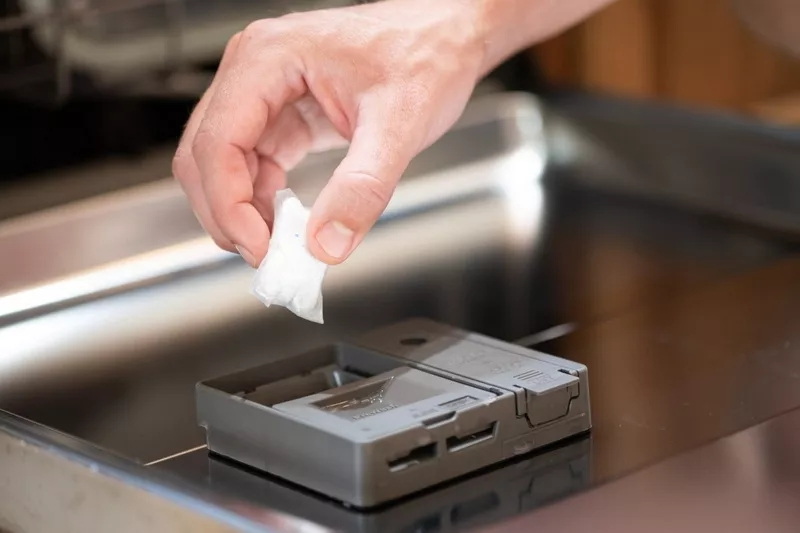
- If your dishwasher has a detergent dispenser, place the pod there.
- If it doesn't, drop the pod at the bottom of the chamber before loading dishes.
5. Select the suitable cycle: Normal or heavy wash cycles allow more time for full pod dissolution.
6. Avoid pre-rinsing too thoroughly: Detergent enzymes work better with some food residue present.
7. Maintain proper water pressure: Low pressure may prevent pod film breakdown.
If you ever notice a partially dissolved pod after your dishwasher completes its cycle, try a longer program or raise the inlet water temperature slightly.
- Problem: Pod doesn't dissolve completely.
Solution: Use a hotter or longer cycle; ensure spray arms are clean.
- Problem: Suds overflow or residue on dishes.
Solution: Reduce detergent amount or switch to powder form.
- Problem: White spots or streaks.
Solution: Add rinse aid even if the pod contains some; your water may be hard.
- Problem: Cloudy glassware.
Solution: Cut the pod in half or use a low-phosphate formula.
- Problem: Pod lodges in dispenser door.
Solution: Place it directly inside the tub rather than the dispenser.
Because countertop dishwashers handle smaller loads, many users prefer alternatives that allow flexible dosing.
- Liquid detergent: Dissolves quickly, even in low-temperature cycles. Ideal for smaller loads.
- Dishwashing powder: Precise portion control and cost-effective for frequent usage.
- Eco tablets: Designed specifically for energy-efficient, small-capacity dishwashers.
- Homemade detergent: A simple mix of washing soda, borax, and citric acid works for light loads (though not as powerful on grease).
When trying an alternative detergent, always start with the smallest dose recommended and increase only if dishes seem under-cleaned.
If you'd like to stick with pods, some brands work exceptionally well in compact dishwashers due to their quick-dissolve technology and balanced formulas:
- Cascade Platinum ActionPacs: Industry leader with enzyme boosters for extra grease cleaning, great even in short cycles.
- Finish Quantum Infinity Shine Pods: Pre-soaking power plus cleaning and shine layers ideal for glassware.
- Ecover Automatic Dishwasher Tablets: Biodegradable, ideal for eco-friendly kitchens.
- Seventh Generation Free & Clear: Gentle on skin and dishes, no artificial fragrance.
- Grab Green Natural Pods: Formulated to dissolve fully under cooler water conditions.
Pairing these pods with correct water temperature and loading technique ensures sparkling results.
To ensure long-term efficiency and cleanliness of your countertop dishwasher, adopt these maintenance habits:
- Clean filters weekly: Detergent residue can clog filters and cause odor.
- Wipe rubber seals and door edges: Prevent detergent buildup.
- Inspect spray arms monthly: Remove any food particles blocking nozzles.
- Descale regularly: Use a dishwasher cleaner or vinegar solution every month.
- Use rinse aid selectively: Helps prevent spotting in hard-water areas.
- Store pods properly: Keep them in an airtight container away from heat and moist air.
Routine care not only improves pod performance but also increases your dishwasher's longevity.
Pods contain concentrated cleaning chemicals—so handle them safely:
- Keep out of reach of children and pets.
- Never pierce, crush, or unwrap the film.
- Avoid mixing multiple cleaning products in one wash.
- Wash hands after handling pods.
- Store them in a cool, dry, shaded environment.
If exposed to skin or eyes, rinse immediately and seek medical advice if irritation persists.
Water quality significantly affects the cleaning power of pods. Hard water (rich in calcium and magnesium) can neutralize detergent effectiveness and leave white deposits on dishes. To counteract this:
- Use a rinse aid or water softener salt if your dishwasher supports it.
- Choose phosphate-free pods with added citric acid for better mineral control.
- Occasionally run a vinegar rinse to dissolve built-up minerals inside the tub.
Optimal water softness ensures every pod delivers its full cleaning potential.
Although pods are convenient, their environmental reputation varies. Many films are made of PVA plastic, which some wastewater systems may not fully biodegrade. The detergent inside can also contain surfactants that affect aquatic ecosystems.
To minimize your impact:
- Use eco-certified pod brands like Ecover or Seventh Generation.
- Always run full loads to maximize resource efficiency.
- Choose low-temperature cycles to save energy.
- Store pods in bulk but away from moisture to reduce plastic waste.
- Verify that pod packaging is compostable or recyclable.
By making small eco-conscious adjustments, you can keep your cleaning habits sustainable.
For users who want high performance every time:
- Preheat your water line: Run hot water at the faucet before connecting the dishwasher.
- Avoid overloading: Crowded dishes block detergent circulation.
- Position hardest-to-clean items near the spray arms.
- Don't block detergent dispensers: Leave enough clearance for the pod to eject freely.
- Occasionally use booster agents: Such as citric acid or dedicated dishwasher cleaners to refresh the system.
Consistent attention to these details guarantees dishes that come out spotless and free of streaks.
So, can you use pods in a countertop dishwasher? Yes—you can, and effectively too. Pods offer unmatched convenience, consistent results, and cleanliness when used properly. However, their high detergent concentration means caution is necessary, particularly in small, water-efficient appliances.
By following manufacturer directions, monitoring water temperature, and using proper dosage, you can enjoy sparkling dishes without residue or film. For those seeking maximum control or working with restrictive models, liquid or powder detergents remain excellent alternatives. Either way, regular maintenance and wise handling will ensure your countertop dishwasher stays efficient for years to come.

Not always. While most modern compact dishwashers support pods, some older models recommend powder or liquid detergent only. Check your manufacturer's manual for confirmation.
First, verify the water temperature—ideally 120°F or higher. Try selecting a longer cycle, increasing water pressure, or placing the pod directly in the chamber instead of the dispenser.
Yes, powder-based pods can be safely halved for small loads. However, gel-filled pods should not be cut because they may leak or fail to dissolve evenly.
Use one pod per full load. For smaller loads, half a pod or a reduced amount of liquid detergent is enough. Overusing detergent can cause sud buildup and dull finishes.
Yes. Brands like Grab Green, Ecover, and Seventh Generation produce eco-friendly or compact pods that dissolve quickly in low-water, quick-cycle machines.


