
Views: 222 Author: Tomorrow Publish Time: 01-23-2026 Origin: Site


Content Menu
● Why avoid vinegar in dishwasher cleaners?
● Best ingredients for a homemade dishwasher cleaner without vinegar
● Step-by-step: basic homemade dishwasher cleaner without vinegar
>> Daily deodorizing and maintenance clean
>> Deep-clean descaling cycle (vinegar-free)
>> Heavy-duty cleaning for greasy buildup
>> Spot-cleaning stains and seals (without vinegar)
>> Deodorizing with essential oil fresheners
● Usage schedule: how often to clean your dishwasher
● Safety tips and common mistakes with homemade dishwasher cleaners
● Comparison: homemade vs commercial dishwasher cleaners
● OEM and private label insights: what brands can learn from DIY trends
>> Dongguan UFine Daily Chemical Co., Ltd. – OEM dishwasher cleaner solutions
● UX and visual suggestions for this article
● Clear call to action for OEM buyers
● FAQ
>> 1. Can I safely clean my dishwasher without vinegar?
>> 2. Is citric acid safer for dishwashers than vinegar?
>> 3. How often should I run a homemade deep cleaning cycle?
>> 4. Can I use borax in a homemade dishwasher cleaner?
>> 5. Why does my homemade dishwasher cleaner sometimes leave a film?
Keeping a dishwasher clean without vinegar is possible by combining safe, effective household ingredients like baking soda, citric acid, salt, and a small amount of dish soap. For brands and OEM buyers, these DIY recipes also reveal which ingredient systems consumers trust and how professional dishwasher detergents are formulated.
To align with modern SEO and content quality standards, this article focuses on the primary keyword “homemade dishwasher cleaner without vinegar,” supported by related long-tail phrases such as “DIY dishwasher cleaner without vinegar,” “citric acid dishwasher cleaner,” and “baking soda dishwasher cleaner recipe.”
- These phrases appear in the H1, early H2s, introduction, and conclusion in a natural, non-spammy way.
- Variants such as “vinegar-free dishwasher cleaner” and “homemade dishwasher detergent without vinegar” help capture additional search intent.
A short FAQ section at the end targets question-type queries like “Can I clean my dishwasher without vinegar?” and “Is borax safe in dishwasher cleaners?” to support long-tail search coverage.
Using vinegar occasionally in a dishwasher can help cut grease, but regular use is controversial because of its high acidity and potential impact on internal parts.
- Distilled white vinegar has a low pH, which is strong enough to slowly degrade rubber gaskets and hoses in some machines, especially with repeated use.
- When vinegar contacts salt residues in the dishwasher, it can promote surface reactions that may discolor metal pans, flatware, and bowls.
Some specialists argue that vinegar is generally safe for many synthetic rubbers and plastics, but if the seal material is unknown or the appliance is older, avoiding direct high-dose vinegar is a cautious, manufacturer-friendly approach.
A strong vinegar-free cleaner relies on alkaline builders, mild acids like citric acid, water-softening salts, and a very small amount of surfactant.
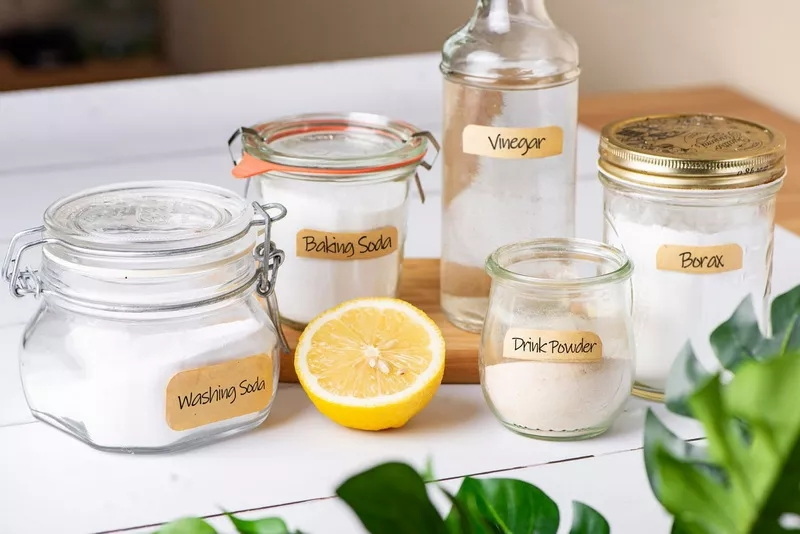
- Baking soda (sodium bicarbonate)
- Deodorizes, provides a gentle abrasive effect, and helps loosen food residues and light grease.
- Washing soda (sodium carbonate)
- Stronger alkali than baking soda, raises water pH, softens water, and boosts cleaning power against fat and protein soils.
- Citric acid
- A food-grade acid that removes limescale and hard-water deposits without relying on vinegar; also helps prevent filmy residues on dishes.
- Salt (sea salt or kosher salt)
- Works as a mild abrasive and supporting water softener, helping reduce spots on glassware.
- Borax (where allowed)
- A traditional laundry and household booster that improves alkalinity and soil suspension; should be kept away from children and used in well-labeled containers.
- Dish soap (only a drop)
- Concentrated surfactants cut through grease, but must be used in very small amounts to avoid excess foam that dishwashers are not designed to handle.
- Essential oils (lemon, tea tree, etc.)
- Add a fresh scent and can provide mild antimicrobial benefits; typical recipes use around 10–30 drops per batch.
These same ingredient families (builders, chelants, surfactants, fragrance) are used—under stricter controls and with additional safety testing—in professional dishwasher detergents produced by OEM factories.
This section offers practical recipes that are easy for households to follow while illustrating the formulation logic useful for brands and OEM buyers.
For regular odor control and light soil, baking-soda-based cleaners are gentle and quick to use.
Recipe 1 – Baking soda and lemon freshener
- 1 cup baking soda
- 2 tablespoons lemon juice powder or food-grade citric powder
- Optional: 10–15 drops lemon essential oil
How to use it:
1. Mix all the ingredients thoroughly and store them in a dry, airtight jar.
2. Sprinkle about ½ cup of the mixture evenly over the empty dishwasher floor.
3. Run a hot, empty cycle to deodorize and freshen the interior.
This formula combines mild alkalinity and natural acidity to fight odors and light mineral film without the issues associated with repeated high-dose vinegar use.
Hard water can leave stubborn white films and limescale on the tub, spray arms, and heating elements, so a deeper descaling cycle is needed periodically.
Recipe 2 – Citric acid deep cleaner
- ¼ cup citric acid granules
How to use it:
1. Ensure the dishwasher is empty and the filter is free from food debris.
2. Sprinkle ¼ cup citric acid evenly in the bottom of the dishwasher.
3. Run the hottest, longest cycle to dissolve mineral deposits and remove cloudiness.
Citric acid is widely used in commercial dishwasher detergents and rinse aids to control scale and film, and it offers a more controlled option than pouring straight vinegar into the machine.
When grease and food residues have accumulated over time, a higher-alkali cleaner with builders and softening salts is more effective.
Recipe 3 – Washing soda, baking soda, citric acid, and salt blend
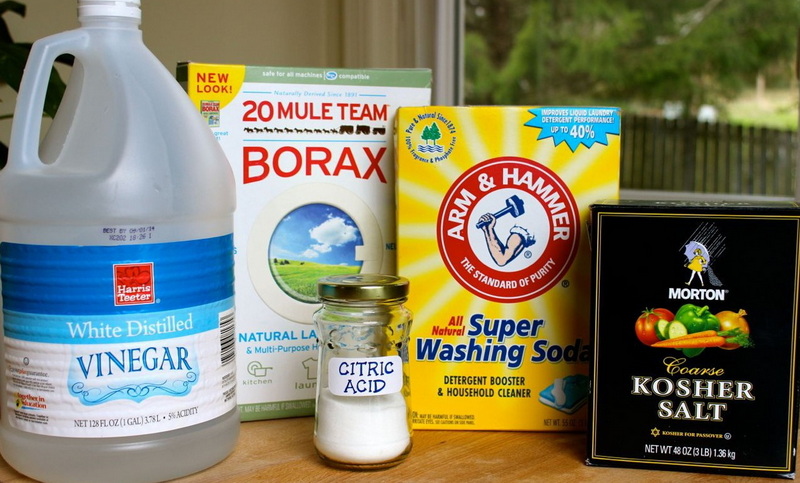
- 1 cup washing soda
- 1 cup baking soda
- ½ cup citric acid
- ½ cup sea salt or kosher salt
This recipe is similar in structure to common DIY dishwasher detergent formulas that balance alkaline cleaning with mineral control.
How to prepare and use it:
1. Combine all ingredients in a large, dry container and mix until uniform.
2. For a deep clean, sprinkle 2–3 tablespoons on the empty dishwasher floor.
3. Run a hot cycle; for very heavy buildup, pause halfway for 20–30 minutes to let the solution soak.
This approach mimics the structure of many powder dishwasher detergents that rely on a builder-plus-chelant-plus-salt system, but without synthetic fragrances or bleach.
While the main tub can be cleaned with powders, some areas like the door seals and corners require gentle manual cleaning.
Recipe 4 – Baking soda and dish soap paste
- 3 tablespoons baking soda
- A few drops dish soap
- A small amount of warm water
How to use it:
1. Mix baking soda with just enough water and a tiny amount of dish soap to form a thick paste.
2. Apply the paste with a soft cloth or sponge to stained areas, seals, and the interior door.
3. Gently scrub, then wipe away with a clean damp cloth before running a short rinse cycle.
This paste provides targeted abrasion and surfactant action without flooding the machine with foam or harsh acids.
If odors remain after cleaning, a light deodorizing cycle can refresh the dishwasher without aggressive chemicals.
Recipe 5 – Essential oil baking soda freshener
- 1 cup baking soda
- 10–20 drops lemon or tea tree essential oil
How to use it:
1. Blend the baking soda and essential oils until there are no clumps.
2. Sprinkle ½ cup in the empty dishwasher base.
3. Run a normal or hot cycle to neutralize odors and leave a light fragrance.
This recipe keeps the main cleaning work focused on alkalinity and powder flow while using essential oils for a pleasant, clean scent.
A clear maintenance schedule improves user experience and reduces confusion about how frequently to use homemade cleaners.
- After heavy or greasy loads:
- Run a quick baking soda freshening cycle or use a small dose of the washing-soda blend to prevent buildup.
- Once per month:
- Perform a full citric acid deep clean to handle hard-water scale and glassware cloudiness.
- Every 1–3 months:
- Remove and hand-wash the filter in hot water with dish soap, since trapped food is a primary source of odor.
This schedule follows typical appliance-care guidance that recommends regular filter cleaning plus periodic internal descaling.
Homemade formulas are powerful, but improper use can reduce performance or risk damage.
- Do not overuse dish soap
- Dish soap is designed for sink washing and creates a lot of foam, which can cause leaks if used in large amounts inside a dishwasher.
- Avoid mixing strong acids and chlorine bleach
- Combining acidic cleaners with chlorine bleach can release hazardous chlorine gas, so “vinegar-free” does not mean “mix anything you want.”
- Store powders in airtight, labeled containers
- Citric acid and washing soda attract moisture and may clump or lose effectiveness if left open; clearly label containers and keep them away from children.
- Check manufacturer guidance
- Some dishwasher manuals warn about certain homemade cleaners, so users should review appliance instructions and local regulations when using borax or other boosters.
Proper labeling and instruction design are exactly the kinds of details that professional OEM manufacturers address during product development.
This table helps users and brand owners compare homemade vinegar-free cleaners with professional commercial detergents.
| Aspect | Homemade dishwasher cleaner (without vinegar) | Commercial dishwasher detergent (OEM / retail) |
|---|---|---|
| Typical ingredients | Baking soda, washing soda, citric acid, salt, tiny dish soap, essential oils. | Builders, enzymes, surfactants, polymers, bleaching or oxygen systems, fragrance, chelants. |
| Pros | Simple ingredient list, fragrance control, low cost per use, avoids repeated high‑dose vinegar exposure. | Optimized cleaning in short cycles, tested for different water types, stable performance, safety and compatibility testing. |
| Cons | More trial‑and‑error, performance varies with water hardness, not lab‑tested as a complete system. | Less control over ingredients, may contain synthetic additives some users avoid, higher price per load in premium brands. |
| Best use cases | Occasional tub cleaning, odor control, eco‑minded households comfortable with DIY. | Daily dishwashing, demanding soils, households wanting consistent set‑and‑forget performance. |
For overseas brands, wholesalers, and private-label buyers, the popularity of vinegar-free DIY cleaners signals important formulation and marketing opportunities. A Chinese OEM factory like Dongguan UFine Daily Chemical Co., Ltd. can transform these preferences into high-performance, scalable products.
- Ingredient transparency and “kitchen-grade” positioning
- Consumers trust ingredients they recognize, such as baking soda, citric acid, and salt, so OEM dishwasher detergents can highlight these components and clearly explain their functions on pack.
- Vinegar-free claims with strong descaling
- Many users want to avoid straight vinegar but still need limescale control; OEM formulas can lean on citric acid and other chelants to support “vinegar-free” but effective descaling claims.
- Low-fragrance and sensitive options
- Essential-oil-inspired fragrances and low-allergen profiles can be adapted into commercial lines, with OEM labs matching popular DIY scent profiles in a more stable, tested system.
Partnering with an established OEM like Dongguan UFine Daily Chemical Co., Ltd. allows brands to move from small-scale DIY ideas to compliant, high-performance dish care products suitable for export and modern retail channels.
For better user experience and engagement on your site, consider these visual enhancements in the final layout.
- A simple flowchart showing “Choose your cleaning level → daily freshen / monthly descale / deep clean” near the recipes section.
- A small ingredient-function table with icons for baking soda, citric acid, salt, and essential oils to make the chemistry friendlier.
- Before-and-after photo panels of glassware affected by hard water vs after a citric-acid deep clean to reinforce the benefits.
Short paragraphs, bold highlights for key actions, and bullet lists around each recipe improve scan-reading on mobile devices.
If you are a brand owner, wholesaler, or private-label buyer who wants to turn the “homemade dishwasher cleaner without vinegar” concept into a scalable, marketable product line, working with a specialized OEM factory is the next logical step.
A professional OEM partner like Dongguan UFine Daily Chemical Co., Ltd. can help you:
- Translate DIY ingredient preferences (baking soda, citric acid, salt) into stable, machine-tested tablet, powder, or gel formulas.
- Design vinegar-free descaling systems that protect dishwasher parts and meet retailer and regulatory standards in your target markets.
- Develop packaging, dosing instructions, and multilingual labels that clearly explain how to use the product for daily cleaning, monthly descaling, and odor control.
If you are planning a new dishwasher detergent or cleaner project, contact Dongguan UFine Daily Chemical Co., Ltd. to discuss custom vinegar-free dishwasher formulas, bulk supply options, and private-label development tailored to your brand and target region.
Contact us to get more information!
Yes, you can clean a dishwasher effectively using baking soda, washing soda, citric acid, and salt without ever adding vinegar directly to the machine. Regular filter cleaning plus a monthly citric acid cycle covers both odor and limescale control for most households.
Food-grade citric acid is widely used in commercial dishwasher detergents and rinse aids to remove hard-water deposits and film. Because it can be dosed precisely in powder form and is designed into the formula, it is often considered a more controlled approach than pouring liquid vinegar into the tub.
Most households benefit from a monthly citric-acid deep cleaning cycle, especially in hard-water areas where mineral scale builds quickly. If dishes start looking cloudy or the dishwasher smells, an extra baking soda or washing-soda cycle can be added between monthly treatments.
Many DIY recipes include borax as an alkalinity booster and cleaning enhancer, but users must follow local regulations and keep it away from children and pets. For commercial products, borax or related ingredients should be evaluated case by case during safety and regulatory assessments, especially for export markets.
Films can appear if the water is very hard, the powder does not fully dissolve, or the recipe lacks enough chelating and rinsing capability. Adjusting the ratio of citric acid and salt, reducing per-load dosage, and ensuring the water is hot enough usually improves rinsing performance.
1. Vigour Group – How to Make Homemade Dishwasher Cleaner Without Vinegar?
2. Wellness Mama – Homemade Dishwasher Detergent Recipe
3. Dishwasher cleaning and DIY detergent guides from independent appliance and cleaning blogs
4. Articles on vinegar use, rubber seal care, and dishwasher maintenance from appliance-care resources
5. DIY dishwasher detergent and non-toxic cleaning guides from natural cleaning and skincare brands


