
Views: 222 Author: Tomorrow Publish Time: 12-08-2025 Origin: Site


Content Menu
● Understanding Dishwasher Pods and Their Function
● The Key Characteristics of Portable Dishwashers
● Can You Use a Whole Pod in a Portable Dishwasher?
>> Why One Pod Works Perfectly
● How to Use a Pod Correctly in a Portable Dishwasher
● When a Pod Fails to Dissolve Properly
● Comparing Detergent Options for Portable Units
● Maintenance for Longevity and Improved Performance
● The Science Behind Pod Cleaning Efficiency
● Environmental Considerations
● Troubleshooting Common Problems
● Pros and Cons of Using Pods in Portable Dishwashers
● FAQ
>> 1. Can using more than one pod damage my portable dishwasher?
>> 2. What should I do if the pod doesn't dissolve fully?
>> 3. Can I put the pod directly on the bottom of the dishwasher?
>> 4. Will pods work with cold water?
>> 5. Are pods suitable for all portable dishwasher brands?
Modern dishwashing technology has evolved rapidly, giving homeowners flexible cleaning options that suit their living spaces. For those living in apartments, dormitories, or RVs, a portable dishwasher offers convenience without the commitment of a built-in installation. However, one question often arises among users: Can you use a whole pod in a portable dishwasher?
At first glance, it seems logical—dishwasher pods are pre-measured, efficient, and easy to use. But since portable dishwashers differ from standard ones in size, water usage, and cycle length, it's important to explore whether these pods perform just as well. Let's look at what happens when you use a whole pod, how to do it correctly, and how to ensure optimal cleaning for your dishes.
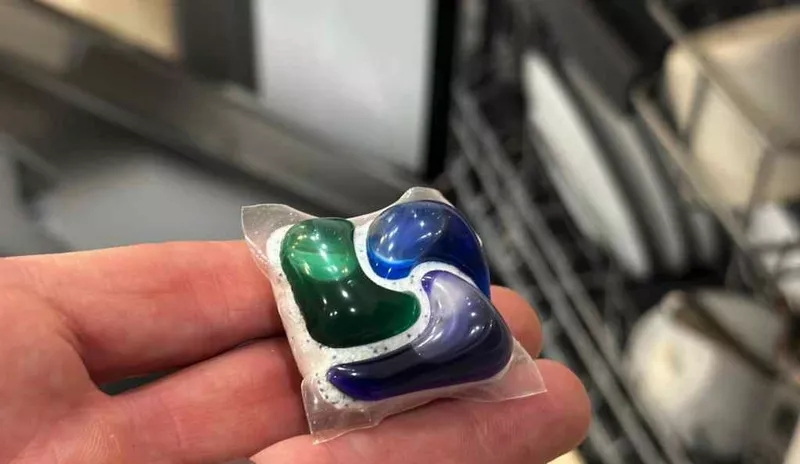
Dishwasher pods, also known as packs, capsules, or tabs, are compact detergent units designed for one-time use. Unlike loose powder or liquid detergent, pods are sealed with a water-soluble film made of polyvinyl alcohol (PVA). When the film comes in contact with water, it dissolves and releases the cleaning agents inside.
A typical pod contains three cleaning components:
- Detergent base: Removes food particles, grease, and grime.
- Rinse aid: Reduces spotting and helps dishes dry faster.
- Enzymes and surfactants: Break down proteins, starch, and fats for easier removal.
Because of their precision formulation, pods are popular among users who want consistent cleaning results without measuring detergent manually. They are also compact and reduce spillage, which makes them suitable for smaller kitchens—just like portable dishwashers.
Portable dishwashers operate on the same principle as full-sized ones but differ mainly in capacity and water connection. Instead of a permanent plumbing setup, they attach temporarily to a kitchen faucet. Once connected, they draw water, heat it, spray it through rotating arms, and drain it into the sink.
The main distinctions are:
- Compact size: Usually fits 4–8 place settings (compared to 12–16 in standard models).
- Reduced water usage: Portable units typically use 3–5 gallons per cycle versus 6–8 in larger ones.
- Removable drain hose: Portable models must be drained manually or connected to a faucet.
- Limited wash programs: Many models have fewer cycle options or lower water pressure.
These differences lead some users to question whether a full pod might be *too concentrated* for smaller machines. The answer depends on proper usage.
The short answer is yes—a whole pod is suitable for most portable dishwashers. Manufacturers design detergent pods to dissolve and disperse across a wide range of water volumes. What matters is where and how it's used.
Even though portable dishwashers use less water, they maintain similar washing pressure and temperature. The detergent concentration from a standard pod remains within safe cleaning limits. The ingredients are carefully balanced to avoid oversudsing, even when water volume varies.
Using a whole pod ensures your dishes receive the intended amount of detergent. Splitting or cutting a pod disrupts the chemical balance, often leading to poor cleaning results or sticky residue.
Using dishwasher pods may seem straightforward, but small mistakes can affect performance. Follow this step-by-step guide for best results:
1. Prepare and load dishes properly.
Scrape off large food chunks—but no need to pre-rinse thoroughly. Arrange items to allow water circulation. Place larger items like pots and plates on the bottom rack and glasses, plastic bowls, and utensils on the top rack.
2. Check and clean the detergent dispenser.
Ensure it's dry before placing the pod. Moisture can cause premature film breakdown, leaving detergent stuck inside the compartment.
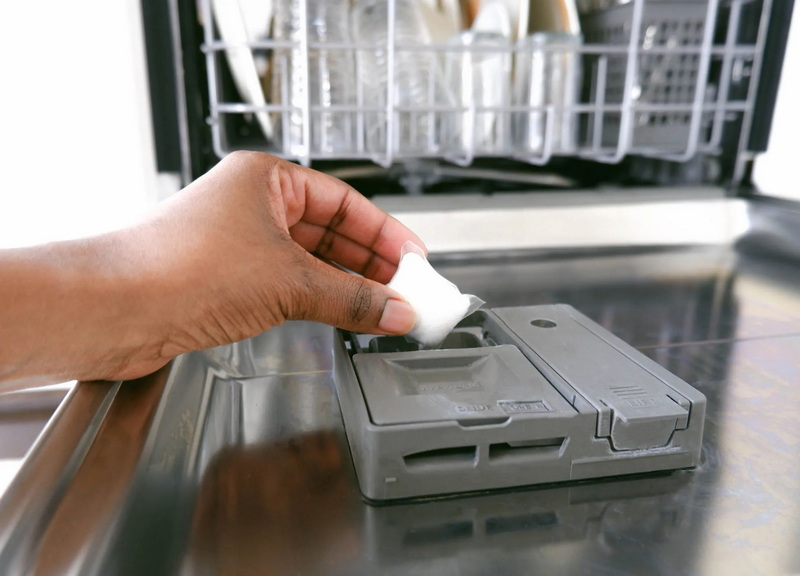
3. Place one full pod in the dispenser.
Never place it at the bottom of the tub. Doing so will release detergent too early and reduce cleaning efficiency.
4. Select the appropriate cycle and temperature.
Use standard or heavy wash cycles. Quick or eco modes might not get hot enough for full pod dissolution. Aim for a water temperature of at least 120°F (49°C).
5. Run the machine immediately.
Don't let the pod sit in the wet compartment. Start the dishwasher as soon as you insert it to ensure full performance.
Following these steps ensures efficient pod use, prevents detergent waste, and extends the life of your portable dishwasher.
If you open your dishwasher and find a half-melted pod or sticky residue, don't worry—it's relatively common. Several factors can cause this:
- Cold water supply: If your water heater doesn't reach 120°F, the film may dissolve poorly.
- Overloaded racks: Excess dishes block water spray and prevent detergent circulation.
- Blocked spray arms: Check for food debris clogging the nozzles.
- Wet dispenser: Moisture interaction with pod film before starting the cycle can cause clumps.
To fix this issue, rinse the dispenser with warm water, clean the filter, and check for clogs. Then run an empty cycle using vinegar or dishwasher cleaner to flush away detergent buildup.
If pods fail to deliver satisfying results in your model, it's worth experimenting with other detergent forms:
- Powder detergent: Dissolves quickly and allows flexible dosage. Suitable for soft water.
- Liquid or gel detergent: Convenient but can leave streaks if overused. Ideal for smaller loads.
- Dishwasher tablets: Similar to pods but harder; ideal for long or hot cycles.
Different machines and water qualities affect how well these detergents perform. If your area has hard water, look for products labeled “for hard water” or add a rinse aid to prevent cloudy glassware.
To avoid frustration and get the sparkling shine you expect, steer clear of these common errors:
- Putting the pod directly on the tub floor. It dissolves too early and disperses unevenly.
- Using two pods for one load. More detergent causes excess foam, leaks, or residue buildup.
- Running short or cold cycles too often. These don't fully activate the detergent.
- Wet or sticky dispenser compartment. The pod can cling or melt before the wash starts.
- Poor storage conditions. Keep pods in a cool, dry container, away from humidity.
Consistency in handling detergent ensures the most reliable outcomes from every wash.
Proper maintenance is essential to keep your portable dishwasher running efficiently. Here's a simple schedule to follow:
- After each use: Check the drain filter for leftover food.
- Once a week: Wipe interior walls and the rubber door gasket to prevent mildew buildup.
- Monthly: Run an empty hot-water cycle with two cups of white vinegar or a store-bought dishwasher cleaner.
- Every 3–6 months: Inspect spray arms and hoses for clogs, cracks, or calcium buildup.
Regular care not only ensures cleaner dishes but also helps minimize energy consumption and prolong the life of your appliance.
Dishwasher pods are formulated using a precise blend of alkalis, surfactants, and enzymes that activate under hot water. The science of dishwashing revolves around Sinner's Circle, a cleaning model defined by four interacting elements:
1. Temperature: High heat softens grease and improves enzyme activity.
2. Mechanical action: Spraying water provides scrubbing force.
3. Chemical action: Detergents break down molecular bonds in food waste.
4. Time: Sufficient exposure ensures complete cleaning cycles.
Even portable dishwashers meet these four principles. As long as water temperature and spray power remain adequate, pods work just as effectively as they do in full-sized units.
Dishwasher pods simplify cleaning but raise legitimate environmental concerns. Much progress has been made to minimize their ecological footprint:
- Most modern pods are phosphate-free, reducing the risk of water pollution.
- Many brands now use biodegradable PVA films that dissolve completely.
- Concentrated formulas allow smaller pods, reducing transport emissions and packaging waste.
To make your dishwashing eco-friendlier:
- Always run full loads to save water and energy.
- Choose brands that use recyclable packaging.
- Avoid excessive detergent, even when dishes are heavily soiled.
- Maintain your dishwasher regularly to prevent inefficiency.
Responsible habits ensure that the convenience of pods doesn't come at the environment's expense.
Even when using whole pods correctly, issues can arise. Here are common problems and how to fix them quickly:
- White residue or streaks: Caused by mineral buildup from hard water. Add rinse aid or use a descaling agent.
- Dull glassware: Often happens if detergent is not fully dissolved—try using a hotter cycle.
- Leftover food particles: Signal blocked filters or spray arms. Clean them regularly.
- Excessive foam: Means too much detergent or incompatible pods—reduce usage or switch brands.
For consistent results, match your detergent type to your dishwasher model and water quality.
Advantages:
- Pre-measured for perfect dosage.
- Mess-free and space-saving.
- Provide consistent cleaning results.
- Contain rinse aid for a sparkling finish.
Disadvantages:
- Costlier per load than traditional detergents.
- Dissolution issues in cold or short cycles.
- May not perform well in very hard water areas.
- Packaging waste if not recycled properly.
Evaluating these factors helps you choose the most practical and sustainable approach for your kitchen routine.
So, can you use a whole pod in a portable dishwasher? Yes—and doing so offers both convenience and efficiency when handled correctly. Pods are formulated for controlled release, ideal for standard and compact dishwashers alike. The key lies in proper placement, suitable temperature, and regular maintenance.
Using one full pod—not split or loose—ensures optimal cleaning results without harming your unit. Combined with consistent care and mindful detergent use, your portable dishwasher can deliver crystal-clear dishes every time, even in tight living spaces. With the right technique, size no longer limits performance.
Yes. Overuse can cause foam buildup, leaks, and potential motor or seal damage. Always use one pod per cycle.
Check that your water is hot enough and that spray arms aren't obstructed. Clean the dispenser and rerun a hot cycle if needed.
No. The pod must go in the detergent dispenser to ensure timed release. Direct placement causes early dispersion and poor cleaning.
Not effectively. Pods need hot water—at least 120°F (49°C)—to activate enzymes and dissolve the protective film.
Most are, but performance varies slightly across brands. Check your manual or choose pods recommended as universal or compact-compatible.


