
Views: 222 Author: Tomorrow Publish Time: 12-04-2025 Origin: Site


Content Menu
● Can You Just Throw Pods in Your Dishwasher?
● Why Proper Placement Matters
● Step-by-Step Guide to Using Pods Correctly
● Common Mistakes and How to Avoid Them
● How Dishwasher Pods Work Internally
● Troubleshooting Undissolved Pods
● Pods vs. Powder and Liquid Detergents
● Choosing the Right Pods for Your Needs
● Environmental and Septic Safety
● Maintenance for Peak Pod Performance
● Safety Precautions with Pods
● Advanced Tips for Heavy-Duty Cleaning
● FAQ
>> 1. Can I put dishwasher pods in the bottom of the dishwasher?
>> 2. What if a pod doesn't dissolve fully?
>> 3. Do pods work in septic systems?
>> 4. Can older dishwashers use pods?
Dishwasher pods offer a convenient way to clean dishes with pre-measured detergent wrapped in a water-soluble film. The question arises frequently: can you simply throw pods into your dishwasher without careful placement? Proper use ensures sparkling results, prevents residue, and protects your appliance from damage.
This comprehensive guide covers pod basics, correct usage, common pitfalls, troubleshooting, comparisons, and maintenance tips for optimal performance.
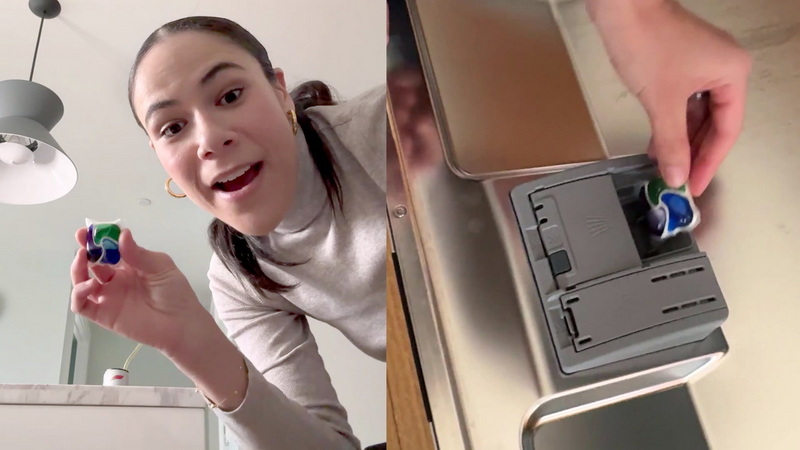
Dishwasher pods, often called tabs or pacs, contain detergent, enzymes, surfactants, and sometimes rinse aid in a single dose. The outer film, typically polyvinyl alcohol, dissolves in hot water during the cycle, releasing contents precisely when needed.[1]
These pods simplify dosing compared to powders or liquids, reducing mess and waste. They target grease, food particles, and stains through multi-phase cleaning, with some featuring layered designs for timed release.[2]
Pods excel in modern dishwashers, outperforming other forms in reducing film buildup over time when used correctly.[1]
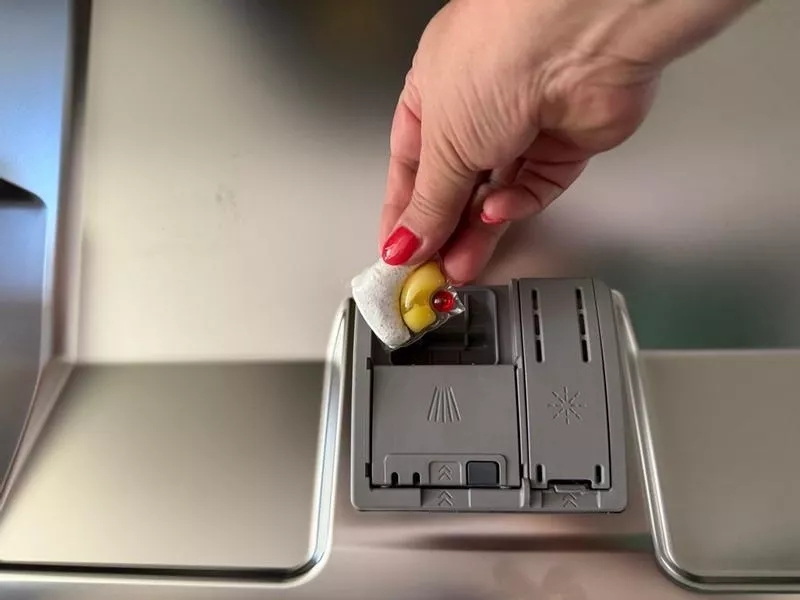
No, throwing pods randomly into the dishwasher leads to poor cleaning and potential issues. Pods must go into the detergent dispenser compartment, which opens during the main wash for optimal timing.[3]
Placing them on the bottom causes premature dissolution in the initial rinse, wasting detergent and leaving residue on dishes or the tub. Always consult your dishwasher manual for the exact spot, as models vary slightly.[4][2]
Incorrect placement reduces efficiency, as the pod needs hot, pressurized water to activate fully.[1]
The dispenser ensures controlled release when water temperature peaks around 120-140°F, maximizing enzyme activity. Random tossing exposes pods to cooler pre-wash water, diluting their power before cleaning begins.[5][3]
This timing prevents foam overflow, protects sensors, and avoids streaks from uneven distribution. Proper use also minimizes wear on pumps and drains.[4]
Studies show pods in dispensers clean 20-30% better than loose placement by maintaining formula integrity.[1]
Follow these steps for best results:
1. Load dishes strategically. Place items with dirty sides facing spray arms, avoiding overcrowding. Top rack for glasses and mugs, bottom for plates and pots. Angle downward for drainage.[3]
2. Dry hands and add pod. Use one pod per load in the main detergent compartment. Close lid firmly until it clicks—no unwrapping needed.[1]
3. Add rinse aid. Even if pods include it, supplement for spot-free drying and faster results.[2]
4. Select cycle. Choose normal, heavy, or auto for full dissolution; skip quick cycles unless pod specifies.[4]
5. Start and monitor. Run with hot water supply; unload bottom rack first post-cycle.[5]
Regular adherence yields consistently clean dishes without extra effort.[3]
Users often err in ways that compromise results:
- Wet hands or dirty dispenser: Causes sticking or early melting—always dry everything first.[2]
- Overloading racks: Blocks water flow and dispenser access, leading to undissolved bits.[4]
- Multiple pods: Creates excess suds, residue, and sensor errors; one suffices for most loads.[1]
- Short cycles: Pods need sustained heat—opt for longer settings.[3]
- Pre-rinsing excessively: Enzymes work best on soils; light scraping is enough.[5]
Avoiding these extends pod life and machine longevity.[2]
Pods feature enzymes breaking starches and proteins, surfactants lifting grease, and builders softening water. The film dissolves in seconds under spray, with some pods having blue layer for shine and white for cleaning.[1]
Multi-chamber designs release boosters later, tackling tough stains in one cycle. They adapt to water hardness better than liquids, preventing mineral spots.[4]
This engineering makes pods reliable for everyday use.[3]
If pods leave chunks:
- Check water temperature—run hot tap first to hit 120°F.[2]
- Clean filters, spray arms, and seals monthly to ensure flow.[4]
- Verify no blockages near dispenser from utensils.[1]
- Store pods cool and dry; humidity degrades film.[5]
- Test with empty cycle using vinegar for buildup removal.[4]
These fixes restore performance quickly.[3]
| Feature | Pods | Powder | Liquid/Gel |
|---|---|---|---|
| Convenience | Pre-measured, no mess | Scoop required | Pour, may spill |
| Dissolving Speed | Cycle-timed | Fast in hot water | Quickest |
| Cost per Load | Moderate | Lowest | Higher |
| Best For | Standard loads | Hard water | Short cycles |
| Residue Risk | Low if placed right | High if overdosed | Streaks possible |
Pods win for consistency in most homes.[3]
Select based on:
- Household size: Larger pods for families.
- Water type: Hard water formulas with extra builders.
- Eco preferences: Phosphate-free, biodegradable films.
- Machine age: Compatible with older models via full cycles.[4]
Brands vary; test for your setup.[5]
Most pods dissolve fully without harming septic systems, especially phosphate-free ones. Opt for plant-based films to minimize plastic-like waste.[2]
Bulk packs reduce packaging; they use less detergent overall than over-measured alternatives. Check labels for certifications.[1][4]
Keep your dishwasher optimal:
- Monthly filter/spray arm cleans.
- Quarterly empty hot cycles with cleaner.
- Rinse aid at full level.
- Gasket inspections for leaks.[4]
This prevents 90% of pod-related issues.[3]
Concentrated formulas demand care:
- Child-proof storage high and locked.
- No puncturing—film handles dissolution.
- Eye/skin contact: rinse immediately.
- Ingestion: call poison control.[2]
Safe habits protect everyone.[5]
For baked-on messes:
- Soak pots briefly.
- Use heavy cycle with booster pods.
- Alternate with powder for variety.
- Descale yearly in hard water areas.[1]
These elevate results further.[4]
Dishwasher pods transform routine cleaning when handled right, but throwing them loosely undermines their potential. Place in the dispenser, load smartly, and maintain your machine for residue-free, efficient washes that save time and resources.
Mastering pod use means longer appliance life, lower costs, and pristine dishes every cycle. Small habits yield substantial cleanliness gains.
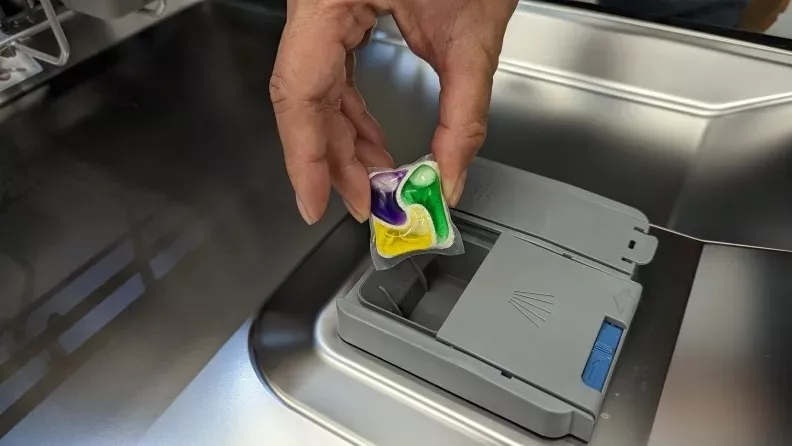
No, place them in the detergent dispenser to ensure timed release during the main wash, avoiding waste and residue.[3]
Low water heat, clogs, or overloads cause this—clean components and use hot cycles.[2]
Yes, most modern phosphate-free pods are safe; verify labels.[4]
Yes, with proper dispensers and full hot cycles for dissolution.[1]
One for standard loads; check manual for heavy soils.[5]
[1](https://www.whirlpool.com/blog/kitchen/how-to-use-dishwasher-pods.html)
[2](https://www.ufinechem.com/how-to-put-dishwasher-pod.html)
[3](https://www.kitchenaid.com/pinch-of-help/major-appliances/how-to-use-dishwasher-pods.html)
[4](https://www.ufinechem.com/how-to-run-a-dishwasher-with-pods.html)
[5](https://www.maytag.com/blog/kitchen/how-to-use-dishwasher-pods.html)
[6](https://www.youtube.com/watch?v=auhGOs7ZusI)
[7](https://www.youtube.com/watch?v=T9rzJ9wKJrs)
[8](https://www.reddit.com/r/Home/comments/u7mnw1/was_wondering_if_this_was_the_correct_spot_to_put/)
[9](https://www.homemadesimple.com/kitchen/the-dish-on-dishwasher-pods/)
[10](https://www.reddit.com/r/Appliances/comments/14rx7og/where_do_i_put_dishwashing_pods_in_my_dishwasher/)


