
Views: 222 Author: Tomorrow Publish Time: 12-22-2025 Origin: Site


Content Menu
● Should You Unwrap Dishwasher Pods?
● Why You Should Not Unwrap Dishwasher Pods
● Common Misconceptions About Dishwasher Pods
● Exceptions and Special Situations
● Troubleshooting Poor Results
● The Science Behind the Water-Soluble Film
● Storing Dishwasher Pods Properly
● Are Dishwasher Pods Safe for All Machines?
● Are Pods Better Than Liquids or Powders?
● Eco-Friendly and Sustainable Options
● How Dishwasher Pod Design Continues to Evolve
● Maintaining Optimal Dishwasher Performance
● FAQs
>> 1. What happens if I accidentally unwrap a dishwasher pod?
>> 2. Can I place the pod directly in the bottom of the dishwasher?
>> 3. Are dishwasher pods safe for septic systems?
>> 4. Do dishwasher pods expire or lose effectiveness?
>> 5. Can I cut a pod in half to save detergent?
In the last decade, automatic dishwashing has evolved tremendously. Tasks that once required messy powder and careful measuring are now handled with small, highly efficient pods. But despite their simplicity, these innovative cleaning products often leave users puzzled about one key question: Do I unwrap a dishwasher pod before putting it in the machine?
This question may sound trivial, yet it matters greatly. Using a dishwasher pod incorrectly can reduce cleaning effectiveness, damage the appliance, or waste money. In this article, we will thoroughly explore what dishwasher pods are, how they work, the science of their coating, and exactly how to use them correctly.

Dishwasher pods—also called detergent capsules or tabs—are single-use packets of concentrated dishwashing agents. Each pod typically contains three core components:
- Detergent for cutting grease and lifting food residues.
- Rinse aid to prevent water spots and promote faster drying.
- Enzymes and oxygen-based bleaches for breaking down proteins, starches, and stains.
What makes pods revolutionary is that they simplify dishwashing. Instead of estimating how much detergent to pour into the dispenser, each pod provides a pre-measured dose suitable for one cleaning cycle. This ensures consistent, reliable performance every time you use your dishwasher.
The answer is no—you should never unwrap a dishwasher pod before putting it in the dishwasher.
Modern dishwasher pods are designed with a water-soluble film, usually made of polyvinyl alcohol (PVA), that completely dissolves during the wash cycle. This coating keeps the detergent stable, protects your skin from direct contact, and ensures that the detergent releases at precisely the right time.
Unwrapping a pod destroys that system. Once exposed to air and humidity, the concentrated detergent can become sticky, begin dissolving prematurely, or spill into the dishwasher too early. As a result, your dishes might come out cloudy, and your dishwasher could develop detergent buildup over time.
Let's look at why keeping the pod intact is essential for ideal results:
1. Precision release: The outer water-soluble film ensures the detergent enters the water stream at the correct stage of washing. If the pod is unwrapped, detergent might flush away too early or clump.
2. Safety and hygiene: Concentrated detergents can irritate skin and eyes. The film acts as a protective layer, allowing you to handle pods safely without direct exposure.
3. No residue risk: Designed to dissolve completely, the film prevents undissolved detergent or streaks on dishes.
4. Storage durability: The wrap helps protect the detergent from air and moisture, keeping the formula potent longer.
These reasons explain why modern dishwasher pods have become standard for both home and commercial use—efficiency without the mess.
A dishwasher pod isn't just detergent—it's a compact chemical system that performs multiple functions during one cycle. When you start a wash, the dishwasher fills with hot water and sprays it onto the detergent compartment. The pod's coating begins to dissolve immediately, releasing ingredients in stages.
- First, enzymes break down food residue, fats, and starches.
- Then, oxygen-based bleaching agents remove stains like tea or coffee.
- Finally, surfactants and rinse aids lift away grime and ensure spotless drying.
The temperature and water flow ensure every ingredient activates at the right time, making pods both smart and efficient.
Despite their simplicity, a few myths circulate among users:
- “I need to unwrap them for better cleaning.” Untrue—unwrapping interferes with timing and may leave residue.
- “Pods can't handle greasy pans.” Modern pods contain strong enzymatic formulations that cut through heavy grease effectively.
- “Pods create buildup inside the machine.” Residue usually comes from overloading, poor water quality, or cold water—not the pods themselves.
- “Pods dissolve poorly in short cycles.” While quick cycles may reduce contact time, using warm or hot water resolves most dissolution issues.
By following the manufacturer's directions, these concerns become virtually nonexistent.
While most dishwasher pods don't require unwrapping, some unique or older models differ. For instance, specialty detergent tablets designed for industrial or high-temperature dishwashers occasionally come with a non-soluble protective wrap meant to be removed manually. Always read the manufacturer's label before use.
Also note that extremely hard water may affect how the pod dissolves. You can offset this by installing a water softener or choosing a detergent designed for mineral-rich water.
To get the best cleaning outcome, follow these steps carefully:
1. Check your dishwasher manual. Ensure your model supports concentrated pods.
2. Load dishes properly. Avoid overcrowding and keep the detergent dispenser door clear.
3. Insert the pod into the detergent dispenser compartment—never directly onto the bottom of the dishwasher.
4. Close the dispenser securely before starting the cycle.
5. Select the right wash cycle based on the load type. For heavily soiled dishes, use a longer or hot-water cycle to maximize dissolving efficiency.
6. Run the dishwasher immediately after loading the pod. Leaving it inside for hours can expose it to humidity and cause partial dissolving.
If your dishes come out spotty, filmy, or streaked, consider these factors:
- Low water temperature: Pods need water above 120°F (about 49°C) to dissolve fully.
- Obstructed dispenser: Large pans or long utensils can block the dispenser door from opening, keeping the pod trapped.
- Dirty spray arms: If spray holes clog with food particles or calcium deposits, the pod cannot dissolve properly.
- Incompatible cycles: Short eco-cycles may not provide enough rinse time for full detergent activation.
Regular dishwasher maintenance—like cleaning filters and spray arms—goes a long way toward keeping pods effective.
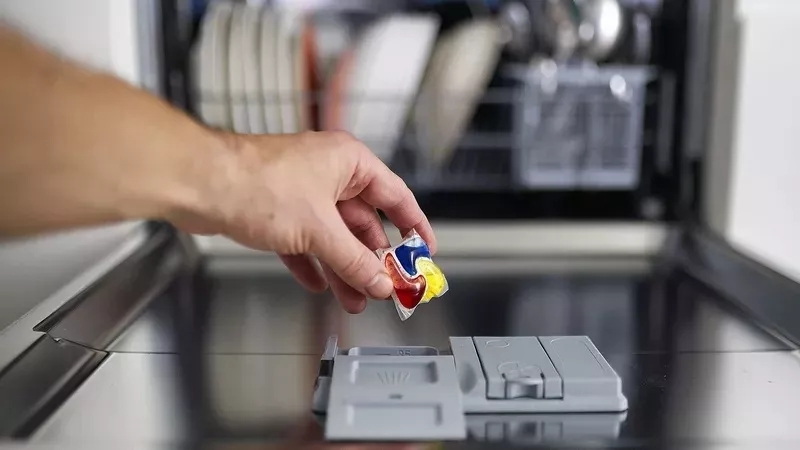
The pod's thin coating, made primarily of polyvinyl alcohol (PVA), is engineered to dissolve rapidly when exposed to water. PVA molecules contain hydroxyl groups that form hydrogen bonds with water, breaking down the polymer chains. Once dissolved, it disperses harmlessly in wastewater and breaks down biodegradably under treatment conditions.
This material innovation eliminates plastic wrappers and reduces environmental waste compared to traditional packaging methods, aligning with modern eco-friendly trends.
Because pods react to moisture, proper storage ensures both safety and performance:
- Keep them in an airtight container, ideally in a cool, dry area away from the dishwasher and sink.
- Avoid humid environments such as under-sink cabinets prone to condensation.
- Store in original packaging if it has resealable moisture barriers.
- Keep out of reach of children and pets. Their colorful appearance can resemble candy, posing poisoning risks.
If a pod becomes sticky or misshapen, discard it—it has likely absorbed moisture and may not dissolve properly.
In general, yes—dishwasher pods work efficiently in most modern appliances. However:
- Compact and countertop dishwashers may not generate enough heat or spray pressure to dissolve pods well, making liquid detergents a better choice.
- Older models without integrated dispenser covers might release detergent too early in the pre-wash stage, reducing cleaning efficiency.
Always verify your dishwasher's manual for detergent type recommendations.
While preference plays a role, pods offer several clear advantages:
- Measurement accuracy: No risk of using too much or too little.
- Convenience: Less time spent measuring or cleaning detergent spills.
- Consistency: Uniform formulation ensures predictable cleaning results.
However, liquid or powder detergents may be more adaptable for partial loads or specific wash cycles. Liquids also dissolve more quickly in short or low-temperature programs.
For heavy or unique tasks—such as baked-on grease or delicate glassware—experimenting with hybrid approaches (a pod plus a mild rinse aid) often yields the best outcomes.
Environmental awareness is shaping detergent manufacturing. Many leading brands now offer biodegradable pods that avoid phosphates and harsh chemicals. Some even use plant-based surfactants and recyclable packaging.
If sustainability is a priority for you:
- Look for “phosphate-free” and “biodegradable film” labels.
- Avoid individually wrapped pods that use extra plastic foil.
- Choose bulk or refill packs to cut down on unnecessary packaging.
In some cases, eco-friendly dishwasher powders can also perform well when dosed carefully. Homemade natural detergents—often combining baking soda, citric acid, and salt—serve as greener, low-cost alternatives, though they may not match the precision of a factory-formulated pod.
The evolution of dishwashing technology has pushed pods to become smarter and more advanced. Some leading brands have begun adding multi-chamber pods with staged dissolving, releasing separate agents at different moments within the wash cycle. This innovation allows:
- Early-release enzymes to break food particles immediately.
- Delayed-release surfactants for mid-cycle cleaning.
- Final-stage rinse aids that activate only during drying.
This sort of precision, once impossible with powder detergents, explains why pods dominate today's market.
While dishwasher pods are slightly more expensive per load than traditional powders or liquids, their value lies in consistency and waste reduction. Because each pod is pre-measured, there's no risk of over-pouring or wasting detergent. The enhanced cleaning power also means fewer rewashes and lower long-term costs.
Bulk-buying or subscription services can further cut prices, making pods both economical and practical for everyday households.
To extend your dishwasher's life and ensure detergent efficiency:
- Run a cleaning cycle monthly using vinegar or a dishwasher cleaner to remove residue.
- Scrape off large food particles before loading, but avoid pre-rinsing—modern pods and machines are designed for some residue.
- Check and clean filters regularly to prevent clogging.
- Inspect spray arms for buildup and clear with a toothpick or brush.
These habits not only help pods dissolve fully but also ensure spotless dishes after every cycle.
So, do you unwrap a dishwasher pod? Absolutely not. Dishwasher pods are precisely engineered to be used as-is, complete with a water-soluble coating that dissolves safely in hot water. Unwrapping defeats their design, risks damage, and often leads to poor cleaning results.
By understanding the science and proper technique behind these powerful cleaning capsules—how they dissolve, when to use them, and how to store them—you'll achieve cleaner dishes, greater efficiency, and a longer-lasting appliance. Combine that knowledge with responsible, eco-friendly choices, and you can transform a routine kitchen task into an effortless, sustainable habit.
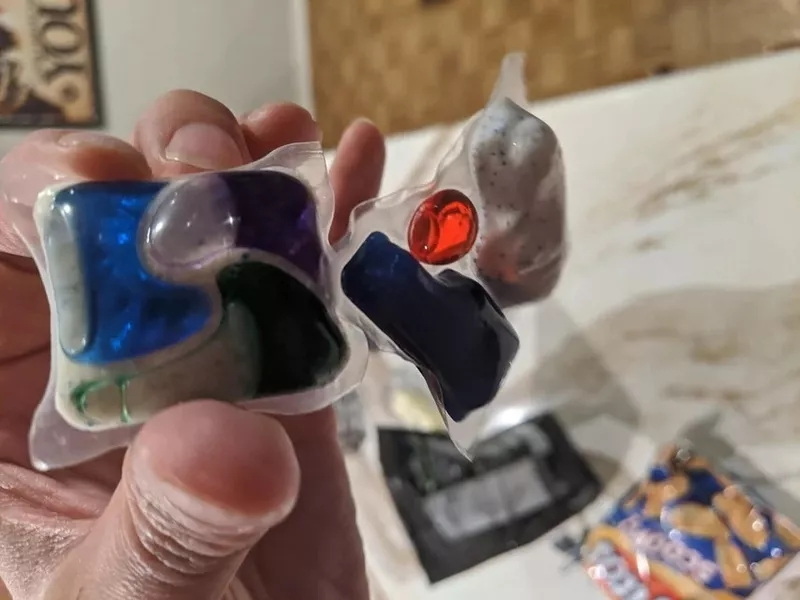
If you unwrap it, the detergent may clump, leak, or begin dissolving prematurely. Discard any exposed pod and replace it with a new one to ensure proper cleaning action.
No. Place it in the detergent dispenser. Putting it on the bottom dissolves it too early, reducing cleaning effectiveness.
Yes, most brands use ingredients safe for septic systems. Always confirm with the packaging label marked “safe for septic and greywater systems.”
Yes. Exposure to air and humidity can weaken their formula. Store them in airtight containers and use them within a year from purchase for best results.
Avoid cutting or splitting pods. Each pod contains carefully measured proportions of detergent and rinse aid calibrated for one full load. Altering that ratio causes poor cleaning performance or residual film.


