
Views: 222 Author: Tomorrow Publish Time: 12-20-2025 Origin: Site


Content Menu
● Understanding the Composition of Dishwasher Pods
● After the Wash: The Journey Through Wastewater Systems
● The Role of Polyvinyl Alcohol (PVA)
● Beyond Plastics: Chemical Residues and Surfactants
● Do Dishwasher Pods Truly Reach the Ocean?
● Environmental and Biological Impacts
>> Toxic and physiological effects
>> Long-term ecosystem alteration
● Misconceptions About “Eco-Friendly” Pods
● Science-Based Efforts to Reduce the Impact
● A Look to the Future: Circular and Regenerative Systems
● FAQ
>> 1. Do dishwasher pods completely dissolve in water?
>> 2. Can wastewater plants remove PVA and detergent chemicals?
>> 3. Are “eco-friendly” dishwasher pods harmless for the environment?
>> 4. How do liquid or powder detergents compare to pods?
>> 5. What can individuals do to minimize environmental impact?
Dishwasher pods have become a modern convenience in households worldwide, offering a tidy, efficient, and mess-free way to clean dishes. Containing pre-measured amounts of detergent, rinse aid, and enzymes, they eliminate the guesswork from dishwashing. Yet, as environmental consciousness grows, an important question emerges: Do dishwasher pods end up in the ocean?
At a glance, they seem harmless—small, compact, and efficient. But behind their convenience lies a complex chain of chemical interactions, waste management shortcomings, and environmental consequences that connect your kitchen sink to the sea. This article explores the path of dishwasher pods from use to disposal, their chemical composition, environmental implications, and sustainable alternatives for preventing ocean pollution.
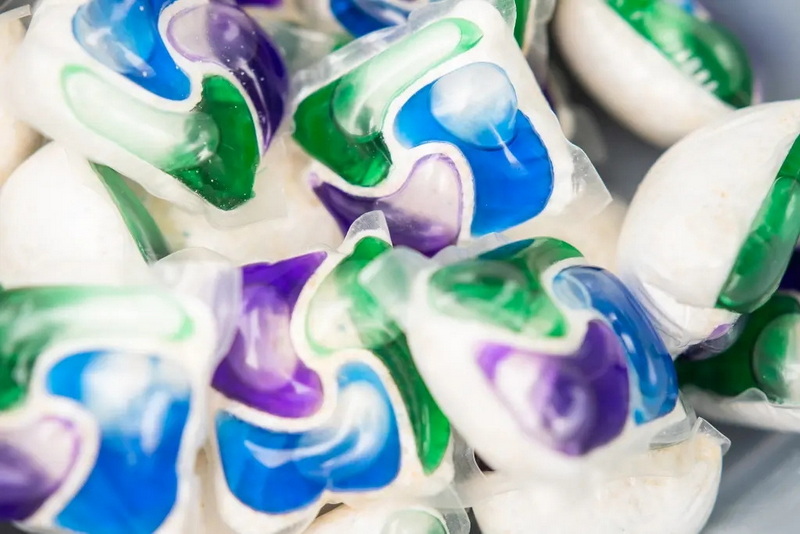
Dishwasher pods are typically made up of three major components:
1. Detergents and surfactants – These compounds break down grease, oils, and food residues.
2. Enzymes – Biological molecules that digest proteins, starches, and fats at low temperatures, boosting cleaning efficiency.
3. Encasing film – Commonly composed of polyvinyl alcohol (PVA) or related polymers, it is designed to dissolve when exposed to water.
Once the outer film dissolves, the chemicals within mix into the dishwasher water, clean the dishes, and then wash away down the drain. What appears to vanish into the plumbing system, however, may not actually disappear entirely.
The film's dissolution in water is often mistaken for biodegradation. In reality, the two concepts differ. Dissolution is a physical process, while biodegradation is a biological one involving microbial activity. This critical distinction underlies much of the confusion about whether dishwasher pods truly “vanish” after use.
When a dishwasher completes its cycle, wastewater containing surfactants, phosphate residues, and dissolved PVA film enters the household plumbing. From there, it joins the broader municipal wastewater network. In cities with advanced infrastructure, water is transported to a treatment plant designed to remove contaminants before discharge into rivers, lakes, or coastal systems.
While wastewater treatment plants (WWTPs) play a crucial role in pollution control, their systems were not developed specifically to target synthetic polymers like PVA or trace chemical compounds from detergents. The treatment process generally includes:
1. Primary treatment – Removal of large solids and sediments.
2. Secondary treatment – Biological processing that breaks down organic material using microorganisms.
3. Tertiary treatment – Filtration and disinfection to further purify water before release.
However, most facilities lack the capability to filter out microplastics or fully metabolize synthetic polymers. The outcome is partial degradation or physical trapping of these substances in sludge, much of which still finds its way back into the environment through agriculture or industrial reuse.
Polyvinyl alcohol (PVA) is one of the key materials enabling dishwasher pods to dissolve in water. Known for its solubility and strength, PVA has applications beyond cleaning products—it's also used in medical tablets, textiles, and packaging. When used in detergent pods, its purpose is to contain concentrated chemicals safely and dissolve quickly without leaving residue on dishes.
Yet, environmental studies reveal that PVA's fate post-dissolution is far from straightforward.
- In wastewater systems: Researchers have observed that degradation rates of PVA vary significantly depending on the bacterial communities present. In aerobic (oxygen-rich) settings with specific microbial strains, partial biodegradation occurs. However, in many treatment plants, these conditions are not consistently achieved.
- In rivers and oceans: Once discharged into open environments, the lack of appropriate microbial species and unstable conditions slows the breakdown process dramatically. PVA molecules can persist for months, sometimes binding with other contaminants.
As a result, even though dishwasher pods are marketed as “water-soluble,” the polymer they use has potential to remain active in ecosystems much longer than assumed.
While PVA attracts attention as a potential microplastic source, the other chemicals inside dishwasher pods also contribute to environmental concerns. Common ingredients include surfactants, bleaching agents, and enzymes that, once released, interact with aquatic environments.
- Surfactants reduce water's surface tension, compromising aquatic organisms' cellular membranes and affecting gas exchange.
- Bleaching agents such as sodium percarbonate or chlorine can alter the pH of local water systems, impacting biodiversity.
- Enzymes, though naturally occurring proteins, can still affect microbial balance when introduced artificially in high concentrations.
When mixed with other pollutants in wastewater, these compounds form complex chemical cocktails that can be difficult to neutralize completely. Their traces, even at low concentrations, can accumulate in sediments and living organisms.
It may be tempting to think that water treatment plants prevent all pollutants from escaping into nature. However, numerous studies indicate that a notable portion of dishwasher pod residues eventually reaches river and marine environments.
According to reports from environmental monitoring agencies:
- Approximately 60–80% of household wastewater is treated in facilities that do not fully remove microplastics or polymer residues.
- An estimated 75% of dissolved PVA can remain intact during treatment processes and flow into natural waterways.
- As urban wastewater often drains into rivers that connect to coastal zones, the final destination for many residues is indeed the ocean.
The cumulative effect across millions of homes means that even seemingly insignificant losses from each dishwasher load can contribute massively to the global pollution load over time.
The environmental consequences of dishwasher pod residues are subtle but persistent. Once in aquatic environments, their substances interact with marine organisms and sediments in various ways.
As PVA particles bind with other synthetic materials, they can form microplastic-like structures. These microscopic fragments are often consumed by plankton, which are in turn eaten by small fish—creating a potential route for contaminants to move up the food chain.
Even low concentrations of surfactants can reduce dissolved oxygen in water, harm gills in fish, and interfere with reproductive systems in aquatic life. Residual PVA, while less toxic than conventional plastics, still changes water's chemical properties, potentially influencing nutrient cycles.
Over time, the continued introduction of detergent residues can shift microbial and chemical balances in aquatic systems, reducing resilience and increasing vulnerability to other pollutants.
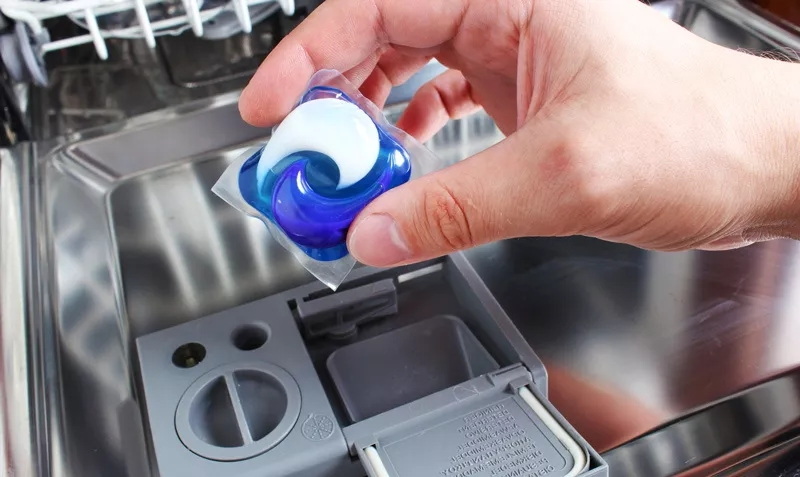
The detergent industry frequently uses terms like “eco-friendly,” “biodegradable film,” and “safe for the environment.” While some progress has been made toward sustainability, these claims can be misleading.
Laboratory tests demonstrating PVA degradation often rely on idealized conditions that do not reflect real wastewater environments. Low temperatures, inconsistent oxygen levels, and weak microbial activity can all delay decomposition. Similarly, while biodegradable surfactants break down faster than traditional ones, they still require time and specific conditions.
As a result, many consumers assume their cleaning habits have become environmentally neutral, when in reality, residues still flow into nature—only the timeline and composition differ.
Not all parts of the world have equal wastewater management capacity. In highly developed regions, sophisticated treatment processes remove or degrade a larger share of pollutants. However, in rural or developing areas, untreated or partially treated wastewater is often discharged directly into local waterways.
This inequality amplifies the global impact of dishwasher pods and other household pollutants. Even if only a fraction of wastewater reaches oceans untreated, the volumes involved are enormous. Pollution does not respect borders; rivers, air currents, and oceanic circulation spread contaminants worldwide.
From the Amazon basin to coastal Southeast Asia, traces of synthetic compounds originating from household cleaning products have been detected in marine sediments and wildlife tissues, illustrating how intimately connected global water systems have become.
Environmental researchers and chemists are actively exploring innovations to reduce detergent pod pollution. Some promising directions include:
- Next-generation biodegradable films: New polymers derived from cellulose, starch, and polylactic acid (PLA) are being developed to replace petroleum-based PVA.
- Microbial enzymatic degradation: Bio-engineered bacteria capable of breaking down synthetic polymers into harmless compounds show potential for wastewater treatment upgrades.
- Phosphate-free formulas: Alternative ingredients, such as citrate-based compounds, provide cleaning efficiency without contributing to algal blooms or oxygen depletion.
- Green chemistry approaches: Manufacturers are encouraged to redesign detergent molecules so that they decompose naturally under diverse conditions, not just controlled laboratory ones.
Individual actions play a powerful role in reducing environmental harm. There are practical and accessible ways for households to contribute:
1. Use fewer pods – Only run the dishwasher when it's full. Overuse wastes detergent and increases chemical load in wastewater.
2. Choose certified sustainable brands – Look for products approved by independent certification programs like EPA Safer Choice, EU Ecolabel, or Cradle to Cradle.
3. Avoid “extra strength” or “industrial” formulas – These often contain higher concentrations of chemicals that are harder to treat.
4. Switch to powder or liquid detergents – Traditional detergents can offer similar cleaning results with fewer packaging issues and simpler formulations.
5. Support policy changes – Advocate for transparency in labeling, stricter standards for biodegradability claims, and investment in improved wastewater systems.
Simple daily choices can collectively make a measurable difference in slowing the flow of synthetic residues into the ocean.
The ultimate goal is to create a circular cleaning economy—where packaging, ingredients, and waste streams form a closed-loop system with minimal emissions. Companies are experimenting with refillable detergent options, solid tablet packaging made from starch-based materials, and waste recapture programs.
Simultaneously, innovations in microplastic filtration and advanced bio-reactor wastewater treatment hold promise for reducing polymer discharge. As these technologies mature, they could drastically diminish the share of detergent-derived pollutants entering marine ecosystems.
The future of clean dishes should not come at the expense of clean oceans. By embracing scientific progress, consumer responsibility, and transparent manufacturing, that balance can become achievable.
While dishwasher pods provide unmatched convenience and cleaning effectiveness, their environmental costs cannot be dismissed. Most modern pods dissolve but do not fully biodegrade. Their PVA films and residual chemicals frequently pass through wastewater treatment processes only partially degraded, with measurable fractions making their way into rivers and seas. Over time, these substances accumulate, subtly altering ecosystems and food webs.
Preventing this pollution requires collaboration among manufacturers, governments, scientists, and consumers. Genuine biodegradability, improved wastewater management, and conscious purchasing choices can collectively mitigate the problem. Cleaning our dishes should not mean dirtying the planet's most vital resource—the ocean.
They dissolve physically but not always biologically. The PVA film breaks apart in water, yet full biodegradation depends on specific microbial and environmental conditions that are often missing in real-world wastewater systems.
Treatment plants partially remove these substances, but effectiveness depends on the type of facility. Most manage to capture solids but are less capable of removing dissolved polymers, surfactants, and micro-fragments completely.
Not entirely. They may use less toxic ingredients or biodegradable surfactants, but many still rely on PVA films or other polymers that break down slowly in nature. True eco-friendliness requires genuine biodegradability under normal environmental conditions.
Liquid and powder detergents generally produce less packaging waste and allow users to control dosage. Pods, while more convenient, use pre-set chemical concentrations and additional packaging, increasing environmental load.
Use only what is needed, run full dishwasher loads, support eco-certified brands, and push for stronger environmental standards. Awareness and practical daily habits are the simplest ways to keep dishwasher waste out of our oceans.


