
Views: 222 Author: Tomorrow Publish Time: 12-19-2025 Origin: Site


Content Menu
● Factors Influencing Pod Dissolution
>> 3. Dishwasher Loading Patterns
● Common Issues When Pods Don't Dissolve
● How to Ensure Dishwasher Pods Dissolve Completely
● Understanding Detergent Chemistry
● Are Dishwasher Pods Suitable for All Machines?
● Comparing Pods, Gels, and Powders
● Environmental Impact of Dishwasher Pods
● Maintenance Matters: Keeping Your Dishwasher Efficient
● FAQ
>>> 1. Why does my dishwasher pod not dissolve completely?
>>> 2. Can dishwasher pods work in cold water?
>>> 3. Is it okay to place the pod directly in the bottom of the dishwasher?
>>> 4. What if my dishwasher leaves white residue after washing?
>>> 5. Are dishwasher pods environmentally friendly?
Dishwasher pods have revolutionized the way we clean dishes, offering convenience, consistent dosing, and reduced mess. Instead of measuring out liquid or powder detergent for every load, modern homeowners can simply insert a pre-measured pod and let the dishwasher do the rest. Yet one lingering question troubles many users: Do dishwasher pods completely dissolve in every cleaning cycle?
The short answer is that they are designed to dissolve fully, but in real use, conditions like water temperature, cycle selection, machine maintenance, and pod storage can change the results. To understand why, it helps to look at how these pods are built and how your dishwasher uses them.
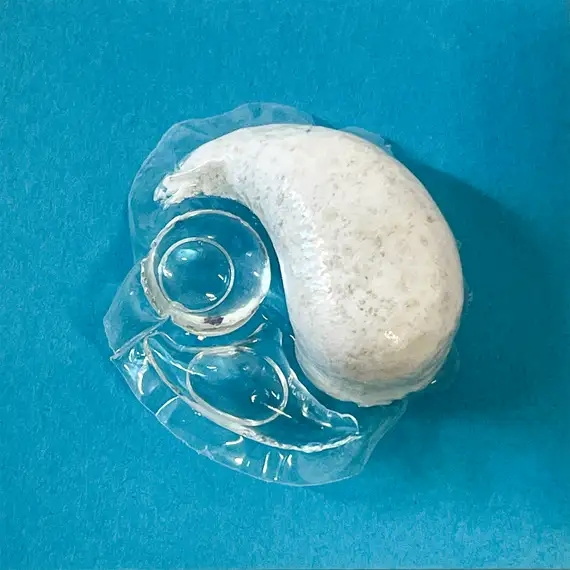
A dishwasher pod — sometimes called a capsule or tab — is a compact, single-use detergent unit. The core ingredients are concentrated cleaning agents such as enzymes, surfactants, bleach, and rinse aids. These are wrapped in a thin, water soluble film made primarily of polyvinyl alcohol (PVA).
Once placed into the detergent compartment, the pod is released at the start of the main wash cycle. As hot water enters, the PVA film dissolves, freeing the detergent to circulate through the spray arms and distribute evenly around the interior.
The cleaning chemistry then performs multiple stages: enzymes break down organic matter, alkaline agents remove grease, surfactants suspend food particles, and rinse aid ensures spotless drying. When working properly, this system leaves dishes sparkling clean with no detergent residue. However, successful performance depends on proper dissolution — something affected by several environmental and mechanical factors.
Although pods are engineered to dissolve efficiently, many external variables influence the outcome. Let's examine the most important ones.
The dissolvable film surrounding most dishwasher pods typically requires hot water above 120°F (49°C) to melt completely. If water enters the machine colder than this threshold, the pod may only partially dissolve, leaving behind sticky residue or detergent clumps.
Cold water issues commonly arise when using eco-cycles or when the water heater is set too low. To remedy this, homeowners can:
- Run the tap until hot before starting the dishwasher.
- Choose a longer or hotter wash cycle.
- Adjust the water heater to an appropriate setting.
Dishwashers with built-in heating elements usually handle this automatically, but older or budget models might not heat water sufficiently.
Water pressure controls how well detergent disperses. When spray arms cannot rotate correctly or jets are partially blocked, the pod may not be exposed to an even water flow. As a result, parts of the film might stay intact.
Common causes include clogged filters, debris in spray holes, or mineral accumulation on rotating joints. Cleaning these components regularly ensures adequate pressure for pod activation.
Placing dishes incorrectly can block the detergent door. If a large pot or baking sheet sits directly in front of the dispenser, the pod may not release into circulating water or may fall into a “dead zone” without sufficient spray.
Experts recommend the following loading strategy:
- Place large cookware on the sides or bottom racks.
- Leave ample space around the detergent drawer.
- Avoid stacking utensils too tightly.
Balanced water flow improves detergent contact and rinsing performance.
Dishwashers offer multiple wash cycles, from quick eco modes to heavy-duty options. Shorter cycles use less water and lower heat, which can prevent full pod dissolution. Heavily soiled dishes require longer, hotter cycles so that detergent has enough time to activate and rinse thoroughly.
If residue appears consistently after quicker cycles, switch to Normal or Intensive Wash, which allows the pod to react under sustained heat.
Because the PVA film is moisture-sensitive, pods should be stored in a cool, dry location away from humidity. When exposed to damp air, pods can soften, stick together, or degrade, leading to incomplete dissolution once in use. Always:
- Reseal packaging tightly after opening.
- Store in airtight containers.
- Avoid storing near sinks or dishwashers, where humidity levels rise.
Proper storage preserves the material's integrity until use.
Even under proper use, certain circumstances may lead to incomplete dissolution. Below are frequent problems and their respective solutions.
| Problem | Likely Cause | Recommended Fix |
|---|---|---|
| Sticky film residue on dishes | Low water temperature or restricted circulation | Run hot water first; clean spray arms |
| Pod left in compartment | Blocked detergent door or overloading | Clear obstacles; reposition dishes |
| White streaks on glasses | Hard water deposits | Add rinse aid or water softener |
| Soapy layer at the bottom | Water pressure too low | Inspect filters and inlet valve |
| Wet or clumpy pod before cycle | Moisture exposure during storage | Use fresh, dry pods stored in sealed packaging |
Consistent maintenance and correct setup resolve the majority of these issues.
Achieving full dissolution involves proactive care and small adjustments in everyday dishwashing routines. Here's a comprehensive checklist to ensure optimal pod performance:
1. Run hot water briefly before each cycle. This primes the system with warm water, immediately encouraging film breakdown.
2. Use appropriate wash cycles. Heavy or normal cycles maintain high temperatures and longer exposure times.
3. Avoid overloading. Crowding dishes prevents spray circulation and restricts contact with the detergent.
4. Inspect and clean spray arms regularly. Remove food debris, limescale, or grease deposits.
5. Check for door obstructions. Make sure nothing prevents the dispenser from opening mid-cycle.
6. Use fresh pods. Expired or moisture-damaged pods disintegrate unevenly.
7. Test for hard water. If present, use a salt-based water softener or an additive to assist detergent performance.
These preventative steps ensure that detergent dissolves uniformly and rinses away without leaving residue.
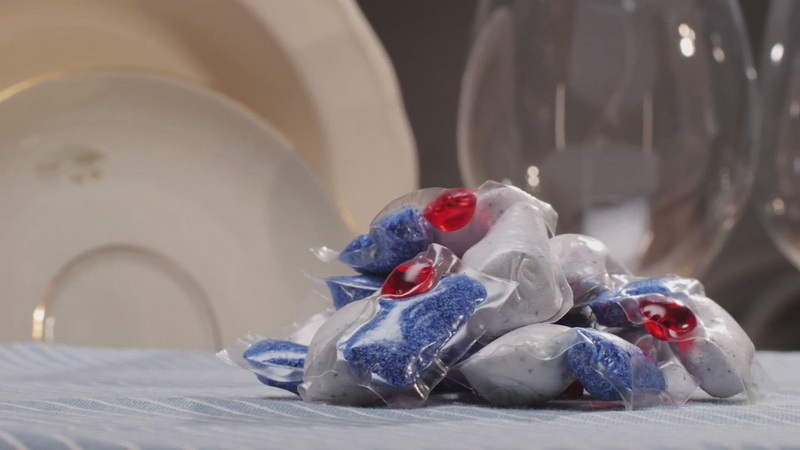
To appreciate why pods occasionally fail to dissolve, it helps to understand their chemistry. Each pod contains a blend of ingredients with specific roles:
- Surfactants lower the surface tension of water, allowing grease and grime to lift off surfaces easily.
- Enzymes such as protease and amylase break down organic food residues like proteins and starches.
- Builders adjust the water's pH to boost cleaning efficiency.
- Bleaching agents tackle stubborn stains such as tea or coffee marks.
- Rinse aids prevent spotting and allow faster drying.
For these ingredients to work synergistically, the PVA film must dissolve at precisely the right moment. If dissolution is delayed, part of the detergent might go unused or remain trapped in corners of the tub.
Advanced dishwasher pods are now designed in multi-chamber configurations, with different ingredients separated to release sequentially during each wash phase. This smart design minimizes premature mixing and ensures that enzymes act before bleaches deactivate them.
Most modern dishwashers are fully compatible with pods. However, compatibility issues arise in machines with unusual dispenser placements or limited water reach. Some older dishwashers, especially early 2000s models, may lack sensors and heating systems required to maintain consistent temperatures for dissolving pods.
If you use such a model and still prefer pods, consider choosing all temperature variants engineered to dissolve in cooler water or using gel detergents instead.
For portable or countertop dishwashers, check the product manual. Many of these smaller units recommend half a pod due to lower water volumes and shorter cycles.
Choosing between pods, gels, and powders depends on personal preference, machine design, and local water quality.
| Detergent Type | Pros | Cons |
|---|---|---|
| Pods | Convenient, mess-free, consistent dosage | Sensitive to heat and moisture; may not dissolve in cold water |
| Gels | Immediate dissolution, suitable for cooler washes | Can be overused; less concentrated |
| Powders | Precise control, quick activation | Requires measuring; can spill easily |
Among these, pods remain the most convenient solution for everyday users, though gels offer flexibility in lower temperatures.
The convenience of pods raises questions about sustainability. The PVA film used for most capsules is water-soluble and designed to biodegrade under industrial wastewater treatment conditions. However, current research suggests that not all municipal systems fully break down every molecule.
To make environmentally responsible choices:
- Select eco-certified brands (such as EPA Safer Choice or EU Ecolabel).
- Avoid products containing phosphates, which harm aquatic ecosystems.
- Choose concentrated or refill-pack systems to minimize plastic waste.
- Use full loads to conserve energy and water.
Innovation continues in developing biodegradable films and plant-based detergents that maintain cleaning power while reducing ecological impact.
Even the best detergent cannot compensate for a poorly maintained appliance. Over time, residue, grease, and mineral scale build up within spray arms, filters, and seals, reducing performance. Periodic deep cleaning ensures pods dissolve efficiently and dishes come out spotless.
- Monthly cleaning: Run an empty hot cycle with dishwasher cleaner or white vinegar.
- Filter maintenance: Remove food debris weekly to prevent clogs.
- Inspect heaters and sensors: These components control water temperature — if malfunctioning, pods will underperform.
- Rinse arms rotation check: Spin them manually to confirm free movement.
- Gasket care: Wipe door seals to prevent mold buildup.
Maintenance directly contributes to complete pod dissolution and optimal washing efficiency.
Many misconceptions surround dishwasher pods. Let's debunk the most common ones:
- Myth 1: Pods are only for high-end dishwashers.
Reality: Most modern machines, even budget models, are designed for pod compatibility.
- Myth 2: Pods damage dishes or glassware.
Reality: When dissolved correctly, pods are gentler and more consistent than manual detergent measurements.
- Myth 3: Using two pods cleans extra dirty loads better.
Reality: Overdosing leads to residue buildup and potential machine damage. Use one pod per cycle only.
- Myth 4: Pods dissolve instantly upon contact with water.
Reality: They dissolve gradually by design, ensuring ingredients are released at optimal stages.
Understanding these facts helps users maximize both safety and efficiency.
Dishwasher pods are designed to dissolve completely when used under proper conditions. Their performance depends heavily on water temperature, pressure, cycle duration, and correct dishwasher operation. When these factors align, the polyvinyl alcohol film melts away flawlessly, releasing detergent in measured doses that clean, sanitize, and rinse effectively.
Incomplete dissolution typically signals issues unrelated to the pod itself — such as cold water supply, blocked spray arms, or overloaded racks. By maintaining your dishwasher, storing pods properly, and choosing suitable cycles, you can ensure every capsule performs as intended. This not only produces cleaner dishes but also prolongs the life and efficiency of your appliance.
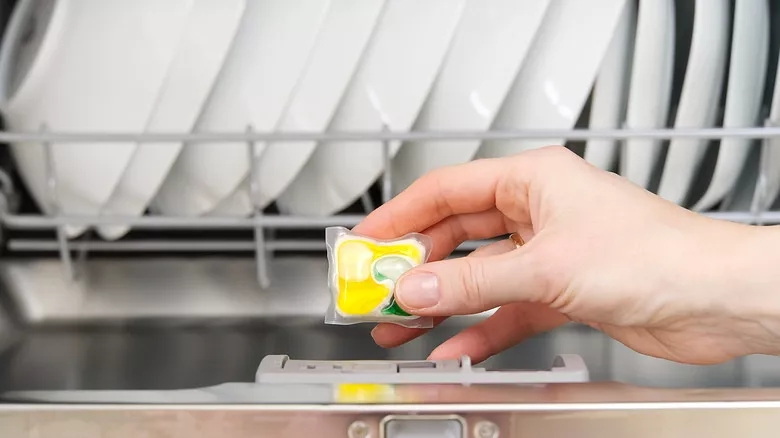
Incomplete dissolution often results from cool water or blocked dispenser doors. Verify water temperature exceeds 120°F and that large dishes do not obstruct the detergent compartment.
While some brands are labeled as “all-temperature,” most standard pods require warm to hot water for full dissolution. Using pods in cold water may lead to leftover detergent or cloudy dishes.
Although possible, it is not ideal. The detergent might dissolve too quickly during the pre-wash phase, leaving little cleaning power for the main wash. Always place pods in the dispenser instead.
White residue can stem from undissolved detergent, mineral scaling, or low rinse aid. Use a rinse agent, check water temperature, or add a descaling agent for hard water.
Many manufacturers are improving sustainability by using biodegradable films and non-toxic formulations. However, full PVA breakdown depends on municipal water treatment. Look for verified eco-friendly brands for greener dishwashing.


