
Views: 222 Author: Tomorrow Publish Time: 12-17-2025 Origin: Site


Content Menu
● The Early Days of Dishwashing Detergent
● The Rise of Liquid Dishwashing Detergents
● The Birth of Dishwasher Pods
● The Technology Behind the Pod
● Environmental Considerations
● The Cultural and Marketing Shift
● Innovations and Future Trends
● The Historical Timeline at a Glance
● The Human Experience Behind the Machine
● FAQ
>> 1. When were dishwasher pods first introduced?
>> 2. How do dishwasher pods differ from traditional detergents?
>> 3. Are dishwasher pods suitable for all dishwashers?
>> 4. How environmentally friendly are dishwasher pods?
>> 5. Can I make homemade dishwasher pods?
The modern kitchen is a marvel of convenience, where machines quietly perform tasks that once demanded hours of manual labor. Among them, the dishwasher stands out as one of the most transformative household appliances. Today, dishwasher pods are synonymous with effortless kitchen cleanup — but this innovation did not always exist. Earlier generations managed dishwashing with powders, liquids, and a lot of trial and error.
The emergence of pods changed the game entirely. They offered consistency, cleanliness, and safety, blending chemistry with design. To answer the question, “Did dishwashers always have pods?” we need to revisit the history of dishwashing itself — from early soap bars to modern multi-chamber pods engineered for peak performance.
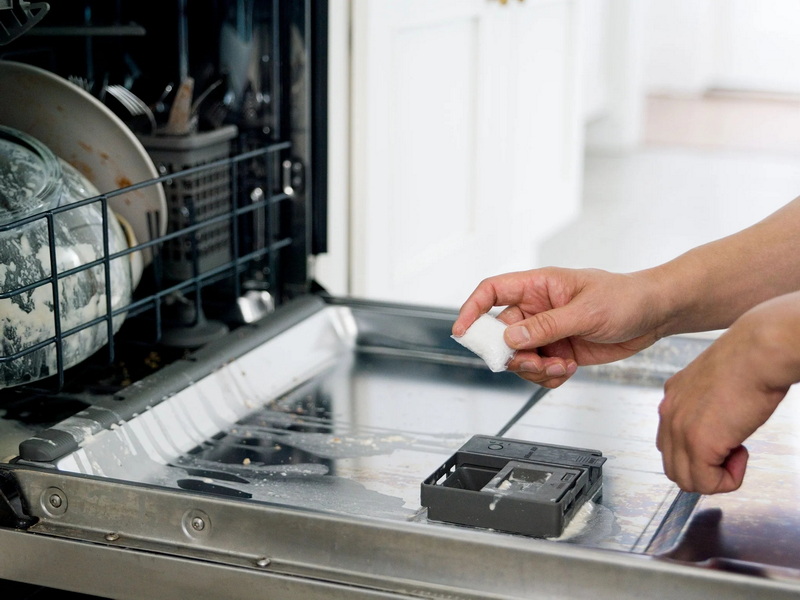
Before dishwashers entered the scene, people relied on traditional soaps to clean their dishes. These soaps were typically made from animal fat, ash, and lye. Although effective at removing grease, they often left a residue on plates and glassware. Handwashing was a time-consuming, messy process that depended heavily on hot water and physical scrubbing.
When automatic dishwashers were introduced in the 1950s, they represented a leap forward. Yet, these machines needed a detergent that could handle the mechanical and chemical demands of automated cleaning. Manufacturers began experimenting with powdered detergents — dry, granular substances that dissolved in the hot water cycle.
Powders were far more efficient than bar soaps because they were designed to create fewer suds. Foam, in an automatic machine, could damage components or leak out of the door. By the mid-20th century, powdered detergents became the standard option in households fortunate enough to own dishwashers.
However, the early powders were imperfect. They clumped easily if exposed to humidity, required careful measurement before every use, and sometimes left chalky residue on dishes. Still, they laid the foundation for continuous innovation.
By the late 1970s and early 1980s, the kitchen product industry was heavily focused on user convenience. Consumers wanted detergent that was easy to control, fast-dissolving, and effective even with modern water-softening systems. The result was the creation of liquid dishwashing detergents.
Liquids proved to be an improvement over traditional powders. They dissolved quickly, produced consistent cleaning results, and often left dishes sparkling clean. Because they could hold enzymes in suspension, manufacturers added specialized compounds that targeted food residues like proteins and starches.
Yet, liquid detergents still had shortcomings. Pouring from a bottle was easy, but dosage control was difficult. Most people used too much detergent, assuming that “more equals cleaner,” which led to waste. In addition, handling and storing large plastic containers became inconvenient.
Environmental consciousness was also growing during this era, and the packaging associated with liquid and powder detergents raised questions about sustainability. The demand for a measured, efficient, and eco-aware alternative led directly to the invention of pods.
The first commercially successful dishwasher pods, or tablets, appeared in the late 1990s. These small, self-contained units featured a perfectly measured amount of detergent sealed in a water-soluble film. The goal was simple: eliminate guesswork and make the dishwashing process cleaner and more efficient.
The concept was revolutionary. Instead of manually pouring or scooping detergent, users could drop a pod into the dispenser and let the machine handle the rest. The pre-measured dose ensured optimal cleaning without overuse — a win for both convenience and the environment.
The outer film, typically composed of polyvinyl alcohol (PVA), automatically dissolved in water, releasing the detergent at the right moment of the wash cycle. This design prevented residue buildup and kept the detergent dry until needed. It also allowed chemists to include complex formulas that would activate in phases — from pre-wash to rinse — ensuring a homogeneous clean.
During the early 2000s, many consumers were skeptical of pods. They were more expensive per load than powders or liquids, and early versions occasionally left streaks or failed to dissolve under cold-water conditions. However, continued research and manufacturing improvements quickly resolved these issues. By the 2010s, pods had become the dominant choice for households worldwide.
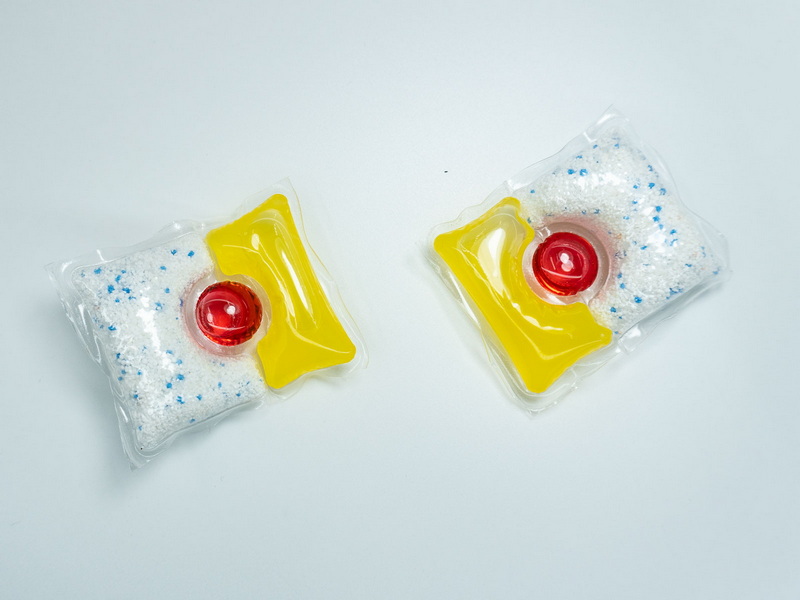
Modern dishwasher pods are small-scale examples of chemical and mechanical engineering working in harmony. Their structure typically includes three major layers:
1. Enzymatic Cleaner: Breaks down food residues like pasta starch, egg proteins, and baked-on cheese.
2. Oxygen-based Bleach Compound: Targets and removes stains while sanitizing dishes.
3. Rinse Aid Layer: Prevents water spots on glass and silverware by improving surface drying.
Some advanced pods, such as multi-chamber formulas, keep these ingredients separate until water activates them. The staggered dissolution improves cleaning efficiency, allowing each chemical to perform at the most effective stage of the washing cycle.
This precision chemistry not only improves dishwashing performance but also reduces waste. Since pods are pre-measured, there is no leftover residue or overuse. Moreover, cutting-edge technologies now allow pods to work effectively at lower water temperatures, saving both energy and time.
The environmental story of dishwasher pods is complex. Initially, they appeared to be a sustainable alternative to bulky plastic bottles. However, critics soon noted that PVA films — while technically water-soluble — could leave behind microscopic residues that persisted in wastewater. Depending on treatment methods, some films could degrade incompletely, releasing microplastics into the environment.
To combat this, detergent companies began reformulating their pod films using biodegradable plant-based polymers. Modern eco-friendly pods contain non-toxic surfactants, enzyme-rich formulas, biodegradable binders, and minimal packaging. Brands like Seventh Generation, Ecover, and Blueland have pioneered compostable or refillable pod designs that reduce plastic waste.
Additionally, because pods offer exact dosing, they limit chemical runoff into water systems. When paired with energy-efficient dishwashers, they contribute to lowering household resource consumption — an important shift in sustainable living practices.
Pods bring undeniable convenience, but they're not universally superior. For families with high dishwashing volumes, liquid or powder detergents may still be more cost-effective. Similarly, individuals who prefer to fine-tune their detergent amounts for partial loads might find pods too inflexible.
Pods also require proper storage to prevent premature dissolution. Moist environments like under-sink cabinets can cause the PVA film to weaken, sticking pods together or activating them unintentionally. Keeping pods in airtight containers ensures longer shelf life and optimal performance.
While pods cost more per wash, the trade-off lies in time saved and consistent results. Busy individuals, apartment dwellers, and those seeking cleaner storage often prefer pods despite the premium.
Dishwasher pods' rapid adoption was supported by powerful marketing campaigns. Rather than selling detergent as a chemical product, advertisers presented pods as *lifestyle upgrades*. Clean dishes became symbols of modern efficiency and care-free living.
Slogans emphasized intuitive use — “Pop it in and relax” — underscoring the idea that these small capsules represented not just soap but freedom from drudgery. Television ads and digital commercials displayed gleaming dishes emerging from modern machines, reinforcing consumer desire for simplicity, precision, and elegance.
The strategic alignment of convenience with identity proved effective. Dishwasher pods became associated with modern minimalism, and their branding emphasized both functionality and aspiration — two powerful motivators in consumer behavior.
The evolution of dishwasher pods is far from over. Industry leaders and startups alike are racing to create the next generation of detergents that combine performance, sustainability, and smart technology.
Upcoming innovations include AI-integrated dishwashers capable of communicating with detergent systems to adjust dosage based on load size or soil level. Bioenzyme technologies are being refined to allow effective cleaning at temperatures as low as 40°C, cutting energy use dramatically.
Manufacturers are also experimenting with powder-free pods that completely eliminate synthetic films. These new materials dissolve instantly and leave no trace behind. Some brands are even developing reusable pod shells, where consumers can refill detergent concentrate to reduce single-use waste.
As environmental regulations tighten, detergents will continue evolving toward plant-derived, phosphate-free, and carbon-neutral formulas. Smart dishwashing pods may become a connected ecosystem component in the sustainable kitchens of the future.
- Pre-1950s: Manual dishwashing using soap bars and natural abrasives.
- 1950s–1970s: Powdered detergents designed for early automatic dishwashers.
- 1980s–1990s: Introduction of liquid detergents and enzyme-based cleaning agents.
- Late 1990s–2000s: Commercial launch of dishwasher pods and tablets.
- 2010s–Present: Growth of multi-chamber pods, eco-friendly formulas, and biodegradable films.
This timeline illustrates humanity's pursuit of efficiency — each generation improving upon the last to save time, reduce effort, and protect the planet.
Beyond chemistry and design, dishwasher pods represent changing social values. They symbolize trust in automation — the willingness to let machines manage what once required human touch. For many, dishwashing pods reflect the balance between modernity and mindfulness.
Their history also mirrors household gender dynamics. Decades ago, dishwashing was often viewed as women's work. As appliances and detergents improved, they helped redistribute domestic labor, making daily chores easier for everyone. The dishwasher pod, in this way, is both a technological and cultural artifact — a product of innovation shaped by social evolution.
Dishwashers did not always have pods. Their existence marks a remarkable transformation in how people approach one of the most routine household tasks. From handmade soap flakes to liquid enzymes and ultimately to pre-measured capsules, dishwashing products have evolved alongside technology, culture, and sustainability awareness.
Today's pods embody precision and convenience — the outcome of decades of experimentation, chemistry, and design ingenuity. As the future leans toward smart kitchens and eco-centered living, dishwasher pods will likely continue to evolve, blending performance with planetary responsibility. The story of the pod is more than a lesson in cleaning — it's a reflection of human creativity and our continuous desire to make daily life more efficient and sustainable.

Dishwasher pods became commercially successful in the late 1990s and early 2000s. Brands like Finish and Cascade refined earlier tablet designs, using dissolvable films to deliver consistent cleaning.
Pods contain a pre-measured dose of detergent within a water-soluble capsule. This eliminates guesswork, avoids spillage, and ensures optimal performance without overuse or residue.
Yes, most modern pods are compatible with all updated dishwashers. However, very old machines or models without detergent cup compartments may require traditional powders or liquids.
Eco-friendly pods are made with biodegradable films and phosphate-free detergents. Some brands also use compostable packaging to reduce environmental footprint. Proper disposal and wastewater treatment are key to minimizing microplastic pollution.
You can make simple pods using baking soda, citric acid, and washing soda, but they lack the complex enzymes and finish agents present in commercial products. They work for light loads but may struggle with greasy or baked-on residue.


