
Views: 222 Author: Tomorrow Publish Time: 12-15-2025 Origin: Site


Content Menu
● The Science Behind How Pods Work
● The Outcome of Using Two Dishwasher Pods
● Why Your Dishes May Still Appear Dirty
● The Role of Water Hardness and Temperature
● Manufacturer Guidelines and Detergent Compatibility
● Best Practices for Effective Dishwasher Pod Use
● Alternatives When One Pod Isn't Sufficient
● The Environmental Impact of Extra Detergent Use
● Common Myths About Dishwasher Pods
● Safety Tips for Storing and Handling Dishwasher Pods
● How Often Should You Clean Your Dishwasher?
● Energy Efficiency and Cost Considerations
● FAQ
>> 1. What if I accidentally used two pods?
>> 2. Can I use half a pod for small loads?
>> 3. How can I tell if my pod isn't dissolving properly?
>> 4. Are pods safe for older dishwashers?
>> 5. What can I do to make glassware sparkle?
Modern dishwashers have transformed the way we handle kitchen cleanup, offering convenience, consistency, and time efficiency. Dishwasher pods—those small, highly concentrated, pre-measured detergent capsules—are central to this convenience. They eliminate the guesswork of dosing detergent, controlling mess, and maintaining optimal detergent use per wash. However, a common question arises among users: Can you use two dishwasher pods at once for a better clean?
At first glance, it may sound logical. More detergent, more cleaning power—right? Yet, that assumption can lead to undesirable outcomes. This article delves deeply into how dishwasher pods work, what happens when you use two instead of one, and smarter ways to boost cleaning efficiency without harming your appliance or your wallet.

Dishwasher pods, also known as capsules, tabs, or packs, are pre-measured detergent portions sealed in a soluble film that dissolves upon contact with water. Inside the pod, multiple cleaning agents work together to handle a range of food debris—from greasy pans to baked-on residue.
A single pod typically includes:
- Detergents to break down fats, grease, and proteins.
- Enzymes to digest starches and proteins into smaller, rinseable fragments.
- Oxygen-based bleach for stain removal and whitening.
- Rinse aid to prevent water spots and speed up drying.
- Water softening agents to counteract mineral buildup in hard water.
This compact design ensures that each cleaning cycle disperses the correct balance of cleaning ingredients at the proper time—something difficult to achieve with manual powder or liquid detergents. However, this precision also means that one pod is formulated for one wash. Adding a second disturbs the equilibrium, wasting detergent and potentially affecting your dishwasher's mechanics.
To understand why two pods are unnecessary—and even harmful—it helps to explore the chemical process that occurs during the wash cycle. Dishwasher pods are engineered to release detergent ingredients gradually, in alignment with the dishwasher's temperature changes and time stages.
1. Dissolution: At the beginning of the cycle, the pod's film breaks down under hot water, releasing initial detergent components.
2. Enzymatic Action: As water temperature rises, enzymes activate, breaking down proteins from eggs, dairy, and meats.
3. Bleach Activation: Mid-cycle, oxygen-based bleach tackles stains and discoloration.
4. Rinse-Aid Phase: During the final rinse, surfactants lower water surface tension, allowing it to sheet off dishes without leaving marks.
Each step occurs in a finely timed chemical sequence. Doubling the amount of detergent disrupts this balance, resulting in excessive chemical concentration that exceeds the rinse cycle's ability to flush it away effectively.
Adding an extra pod may appear harmless at first, but several potential consequences can arise:
- Excess Sudsing: Dishwashers are not built to handle foam. Over-sudsing may lead to leaks, clogged filters, and poor rinsing.
- Residue on Dishes: Too much detergent leaves streaks or a chalky film, especially noticeable on glassware.
- Rubber Seal Damage: High concentrations of detergent chemicals can degrade internal seals, door gaskets, or valves over time.
- Pump Strain: The motor and pump may overwork to manage excessive foaming, affecting long-term durability.
- Warranty Violations: Using products outside the manufacturer's guidelines can void warranties on both detergent and dishwasher.
When it comes to cleaning dishes, more detergent doesn't mean more power—it simply means more waste.
When one pod doesn't seem to deliver sparkling dishes, users often assume the detergent strength is to blame. In reality, poor cleaning results usually stem from other factors:
- Dirty filters: A clogged filter prevents debris from draining properly.
- Blocked spray arms: Clogged jets reduce water flow, meaning detergent isn't distributed evenly.
- Incorrect loading: Overcrowded racks obstruct detergent and water movement.
- Hard water: High mineral content causes cloudy glassware and spots.
- Improper cycle selection: Using a short or eco cycle for heavy soil fails to fully dissolve hardened grease or burnt food.
By identifying and fixing these issues, you can significantly improve cleaning results without the need for extra pods.
Water hardness and temperature directly influence detergent performance. In hard water areas, minerals like calcium and magnesium bind to detergent molecules, reducing their cleaning efficiency. If you live in such a region, you may notice cloudy glasses or persistent residue even when you follow instructions.
To counteract this:
- Use a rinse aid or water softener salt. These additives prevent minerals from settling onto dishes.
- Ensure adequate water temperature. Water below 120°F (49°C) can fail to fully dissolve the pod, leaving streaks or soap spots.
- Periodically run a cleaning cycle. A monthly hot wash with a dishwasher cleaner removes internal mineral build-up.
Addressing water quality ensures the chemical efficiency of a single pod works as designed.
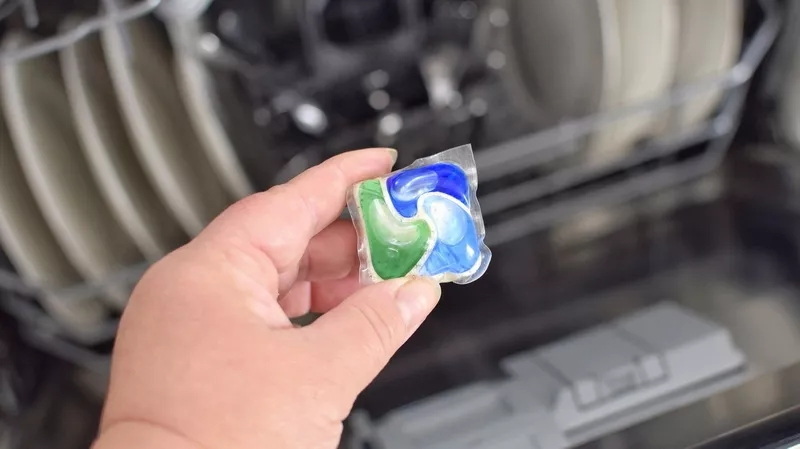
Dishwasher manufacturers such as Bosch, Whirlpool, and KitchenAid meticulously test detergent formulations to ensure appliance compatibility. They consistently recommend using one pod per cycle—no more, no less.
Detergent companies echo the same advice. Leading brands like Finish, Cascade, and Seventh Generation design pods for universal compatibility and optimal detergent dispersion. Each pod contains enough enzyme and detergent power to tackle a full load's worth of grime under typical household conditions.
If your manufacturer's guide specifies compatible detergent types (such as powder, gel, or pod), always adhere to that recommendation. Ignoring it could lead not just to poorer results but also to mechanical wear.
To maximize performance while keeping your dishwasher healthy, consider these practical tips for daily use:
1. Load sensibly. Ensure good water circulation by spacing dishes evenly. Plates face the center, and cups face down.
2. Remove food scraps. Scrape excess food but avoid pre-rinsing; enzymes in detergent need organic residue to activate effectively.
3. Always place the pod in the detergent dispenser. Dropping it directly on the rack or at the bottom can cause premature dissolving.
4. Check the dispenser door. Ensure it opens freely and isn't blocked by large objects.
5. Use hot water. Start the cycle after running the kitchen tap until the water feels hot to the touch.
6. Maintain your dishwasher. Clean filters and seals regularly to prevent odorous buildup.
When you consistently follow these steps, a single pod easily achieves the same cleaning power that many people mistakenly attempt to double.
If, even after proper maintenance and cycle selection, dishes still seem dull, try these strategies instead of using two pods:
- Switch pod brands. Some pods perform better in certain water types or soil loads.
- Add a rinse booster. Liquid rinse aids improve drying and minimize spotting.
- Use cycle-specific boosters. Certain detergents are compatible with additive boosters such as degreasers or pre-wash enhancers.
- Run a hot or heavy cycle. Heavier cycles extend wash time and improve detergent activation.
- Clean your dishwasher interior. Once a month, use a dedicated dishwasher cleaner to remove grease, soap residues, and hard water deposits.
These adjustments address root causes rather than compensating with extra detergent.
Every extra pod used unnecessarily adds more chemicals to wastewater systems. Overuse increases phosphate and surfactant flow, which contributes to environmental degradation. Furthermore, excessive use drives up household costs and detergent manufacturing waste.
Sustainable usage means adhering to manufacturer dosages, selecting eco cycles, and maintaining the dishwasher in good condition. When handled properly, a modern dishwasher with a single pod uses less water and energy than handwashing—making it both eco-friendly and economical.
Understanding how dishwashers function means filtering out common urban myths. Here are a few misconceptions debunked:
- Myth 1: Two pods clean faster.
False. Cleaning duration depends on cycle design and water heat, not detergent quantity.
- Myth 2: Pods can be cut in half for small loads.
False. Cutting alters the pod's protective seal and can cause premature dissolving or incorrect detergent balance.
- Myth 3: More bubbles indicate better cleaning.
False. Suds interfere with washers, which rely on water jets, not foam, to remove debris.
- Myth 4: Using different pod brands together improves results.
False. Mixed formulations can react chemically, reducing effectiveness or leaving stains.
- Myth 5: Pod placement doesn't matter.
False. Placing pods outside the dispenser prevents timed release, making cleaning uneven.
The takeaway: More detergent or cross-brand mixing does not equal cleaner dishes—it simply introduces new cleaning inconsistencies and potential mechanical stress.
Dishwasher pods may look harmless, but they contain concentrated chemicals. Safe handling is essential, especially in homes with small children or pets.
- Store out of reach. Keep pods in a high cabinet or locked drawer.
- Keep them dry. Moisture can cause pods to clump or dissolve prematurely.
- Use the original container. Do not transfer pods into jars or other unlabeled containers that resemble candy.
- Avoid touching with wet hands. Moisture triggers pod dissolution.
- Dispose properly. If a pod bursts, wipe up immediately and rinse the area thoroughly.
Practicing safe storage and handling ensures both effective performance and household safety.
Even the best detergent cannot compensate for a dirty appliance. Food particles and soap scum can accumulate over time, reducing water pressure and trapping odors. A regular cleaning schedule keeps performance optimal.
- Every week: Remove and rinse the filter under hot water.
- Every two weeks: Wipe the door seals and detergent compartment with vinegar and a microfiber cloth.
- Every month: Run an empty cycle with a dishwasher cleaner or one cup of distilled vinegar on the top rack.
- Every three months: Inspect spray arms and unclog holes using a toothpick or fine pin.
Consistent cleaning not only prevents grime from transferring back onto dishes but also extends appliance lifespan.
Using one pod per load has economic and ecological advantages. Most leading brands design pods so that one capsule provides full detergent coverage even for large family loads. Doubling up doubles the cost per wash unnecessarily.
Consider this: using one pod per day amounts to 365 pods per year. Doubling means 730 pods annually—twice the price without any proven benefit. Moreover, extra detergent requires more rinsing, increasing water and energy consumption per cycle.
Over time, these habits not only strain your dishwasher but also reflect on your energy bill and environmental impact. The smarter and more cost-effective choice remains to use one pod per cycle, only when the dishwasher is full.
So—can you use two dishwasher pods at once? While nothing physically prevents it, doing so is counterproductive. More detergent does not equal cleaner dishes; instead, it risks over-sudsing, chemical buildup, appliance damage, and unnecessary expense. Dishwasher pods are engineered for precision—each capsule contains just the right amount of power for one full wash.
Focusing on correct placement, proper loading, regular cleaning, and water quality yields far better results than doubling detergent. In short, one pod is not only enough—it's ideal.
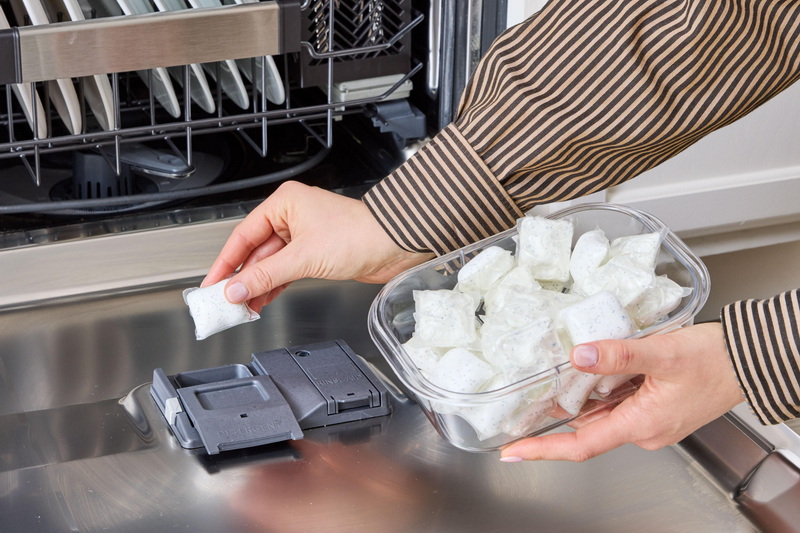
If you've already run the dishwasher with two pods, you may see soap residue or excess foam. Run an empty rinse cycle with hot water to remove leftover detergent.
No. Cutting a pod releases detergent prematurely and dissolves unevenly. If you frequently run half loads, use adjustable dosing gels or powders instead.
If you find pod remnants, check that the water is hot enough, the dispenser door isn't blocked, and the spray arms spin freely.
Generally, yes. However, older machines with weaker spray pressure or inconsistent heating may perform better with powder or liquid detergent instead of pods.
For spotless glass, use a rinse aid, load glasses on the top rack, and avoid mixing aluminum or steel items that cause cloudiness through oxidation.


