
Views: 222 Author: Tomorrow Publish Time: 12-01-2025 Origin: Site


Content Menu
● Composition of Laundry Detergent Pods
● Manufacturing Process of Laundry Detergent Pods
>> 1. Film Feeding and Formation
>> 2. Filling
>> 3. Sealing
>> 6. Packaging
● Safety and Environmental Considerations
● Advantages of Laundry Detergent Pods
● FAQ
>> 1. What material is used for the outer film of laundry detergent pods?
>> 2. How do enzymes in laundry pods improve cleaning?
>> 3. How is the detergent mixture sealed inside the pods?
>> 4. Are laundry detergent pods safe to use in all washing machines?
>> 5. What precautions are necessary when handling laundry detergent pods?
Laundry detergent pods are small, pre-packaged packets designed to simplify the laundry process by holding highly concentrated detergent components inside a water-soluble film. They combine various cleaning agents within a protective outer layer that dissolves in water, effectively releasing the detergent contents to clean clothes efficiently and conveniently.
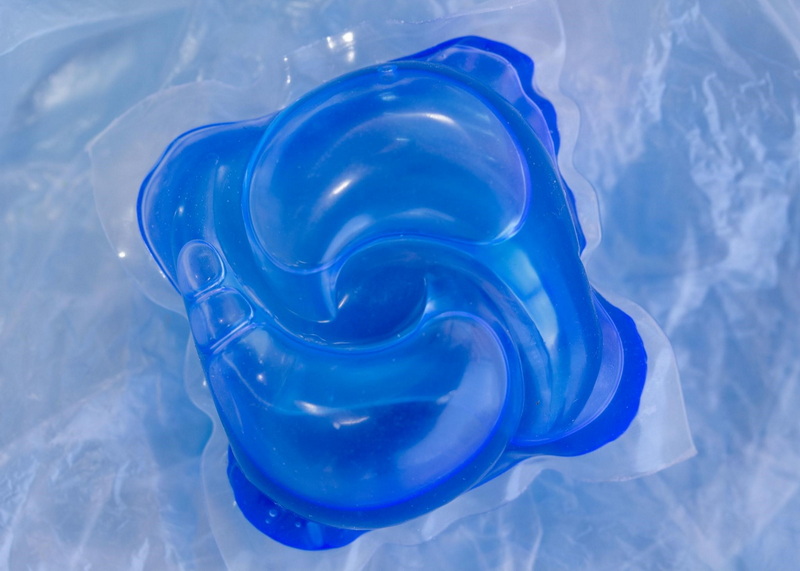
The fundamental components of laundry detergent pods include:
- Water-Soluble Film: Typically made of polyvinyl alcohol (PVA), this biodegradable polymer forms the outer shell of the pod. PVA dissolves completely in water during the wash cycle without leaving residue.
- Surfactants: These are the primary cleaning agents responsible for removing dirt, grease, and stains. Common types include anionic surfactants such as alkylbenzene sulfonates and non-ionic surfactants, which lower surface tension for better cleaning.
- Enzymes: Pods often contain enzymes like proteases, amylases, lipases, cellulases, and mannanases. These biologically active molecules break down proteins, starches, fats, and other stains, enhancing cleaning efficiency at lower temperatures.
- Builders: Ingredients such as sodium carbonate and sodium bicarbonate work to soften water and improve surfactant performance by managing mineral content.
- Solvents: Compounds like propylene glycol act as stabilizers and help dissolve detergent ingredients for a consistent formulation.
- Fragrances and Dyes: Added for consumer appeal, these provide the pods with pleasant scents and attractive colors.
- Additional Additives: Some formulations include optical brighteners to enhance fabric whiteness and fabric softeners to improve tactile feel and reduce static cling.
The creation of laundry detergent pods is a complex, highly automated process carried out with precision machinery in multiple stages:
The production begins with a roll of water-soluble PVA film being fed into a forming machine. Through thermoforming or vacuum forming, this film is shaped into small pockets or cavities that will house the detergent liquid. The molds are highly precise, often forming pods of various shapes and sizes, including multi-chamber pods that separate ingredients to improve stability and performance.
Once the pockets are formed, a measured amount of concentrated detergent liquid or gel is injected into each cavity via nozzles. This precise filling ensures consistent dosage per pod, preventing wastage and maintaining quality control. The detergent is kept at controlled temperatures to maintain optimal viscosity for smooth filling.
After filling, a second layer of PVA film is laid over the filled pockets. Heat and pressure sealing methods (either heated rollers or ultrasonic sealing) bond the two film layers, enclosing the detergent securely within the pod. The sealing process is carefully controlled to create a leak-proof and tamper-resistant pod that will easily dissolve during washing.
The continuous film containing multiple sealed detergent pods is then cut into individual units using sharp, precise cutting devices that prevent damage to the delicate film. These individual pods are then inspected for quality assurance.
Automated systems inspect each pod for proper sealing, fill levels, and integrity. Pods with defects are removed to maintain consistent quality standards.
Finished pods are packaged into containers such as resealable pouches, plastic tubs, or boxes designed to protect them from moisture and damage. Packaging often includes child-resistant features as a safety precaution due to the toxic nature of concentrated detergent chemicals.
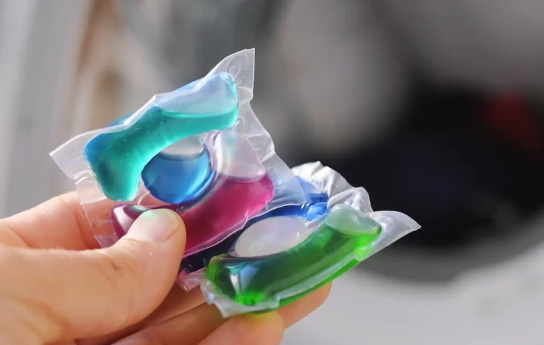
Laundry detergent pods offer several benefits, including convenience, precise dosing to minimize waste, and reduced packaging volume relative to liquid detergents. However, their highly concentrated contents pose safety risks, especially to children if ingested or mishandled. Therefore, secure storage and clear labeling are crucial.
Environmental concerns focus on the biodegradability of PVA films and the chemical ingredients inside. While PVA dissolves readily in water during laundry, it may not degrade quickly in all environments, prompting ongoing research into more eco-friendly film alternatives. Moreover, concentrated detergent formulas reduce water and raw material consumption during production and transport, lowering the overall environmental footprint.
- Convenience: Pre-measured pods eliminate the need for measuring detergent, making laundry simpler and faster.
- Portability: Compact design makes storage and transportation easy.
- Performance: Concentrated formulas ensure effective cleaning, even at lower temperatures, aided by enzymes and advanced surfactants.
- Reduced Waste: Precise dosing minimizes overuse and environmental harm.
- Modern Packaging: Child-resistant packaging enhances safety in households.
Laundry detergent pods represent an innovative fusion of chemistry and packaging technology. Their core includes a highly concentrated detergent mix featuring surfactants, enzymes, and other additives enclosed within a water-soluble PVA film that dissolves efficiently during washing. The manufacturing process involves meticulous steps from film formation to precise filling, sealing, cutting, and quality checks. Although pods simplify laundry while promoting efficient use and reducing waste, safety and environmental factors remain key considerations driving ongoing product improvements.
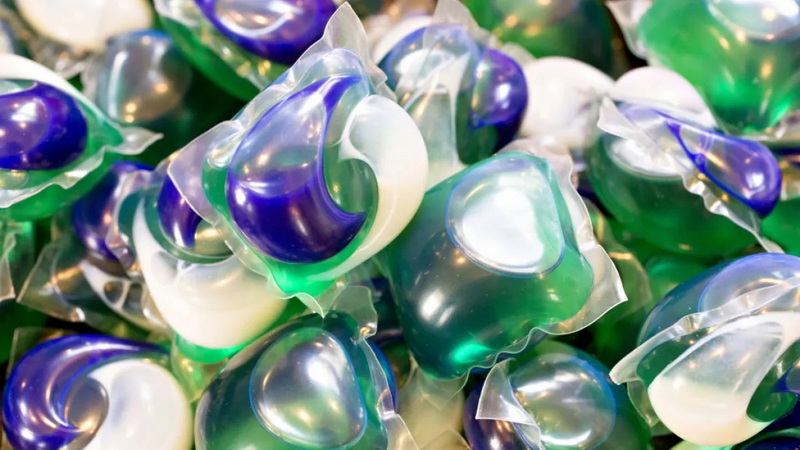
The outer film is made from polyvinyl alcohol (PVA), a biodegradable, water-soluble polymer that dissolves completely in the wash.
Enzymes break down tough stains such as proteins, starches, fats, and cellulose, allowing effective cleaning even at lower temperatures.
The detergent is enclosed between two layers of PVA film, sealed with heat and pressure to create a leak-proof, tamper-resistant pod.
Yes, they are compatible with most machines, including high-efficiency models, but users should always follow the manufacturer's instructions for best results.
Pods should be stored out of reach of children and pets, used as directed, and not punctured or handled outside the washing machine to avoid exposure.
[1](https://www.polyva-pvafilm.com/how-does-laundry-detergent-pods-packaging-machine-producing-pods.html)
[2](https://www.ufinechem.com/how-do-they-make-laundry-pods.html)
[3](https://stppgroup.com/the-science-and-safety-of-laundry-detergent-pods-a-comprehensive-guide/)
[4](https://www.detergentworld.com/The-Production-Process-of-Laundry-Detergent-Pods-Factory-Revealed-id40561456.html)
[5](https://www.youtube.com/watch?v=sEkmDXQjKw0)
[6](https://www.polyva-machine.com/how-do-linear-detergent-pods-making-machines-work.html)
[7](https://unimasses.com/index.php/en/blog-and-news-of-laundry-pods/knowledge/how-the-laundry-pods-are-made-how-to-make-laundry-pods-or-laundry-capsules.html)
[8](https://www.youtube.com/watch?v=ku97B4Yqhao)
[9](https://www.youtube.com/watch?v=36YsuufrM0w)
[10](https://www.pvapodsmachine.com/blog-pva-packaging-machine-11206/How-the-Detergent-Pods-Factory-Works-11913817.html)


