
Views: 222 Author: Tomorrow Publish Time: 12-14-2025 Origin: Site


Content Menu
● The Structure of Laundry Pods
● Polyvinyl Alcohol: The Magic Ingredient
● Factors Affecting Dissolution Speed
>> 3. Agitation
>> 4. Placement
● Environmental Aspect of PVA Films
● Performance in Different Washing Conditions
● Innovation in Multi-Chamber Pods
● Handling and Safety Guidelines
● Why Pods Don't Melt Immediately When Touched
● Cleaning Mechanism After Dissolution
● Comparing Pods to Other Detergents
● The Future of Water-Soluble Packaging
● FAQ
>> 1. How long does it take for laundry pods to melt?
>> 2. Can laundry pods be used in front-loading washers?
>> 3. Do leftover residues mean pods didn't work?
>> 4. Is polyvinyl alcohol film safe for the environment?
>> 5. Can pods dissolve in other liquids besides water?
Laundry soap pods have revolutionized modern cleaning routines. Compact, powerful, and easy to use, they eliminate the need for bulky detergent bottles and messy measuring cups. Yet, one curious aspect often catches people's attention: why do laundry soap pods melt in water?
At first glance, it looks like magic—a tiny plastic-like packet seemingly vanishing in the wash. But behind this everyday convenience lies a fascinating combination of chemistry, engineering, and material science. Understanding how and why laundry pods dissolve offers insight into sustainable design and the physics of cleaning.
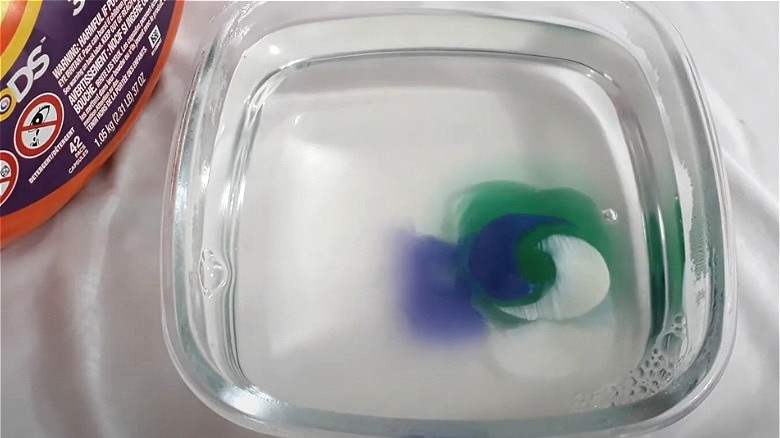
Laundry pods are multitasking marvels of chemistry. Each one is carefully structured to perform several roles in a single wash. Typically, a laundry pod comprises:
1. An outer film.
Made from water-soluble polymers, this thin layer encapsulates the cleaning ingredients and ensures safe handling before use.
2. Concentrated detergent formulation.
Inside the capsule lies a mix of surfactants, enzymes, and cleaning boosters precisely measured for one load.
3. Sealing and packaging system.
The pod's edges are sealed under controlled conditions using heat and pressure to prevent leaks or air entry.
This sophisticated design helps reduce product waste, improves dosing accuracy, and enhances cleaning performance—delivering convenience without compromising scientific precision.
The outer casing of most laundry pods is made from polyvinyl alcohol (PVA), a synthetic polymer that's deceptively plastic-like but fully water-soluble. PVA is unique because it forms strong hydrogen bonds with water molecules, allowing the film to weaken and disperse efficiently once wet.
When the pod enters the washing machine, water begins interacting with the molecular structure of the film. The -OH (hydroxyl) groups on the PVA chain attract water molecules through hydrogen bonding. As water penetrates deeper, these molecular interactions reduce the film's internal cohesion, causing it to dissolve completely.
In essence, the “melting” you see is not thermal melting but molecular dispersion—a process driven by solubility rather than heat. The film doesn't physically melt like wax or plastic; instead, it breaks down at the chemical level until it's indistinguishable from water.
Although laundry pods are engineered for consistent performance, several factors influence how quickly the PVA film dissolves.
Higher temperatures increase molecular activity, helping the film dissolve faster. In cold water, dissolution takes longer but still occurs due to optimized polymer formulation.
Hard water can sometimes slow down dissolution because it contains calcium and magnesium ions that interact with detergent molecules, slightly changing how the film disperses.
Mechanical motion in the washer helps distribute water evenly around the pod, ensuring uniform exposure and faster release of detergent.
Pods should always be placed directly in the drum before adding clothes. Putting them in detergent drawers might restrict water flow and delay dissolution.
Understanding these factors helps users make the most of their pods under different wash conditions.
Solubility is governed by the principle of “like dissolves like.” PVA, being hydrophilic, strongly attracts polar water molecules. When immersed, water molecules penetrate the polymer matrix and push apart the molecular chains, leading to dispersion.
This is similar to how sugar dissolves in tea—the solute's bonds weaken as it interacts with the solvent. However, in the case of laundry pods, the process involves polymer hydration, swelling, and eventual breakup.
The end result is complete dissolution without residue. Unlike common plastics, PVA doesn't just float or soften—it integrates into the wash water chemically.
A frequent concern among environmentally conscious users is whether these films truly biodegrade. Studies indicate that PVA can be broken down by microorganisms under the right conditions. Once dissolved in water, it can decompose into carbon dioxide, water, and non-toxic compounds.
Municipal wastewater treatment plants often contain the necessary bacteria and aerobic conditions to achieve full biodegradation. However, the rate depends on temperature, oxygen levels, and microbial diversity.
To further improve sustainability, many manufacturers now use modified PVA blends that break down faster and have lower environmental footprints. Research in green chemistry continues to refine these materials, advancing toward films that biodegrade efficiently even outside treatment facilities.
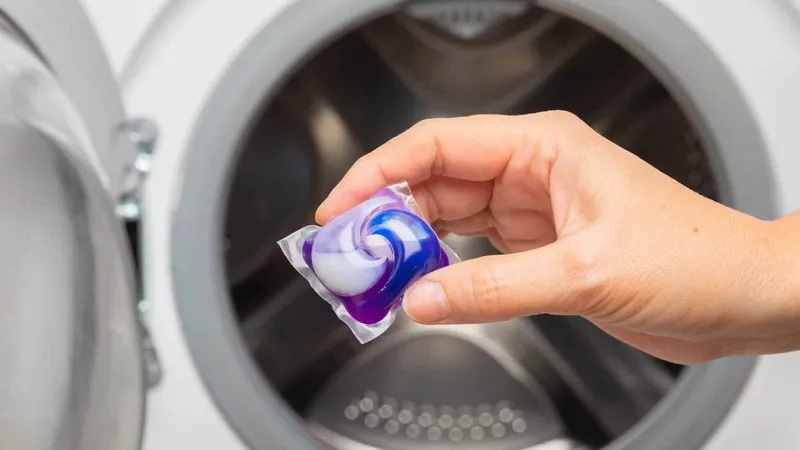
Laundry pods are designed to perform well in both hot and cold cycles, but understanding how each condition affects the chemistry enhances user results.
- Hot water cycles dissolve pods almost instantly. The heat accelerates molecular motion, instantly weakening hydrogen bonds in PVA.
- Warm water cycles strike a balance, offering great dissolution speed and energy efficiency.
- Cold water cycles are more environmentally friendly, and modern pods include optimized films and enzymatic detergents that activate even at low temperatures.
With energy efficiency becoming a household priority, cold-water pods demonstrate how formulation science continues to evolve alongside sustainability goals.
Newer laundry pods contain more than one chamber within the same dissolvable film. Each chamber holds separate cleaning agents—such as oxygen bleach, stain removers, or fabric enhancers—that release sequentially as the film dissolves.
This advanced design prevents chemical reactions between ingredients during storage and ensures that specific components enter the water at optimal moments. For example, one chamber may release enzymes early to break down organic stains, while another releases brighteners later in the cycle for added fabric luster.
Because laundry pods contain concentrated detergents, careful handling is essential. Since the film dissolves quickly with moisture, contact with wet or damp hands can trigger premature softening. To maintain safety and prevent accidents:
- Always handle pods with dry hands.
- Store pods in sealed containers out of reach of children and pets.
- Avoid puncturing or cutting pods.
- Don't mix them with other cleaning products or liquids.
Following these precautions ensures longevity and reduces the risk of accidental exposure.
Many people notice that pods don't melt when touched with dry hands but begin to soften if fingers are slightly wet. This is because PVA films require a threshold amount of water to trigger molecular dispersion. The water from slightly wet hands may begin short-term surface dissolution, but not enough to break the polymer's integrity.
In contrast, submersion in a washer provides sustained exposure to large amounts of water, meeting the conditions needed to dissolve the pod fully.
Once the film dissolves, the concentrated detergent mixes with water to form an active cleaning solution. Several chemical components start working simultaneously:
- Surfactants lower water's surface tension, allowing it to penetrate fabric fibers.
- Enzymes break down organic stains such as proteins, fats, and starch.
- Builders soften hard water, improving detergent efficiency.
- Brighteners enhance the visual appearance of washed fabrics.
Because the film ensures precise dosing, the balance of these components is optimized for consistent performance across different wash sizes and fabric types.
Traditional powders and liquids remain popular, but pods offer distinct advantages in precision and convenience. A side-by-side comparison highlights why pods have become so favored:
| Feature | Pods | Liquid Detergent | Powder Detergent |
|---|---|---|---|
| Dosing accuracy | High | Medium | Low |
| Mess-free use | Yes | Moderate | No |
| Residue risk | Minimal | Low | Possible |
| Storage convenience | Compact | Bulky | Bulky |
| Environmental efficiency | High with PVA film | Depends on packaging | Varies greatly |
These differences underline that pods aren't just a marketing gimmick—they reflect genuine innovation in detergent engineering.
After the pod dissolves completely, the detergent disperses evenly in the wash water. The polymer film, now molecularly separated, remains suspended and eventually flows out with rinse water. In wastewater treatment facilities, aerobic bacteria break it down into simpler molecules. This final step ensures minimal environmental residue and aligns with global goals for sustainable manufacturing and biodegradable materials.
PVA films have paved the way for broader applications in water-soluble packaging. Beyond laundry, industries use similar biodegradable films for dishwashing pods, hospital cleaning sachets, and agricultural chemicals.
In the future, research may create films that dissolve under programmable conditions—responding to pH, temperature, or even water hardness. Such innovations aim to further minimize microplastic concerns and enhance biodegradability without compromising product stability.
Laundry pods melt in water because of their hydrophilic polyvinyl alcohol shell, which dissolves at the molecular level through hydrogen bonding. This scientific innovation enables controlled release of detergent while ensuring safety, precision, and environmental responsibility.
The process combines advanced polymer chemistry with practical design to make washing easier and cleaner. By understanding how these pods function—from chemical breakdown to environmental biodegradation—consumers can use them more effectively and sustainably. Each pod is a small but extraordinary example of how science can turn convenience into eco-conscious technology.
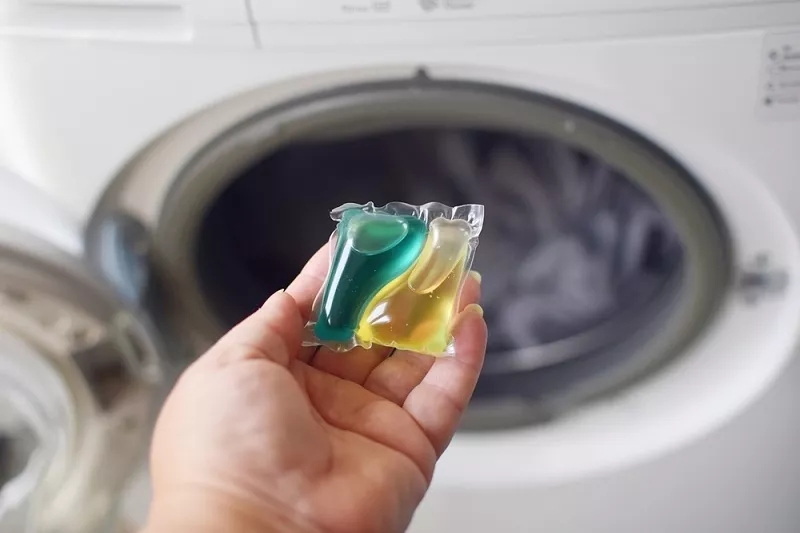
Generally, pods fully dissolve within 30 seconds to 2 minutes, depending on water temperature and machine agitation. Hot water dissolves them fastest.
Yes. Pods perform perfectly in both front-load and top-load machines. Place the pod directly into the drum before adding clothes for best results.
Residues are usually caused by cold water, overloading, or restricted water flow. Ensure there's enough water circulation so the film can dissolve entirely.
PVA is biodegradable under appropriate conditions and non-toxic once dissolved. Many brands use improved formulas that further reduce ecological impact.
No. PVA films are specifically formulated to dissolve in water. In other liquids like oils or alcohol, the film remains intact and will not degrade.


