
Views: 222 Author: Tomorrow Publish Time: 12-14-2025 Origin: Site


Content Menu
● The Technology Behind Laundry Pods
● The Cost of Ingredients and Concentration
● Packaging and Environmental Considerations
● Branding, Marketing, and Consumer Psychology
● Production Scale and Supply Chain Complexity
● Convenience and Waste Reduction
● Market Trends and Regulatory Pressures
● Comparative Cost Perspective
● Innovation and Future Outlook
● FAQ
>> 1. Are laundry pods more effective than liquid detergent?
>> 2. Can laundry pods save money overall?
>> 3. Are laundry pods bad for the environment?
>> 4. Why do laundry pods pose ingestion risks?
>> 5. What's the best way to store laundry pods?
Laundry pods have revolutionized the way people handle one of the most common household chores. With their compact form, pre-measured doses, and colorful appeal, they offer a modern alternative to traditional detergents. Yet for all their convenience, many consumers can't help but ask a simple question: why are laundry pods so expensive?
Compared to traditional powders or bottles of liquid detergent, pods can cost nearly double per load. To understand the price difference, we must dig into the unseen forces behind production, chemistry, marketing, and consumer psychology. Laundry pods are not just a cleaning product—they are the outcome of intricate scientific engineering, sophisticated logistics, and strategic branding.
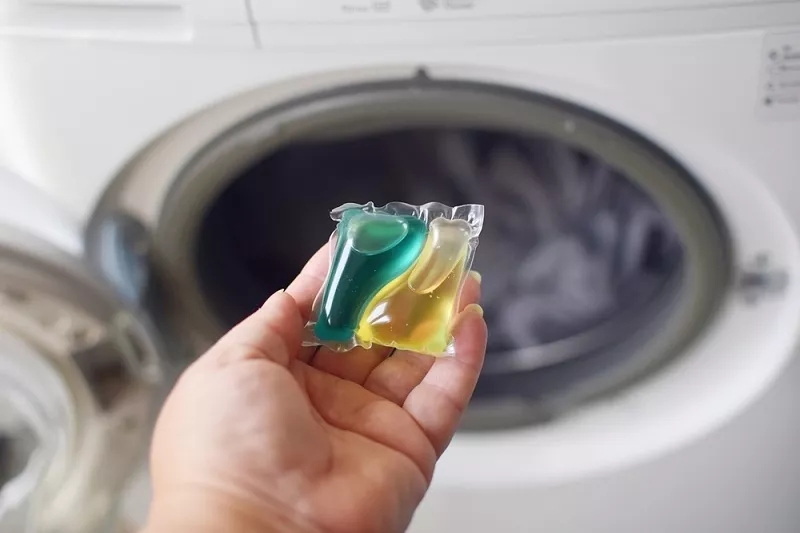
At first glance, laundry pods may seem simple: small packets of pre-dosed detergent that melt away in water. In reality, this innovation results from years of research and precision engineering. Each pod is composed of several sealed chambers, separating different chemical ingredients to prevent unwanted reactions before use.
The pod's outer layer is made of polyvinyl alcohol (PVA), a special water-soluble film. Producing this film poses unique challenges—it must remain durable in storage yet dissolve fully during washing at various temperatures. Achieving this balance requires advanced material science and continuous quality control. Even slight fluctuations in moisture during production could compromise the film, leading to leakage or incomplete dissolution. This delicate process necessitates sophisticated machinery and strict environmental conditions, all of which raise the manufacturing cost.
Moreover, the automated filling systems that encapsulate detergent into PVA membranes must operate with extreme precision. Unlike standard detergent bottling, which tolerates small measurement variances, pod manufacturing demands micro-level dosing accuracy. These production lines, often controlled by robotics, represent a large capital investment and require ongoing maintenance and specialized labor.
Another major factor behind the elevated price of laundry pods is the chemical sophistication of their formula. Each pod contains highly concentrated cleaning ingredients combined in a formula designed for maximum performance with minimal volume.
Traditional detergents rely on dilution—they contain a significant percentage of water. In contrast, pods are engineered to pack powerful, concentrated surfactants and enzymes into a compact space. The inclusion of multiple enzyme types—such as proteases (for protein stains), amylases (for starch-based stains), and lipases (for fat and oil stains)—increases cleaning efficacy but also production complexity and cost.
These enzymes are delicate biological molecules that require stabilization to function over long storage periods. Techniques that prevent enzyme degradation—like encapsulation or the use of stabilizing agents—add further production expense. Advanced surfactants, capable of dealing with modern synthetic fabrics and washing at lower water temperatures, are also more expensive than generic formulations found in bulk detergent.
On top of that, premium pods incorporate fragrance capsules, color protectants, and fabric softening agents. Each additive demands unique chemical balancing to maintain stability within the PVA shell. Unlike liquid or powder detergents that mix all components freely, pods must keep ingredients separated until release, requiring sophisticated gel layering and partition design.
Packaging contributes significantly to pricing as well. Pod manufacturers have learned that the contents are vulnerable to moisture, air, and accidental puncture, requiring reinforced containers. Many brands now use child-proof packaging, moisture-absorbent lining, and resealable locks to reduce safety risks and maintain product integrity.
The development of secure packaging became a regulatory necessity after accidental ingestion incidents involving children and pets. Today's laundry pod packages often include opaque, sturdy containers with safety labels, bitter-tasting coatings on pods, and lockable lids—each feature adding a layer of cost.
Simultaneously, environmental pressures have reshaped industry priorities. Many consumers demand eco-friendly packaging and biodegradable pod films. While PVA is technically biodegradable under certain wastewater treatment conditions, improvements toward complete biodegradability require ongoing investment. Research into compostable or plant-based alternatives continues, but these innovations are not yet cheap or widely scalable.
Furthermore, the sustainability of production extends beyond packaging. Manufacturers invest in sourcing sustainable surfactants derived from vegetable oils, reducing carbon footprints, and upgrading waste-water management systems to meet stricter ecological laws. This commitment to green practices, although commendable, pushes operational costs higher.
The marketing power behind laundry pods is immense—and costly. Major producers like Procter & Gamble (Tide), Henkel (Persil), and Unilever (OMO) spend millions every year on advertising campaigns to highlight convenience, performance, and lifestyle appeal. The sleek, colorful design of the pods themselves is part of the brand identity—they project an image of sophistication and efficiency.
Marketing also relies heavily on consumer psychology. Pods are deliberately positioned as “premium convenience” items rather than essentials. By charging higher prices, brands reinforce the perception that pods are advanced and superior cleaning solutions. This perception is further bolstered through influencer marketing, online demonstrations, and in-store visuals.
Price, in this sense, also becomes a signal of quality. Consumers often associate higher cost with better performance or eco-friendliness, even when cost differences primarily stem from packaging or production expenses. This pricing strategy helps companies maintain differentiation in a saturated detergent market.
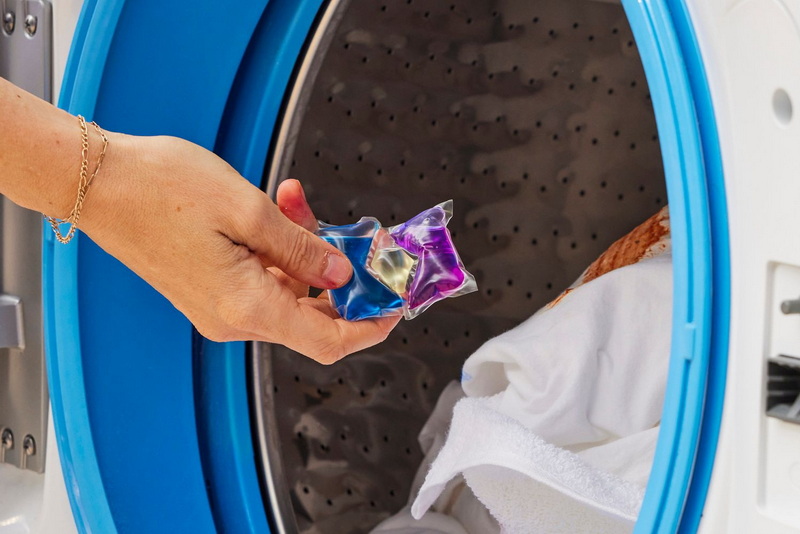
Unlike bottled detergent or powder, which benefit from generations of mass-production optimization, pods require specialized equipment and materials. This limits scalability. Smaller production batches, temperature-controlled environments, and costly PVA sourcing keep overall output costs high.
Distribution logistics present another challenge. Laundry pods are light but relatively fragile, demanding careful packaging during shipping. Heat or humidity during transit can deform pods or cause them to fuse together, resulting in product loss. To combat this, manufacturers use moisture-absorbing inserts, advanced sealing materials, and climate-controlled storage—all additional overhead costs.
The global supply chain also affects raw material prices. Surfactants derived from petroleum or plant oils fluctuate with global market trends. Enzyme production, which often depends on biotechnological fermentation processes, also faces supply limitations. When feedstock prices rise or production plants face disruptions, the cost is directly reflected in the retail price of pods.
Perhaps the most significant justification for the high price is convenience. Pods simplify the laundry process to a single step: throw one in the washer, and you're done. There's no mess, no measuring, and no risk of overdosing detergent, which can harm clothes or leave residue.
From a consumer behavior standpoint, this simplicity is revolutionary. In modern busy households, people often trade money for time and ease. The pre-measured dose avoids waste, making pods more eco-efficient in certain usage patterns. While the cost per load is higher, the cost per effective wash can sometimes equalize when factoring in reduced waste and fewer rewashes.
Moreover, pods contribute to space-saving storage and portable convenience, particularly for urban living. These subtle lifestyle benefits, though intangible, influence purchasing decisions and justify a pricing premium for many customers.
Safety regulations, environmental standards, and evolving consumer preferences continuously shape pod manufacturing. In the U.S. and Europe, regulatory bodies mandate strict packaging designs and labeling protocols to ensure child safety, dramatically increasing compliance costs.
Environmental policy also pushes detergent makers to reduce water pollution and design microplastic-free products. Companies must reformulate detergents using biodegradable compounds and low-impact surfactants. This means rerunning safety tests, stability checks, and efficacy trials for every reformulation. These regulatory hurdles consume years of R&D investment, which eventually factors into shelf price.
The global shift toward “clean” and “green” products drives companies to develop hypoallergenic, plant-based, or fragrance-free pod variants. While beneficial for consumers with sensitivities, these formulations use less common ingredients and eco-certified materials, which come at a premium.
To quantify cost differences, consider average price per load:
- Powder detergent: $0.10–$0.15 per load
- Liquid detergent: $0.20–$0.25 per load
- Pod detergent: $0.35–$0.50 per load or higher
At first glance, pods seem the priciest option. However, users who typically overpour liquid detergent might unintentionally double their cost per load; thus, pods may represent a form of controlled efficiency. They prevent excess use, reduce residue buildup in clothing, and minimize environmental impact from detergent runoff.
Still, for large families doing multiple laundry loads weekly, these differences accumulate rapidly. As a result, laundry pods tend to serve a more convenience-driven than cost-conscious demographic. Sales data supports this, showing that pods dominate in urban and higher-income segments, while bulk detergent remains popular in large households.
The detergent industry continues to evolve, and laundry pods stand at the forefront of innovation. Emerging technologies aim to make pods even more environmentally friendly and efficient. Scientists are developing biodegradable films made from seaweed cellulose, enzyme-encapsulated microbeads, and carbon-neutral detergents derived from renewable energy processes. Future pods may even incorporate AI-powered washing machine sensors, adjusting dosing automatically for fabric type and load size.
As technology advances and production processes scale up, pod prices might gradually decline. However, as long as convenience, sustainability, and premium branding remain desirable traits, pods are likely to maintain a higher price bracket than traditional detergents.
Laundry pods represent much more than a flashy alternative to detergent bottles—they embody the intersection of chemistry, convenience, and modern branding. Their elevated price stems from numerous factors: complex manufacturing, high-quality concentrated formulas, specialized packaging, environmental compliance, and psychological marketing strategies. Each of these elements contributes to making laundry pods a luxury of modern domestic life.
For some consumers, the cost is a small price to pay for the convenience of precision dosing, clean storage, and consistent results. For others, especially larger households, traditional detergents still make more economic sense. Ultimately, the high price of laundry pods is a reflection of their complexity—each capsule symbolizing years of innovation, stringent safety measures, and the enduring human desire for time-saving solutions.

Yes, in many cases. Laundry pods contain concentrated cleaning agents and multiple enzyme types designed to dissolve evenly in water, providing consistent cleaning performance. Their precision dosing ensures the right mix of detergent and stain remover for each load.
While the upfront cost per pod is higher, pods can save money indirectly by preventing detergent waste and maintaining wash consistency. Households that typically use excess detergent may find pods deliver balanced costs in the long run.
Pods pose some environmental concerns due to PVA films, which may not fully biodegrade in all wastewater systems. However, many companies invest in greener alternatives, reducing ecological footprints through plant-based films and eco-friendly surfactants.
Their bright colors and candy-like appearance can attract children or pets. To counter this, manufacturers add bitter-tasting coatings, warning labels, and child-resistant packaging. Education and safe storage remain vital for prevention.
Store pods in a cool, dry place away from humidity and sunlight. Always keep them sealed within their original packaging and out of reach of children or pets to prevent damage and accidental ingestion.


