
Views: 222 Author: Tomorrow Publish Time: 12-12-2025 Origin: Site


Content Menu
● Safety Concerns and Accidental Poisoning
● The “Tide Pod Challenge” and Viral Culture
● Retail Theft and Shrinkage Concerns
● Balancing Safety With Consumer Convenience
● Packaging Innovations and Consumer Awareness
● Behavioral Economics and Symbolic Meaning
● Technological Advances in Retail Security
● The Broader Cultural and Economic Context
● Social Justice and Access Concerns
● FAQ
>> 1. Why did stores start locking laundry pods?
>> 2. Are laundry pods dangerous for children?
>> 3. What was the Tide Pod Challenge?
>> 4. Do locked laundry pods mean prices will rise?
>> 5. Are other household products locked up too?
Laundry pods have become a household essential across much of the world, combining convenience, efficiency, and cleanliness in a small, colorful package. Yet in many supermarkets, drugstores, and retail chains, customers have noticed an unexpected sight: laundry detergent pods often displayed behind glass panels or locked in protective cases. What was once a freely accessible cleaning product now requires assistance from store staff.
So why are laundry pods locked up? The answer involves several overlapping factors — safety concerns, viral misuse, theft prevention, and broader retail economics. This article explores these reasons in depth, revealing how a product designed to make life easier became one of the most controlled items in the household detergent aisle.
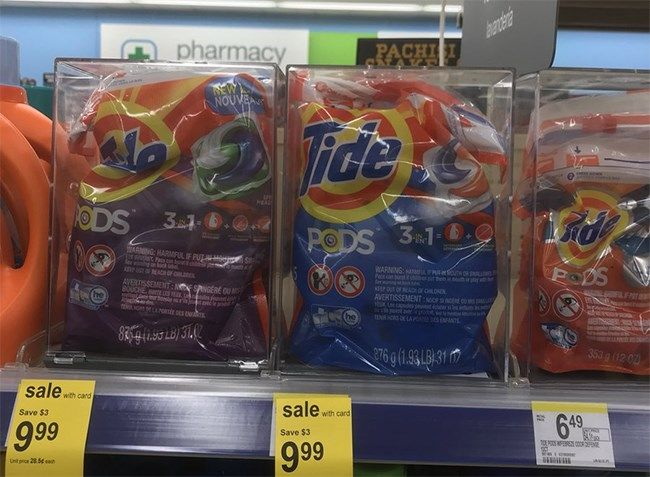
Laundry pods first entered the market in the early 2010s, quickly revolutionizing how consumers approached laundry. Instead of measuring messy liquid or powder detergent, users could simply toss a pre-measured pod into the washing machine. Each pod contained detergent, stain remover, and fabric brightener in a single dose — offering convenience and precision.
Brands such as Tide, Gain, and Persil led this innovation, marketing pods as the modern, efficient alternative to traditional detergent. For busy families, college students, or apartment dwellers, pods promised cleanliness without hassle. Within a few years, they commanded a large share of the detergent market.
However, this convenience came with unintended consequences. The design that made pods appealing to adults — colorful, compact, and neatly packaged — also made them dangerously attractive to children and, surprisingly, even to certain groups of teenagers engaging in online challenges. These developments set the stage for stronger controls and stricter retail practices.
The most serious reason laundry pods are locked up is safety, especially relating to children under five. Unlike traditional detergents, pods look like shiny candy or small water balloons. Their bright colors and glossy films attract young children, who may attempt to squeeze, bite, or swallow them.
The highly concentrated detergent inside can cause severe harm if ingested, inhaled, or if it comes into contact with sensitive areas such as the eyes. Reported symptoms have included vomiting, breathing difficulties, throat burns, and temporary blindness.
According to data from the American Association of Poison Control Centers (AAPCC), thousands of laundry pod-related poisonings are reported each year. Even with immediate medical treatment, the effects can be distressing.
As a response, major manufacturers redesigned packaging to include child-resistant containers, strong warning labels, and tamper-proof seals. The Consumer Product Safety Commission (CPSC) also issued new standards requiring packaging that meets specific child safety criteria.
Yet despite these measures, stores recognized another layer of prevention: controlling access. Displaying laundry pods behind locked cases ensures children cannot handle them during shopping trips. This not only fulfills a legal and ethical duty but also helps reassure parents about store safety practices.
Beyond accidental incidents, laundry pods became infamous for a very different and disturbing reason — the Tide Pod Challenge. Around 2017–2018, social media platforms were flooded with videos showing teenagers biting or chewing pods as part of an online dare. The stunt quickly went viral, gaining millions of views but also sparking significant outrage.
Health officials, educators, and detergent manufacturers warned against the behavior. Procter & Gamble, the company behind Tide, collaborated with platforms such as YouTube and Facebook to remove related content. Celebrities and public figures issued public service announcements emphasizing that consuming detergent was not only dangerous but potentially lethal.
Still, the internet challenge had already shifted public perception of laundry pods from “convenient cleaning aid” to “hazardous curiosity.” Retailers took notice. Many began to store pods in locked displays to deter impulsive behavior or theft linked to viral stunts. Although the trend faded over time, its legacy persists in how stores manage potentially risky items.
In recent years, organized retail theft has surged, affecting everything from electronics to toiletries. Laundry pods, surprisingly, fall into one of the most commonly stolen categories of consumer goods.
Their appeal lies in their compact size, high price per unit, and consistent demand. Thieves can easily conceal pods under clothing or in bags and later resell them online through secondary markets. According to the National Retail Federation (NRF), retail shrinkage — the combined loss from theft, error, and fraud — cost U.S. businesses over $110 billion in 2022. Detergent pods have frequently appeared on lists of “high-theft” household items, along with razor blades, baby formula, and over-the-counter medications.
By locking pods away, stores reduce theft risk dramatically. For large chains, even a 10% reduction in shrinkage can lead to millions in savings. Smaller, community-based retailers often follow suit, not only for loss prevention but also for compliance with corporate policy or insurance requirements.
From a shopper's perspective, locked products can be frustrating. Customers often view these security measures as inconvenient or even insulting, especially when they have to wait for an employee to unlock a glass case just to buy detergent. Retailers, however, face a delicate balancing act.
On the one hand, they must ensure safety and control theft; on the other, they must protect the shopping experience. Many stores are experimenting with new systems — such as digital lock buttons that alert staff immediately or allow for quick self-scanning authorization — to minimize inconvenience without sacrificing security.
There is also the emotional dimension: locking up everyday essentials can subconsciously communicate that a community is unsafe or that theft is rampant. This perception can affect how customers view the brand and even influence where they choose to shop. Thus, retailers must carefully manage not just logistics, but also optics.
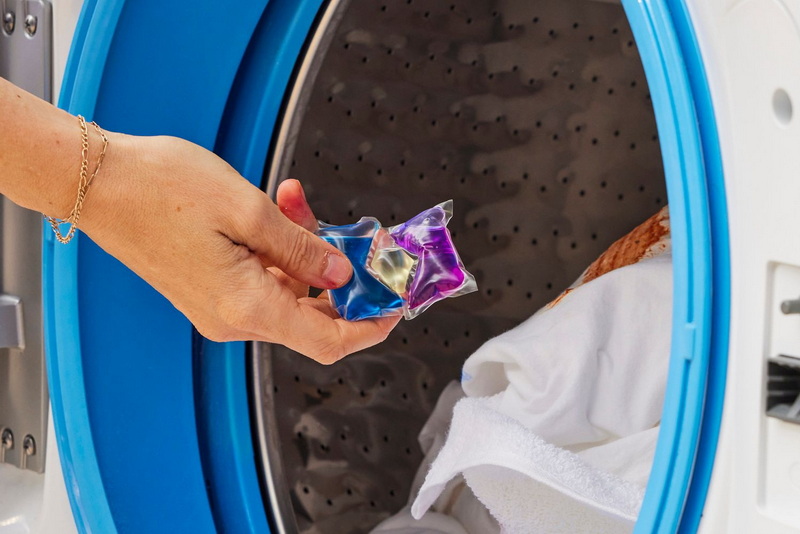
Manufacturers have played a major role in addressing both safety and theft concerns. Modern laundry pod containers often feature:
- Opaque or frosted walls to reduce visual attraction for children.
- Stronger plastic casings and double-click locking lids.
- Prominent safety warnings printed in bright colors.
- QR codes linking to educational videos on safe storage.
Public awareness campaigns have also made an impact. The American Cleaning Institute (ACI), for example, regularly promotes the “Store High, Store Safe” message, discouraging consumers from keeping pods within easy reach of children or pets. Educational outreach has been especially effective among young parents, resulting in fewer incidents in recent years.
The act of locking up laundry pods is not merely a practical decision — it also reflects deeper social and psychological factors. From a behavioral economics standpoint, physical barriers influence consumer interactions. When an item is locked, it sends signals about exclusivity, risk, and value.
In some cases, locked products are perceived as more desirable or prestigious precisely because they're restricted. In others, they evoke feelings of inconvenience or mistrust. This dual perception forces retailers to walk a fine line between responsibility and customer satisfaction.
Interestingly, some market studies have found that visible locks or additional oversight can deter impulse purchases, even among honest customers, because it disrupts the flow of decision-making. This has prompted stores to test alternative deterrents — like discrete sensors or digital locks — that balance accessibility with control.
Technology is reshaping how retailers protect items like laundry pods. Smart security systems now allow for more dynamic solutions than traditional glass cases. For instance:
- Electronic shelf locks: These can be opened remotely by authorized staff after verifying a customer's request.
- RFID tracking: Embedded micro-tags detect when an item leaves the store without proper checkout.
- Computer vision systems: AI-enabled cameras monitor behavior and alert staff to suspicious activity in real time.
- Smart shelves: Sensors automatically record when products are removed or replaced, helping detect theft patterns early.
These innovations not only reduce theft but also minimize friction for legitimate customers. Over time, they may make physical locking unnecessary — though the transition remains gradual and costly for smaller businesses.
Locking everyday products like detergent pods brings attention to broader societal issues: income inequality, online behavior, and consumer trust. Rising living costs and economic instability often correlate with increases in petty theft, making it more likely for even mundane goods to be stolen or misused.
At the same time, the internet's influence extends beyond retail. Viral challenges, social media trends, and digital rumors can alter consumer behavior almost overnight. Retailers must adapt quickly to protect both customers and their brands from the spillover effects of online culture.
There is also an underlying tension between personal freedom and institutional control. Every locked shelf is a symbol of the balance between open access and collective safety. While most customers understand the reasons behind such precautions, the visual of locked pods remains a stark reminder of modern society's security-conscious mindset.
Some critics argue that locking products like laundry pods disproportionately affects low-income communities, where security measures are most common. They claim that excessive locking policies may stigmatize certain neighborhoods by implying higher criminality.
Retailers respond that product locking decisions are based on local theft data, not demographics, but the optics can be sensitive. Transparency and customer communication are therefore crucial. Some stores display public notices explaining that security measures are aimed at preventing loss and ensuring fair pricing, rather than reflecting mistrust toward any customer group.
This ongoing dialogue underscores how retail decisions intersect with social perception — turning a simple item like a detergent pod into a focal point for discussions about fairness and community relations.
Laundry pods are locked up for a combination of safety, economic, technological, and social reasons. Their colorful design poses poisoning risks for children, viral challenges turned them into risky novelty items, and their compact value makes them attractive to thieves. Retailers must balance these realities with customer convenience and trust.
Locking laundry pods may appear excessive at first glance, but it reflects a complex interaction between human behavior, security innovation, and market adaptation. As technology evolves, stores may rely less on physical locks and more on digital or behavioral systems. Until then, the glass display case around detergent pods will remain a quiet symbol of our society's need to protect even the most ordinary objects.

Stores began locking laundry pods to prevent both theft and accidental misuse. Their small size, bright colors, and high retail value made them attractive to thieves and dangerous to children if mishandled.
Yes. The concentrated chemicals inside pods can cause poisoning, burns, or breathing issues if swallowed. Because they resemble candy, toddlers are at particular risk, which is why both packaging and retail access are tightly controlled.
The Tide Pod Challenge was a short-lived but hazardous social media trend where teenagers filmed themselves biting laundry pods. It led to serious health cases and influenced retailers to increase product security.
Not necessarily. Locking pods helps reduce theft-related losses, which can help keep prices consistent. However, implementing security measures also adds operational costs that may influence overall pricing strategies.
Yes. Items like razors, baby formula, electronics accessories, and some over-the-counter medications are often locked due to their combination of high resale value and frequent theft rates.


