
Views: 222 Author: Tomorrow Publish Time: 12-11-2025 Origin: Site


Content Menu
● Early Attempts at Unit-Dose Laundry
● European Pioneers of Liquid Capsules
● Dropps: First Modern Liquid Pods
● Patents and Technical Innovation
● Global Growth of the Pods Market
● Consumer Behavior and Convenience
● Environmental Considerations
● Innovations in PVA Films and Green Pods
● How Pods Changed Laundry Habits
● So, Who Invented Laundry Pods?
● FAQ
>> 1. When were laundry pods first introduced?
>> 2. Are Tide Pods the first laundry pods?
>> 3. Who owns the Tide Pods brand?
>> 4. Why did early laundry tablets fail?
>> 5. Are laundry pods more environmentally friendly than liquid detergent?
Modern laundry detergent pods do not have a single heroic “lone inventor”; they emerged from decades of work by several companies, with key milestones from Procter & Gamble, Unilever, Henkel, and Cot'n Wash. The products recognized today as liquid laundry pods were first commercialized in 2005 by Cot'n Wash under the Dropps brand and taken to global mass adoption by Procter & Gamble's Tide Pods in 2012.[1][2][3][4]

The story of laundry pods begins with unit-dose detergents rather than with the colorful liquid capsules on today's shelves. Procter & Gamble (P&G) experimented with pre-measured formats as early as 1960, when it launched Salvo, a pressed detergent tablet designed to simplify dosing.[5][3][1]
Salvo tablets were made from compacted powder and were intended to remove guesswork from measuring detergent. However, they suffered from poor dissolution, especially in certain washer conditions, which led to consumer dissatisfaction and the eventual disappearance of the product from the market by the late 1970s.[3][6][5]
P&G revisited solid unit-dose laundry in 2000 with Tide Tabs, another powder-based tablet that carried the well-known Tide brand. These tabs again tried to offer convenience and consistent dosing, aligning with the broader trend toward simplifying laundry.[4][6][3]
Despite the brand strength, Tide Tabs faced technical challenges similar to Salvo, including difficulties dissolving completely and limited performance in cold water. As a result, Tide Tabs were pulled from the market just a couple of years after launch, underlining that better chemistry and materials would be needed before pods could succeed.[6][3][4]
While P&G was experimenting with tablets, European manufacturers were moving toward liquid-filled capsules. In Western Europe during the 1990s, companies such as Unilever and Henkel began to commercialize water-soluble sachets and capsules for laundry detergents under brands like Persil.[2][1]
By 2001, liquid “Liquitabs” and similar capsules had begun to gain traction, especially in markets where front-loading machines and concentrated detergents were already common. These European developments helped define the concept of a single-dose, water-soluble liquid pod that would later influence products in North America and beyond.[1][5]
The first modern liquid unit-dose laundry pods are widely attributed to Cot'n Wash, Inc., a smaller U.S. company that launched Dropps in 2005. Dropps used water-soluble packaging to contain liquid detergent, offering consumers a convenient, pre-measured dose suitable for home washing machines.[2]
Although not as visually iconic as later multi-chamber pods, Dropps represented a decisive shift from powders and tablets to liquid-filled capsules and demonstrated that such products could function reliably in typical laundry conditions. The innovation laid important groundwork for the category, even though the brand remained much smaller than the giants that would follow.[2]
P&G's most famous contribution to laundry pods came with Tide Pods, launched in 2012 after roughly eight years of development. Work on liquid tablet technology began in the early 2000s, involving more than 75 employees and hundreds of packaging and design iterations to resolve stability, dissolution, and consumer usability issues.[3][4][6]
Tide Pods use a polyvinyl alcohol (PVA) film, developed with supplier MonoSol, which dissolves in water at various temperatures. The pods are highly concentrated, containing significantly less water than standard liquid Tide to prevent premature dissolution or deformation during storage.[4][3]
A defining element of Tide Pods is the multi-chamber design, typically consisting of three compartments with different formulations. These chambers can separately hold surfactants, brighteners, and fabric conditioners, which mix only once the film dissolves in the wash.[6][3]
This separation allows ingredients that might otherwise interact negatively in a single liquid formula to remain stable until use, improving performance and shelf life. The approach also makes it possible to mix and match benefits, such as stain removal plus fabric care, within a single compact dose.[7][3][6]
The evolution of pods is documented in numerous patents covering water-soluble pouches, concentrated liquid formulations, and multi-compartment designs. These patents describe innovations in film chemistry, encapsulation methods, and detergent compositions that ensure pods dissolve correctly while delivering cleaning power.[7][6]
Unit-dose liquid laundry inventions typically specify high-active detergent systems and carefully controlled water content to balance flowability with stability inside the pouch. Together, these technical advances underpin the reliability of modern pods across diverse washing machines, water hardness levels, and temperatures.[1][7]
When Tide Pods debuted in 2012, they quickly reshaped the U.S. laundry market, becoming a multibillion-dollar product line within a few years. Pods helped shift consumer expectations toward convenience, pre-measured dosing, and compact packaging instead of large jugs of liquid detergent.[4][6]
By the mid-2010s, single-dose pods captured an estimated mid-teens share of U.S. laundry detergent sales, pushing competitors to launch their own capsule products. In Europe, where capsules already had a foothold, P&G marketed similar products under the Ariel Pods name, aligning the global portfolio and reinforcing pods as a premium, performance-oriented format.[3][1][2]
The global laundry detergent pods market has continued to expand as consumers worldwide adopt single-dose formats for both household and commercial use. Recent estimates place the market value in the low- to mid-ten-billion dollar range in the early 2020s, with projections reaching well over 17 billion dollars by 2030 and compound annual growth rates above 6 percent.[8][9]
Growth is driven by several factors: rising middle-class incomes, the spread of automatic washing machines, and an emphasis on time-saving household products. Hospitality, healthcare, and other commercial sectors increasingly use pods to control costs and standardize cleaning performance, further broadening the market beyond home laundry rooms.[9][10][8]
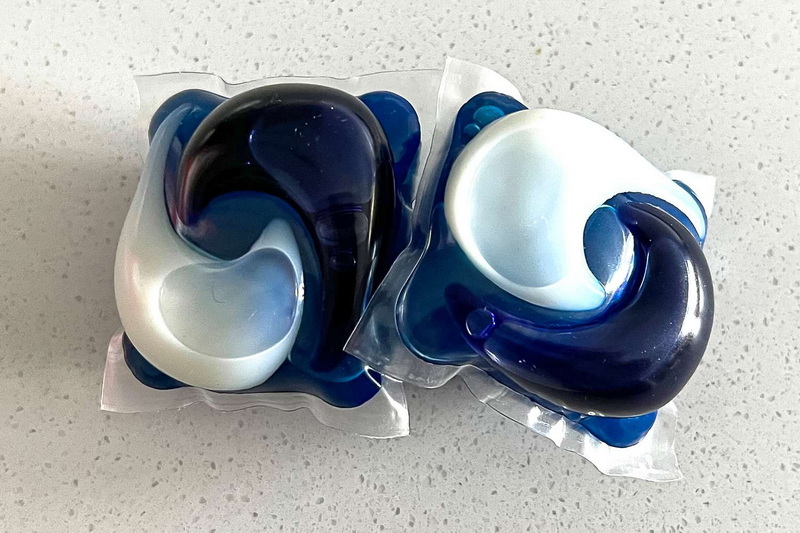
Pods appeal strongly to consumers who value simplicity, portability, and tidiness in their laundry routine. Each capsule offers a pre-measured dose that removes the need for measuring cups and helps prevent spills or overdosing, which can waste detergent and leave residues on fabrics.[11][8][1]
Surveys and market analyses indicate that a growing share of households, particularly in North America and parts of Europe, prefer pods or other single-dose formats over loose liquids and powders. This shift reflects broader lifestyle trends toward convenient, ready-to-use products across many categories, from coffee capsules to dishwashing tablets.[10][8][9][11]
The candy-like appearance of some pods, especially colorful Tide Pods, led to safety concerns as children mistook them for sweets. Incidents of poisoning and eye irritation prompted health warnings, packaging redesigns, and industry-wide guidelines aimed at reducing unintentional exposure.[2][3][4]
Changes included more opaque or less playful packaging, stronger container latches, and extensive consumer education about safe storage. European industry groups such as A.I.S.E. introduced stewardship programs and labeling standards, while regulations in multiple regions set requirements for child-resistant packaging and clear hazard communication.[1][4][2]
Laundry pods are more concentrated than many traditional liquids, which can reduce packaging volume and shipping weight per wash. Their precise dosing also helps limit overuse of detergent, potentially lowering overall chemical discharge into wastewater systems and reducing energy used in transport.[8][9][1]
However, the soluble films and concentrated ingredients raise questions about biodegradability and aquatic toxicity, prompting ongoing research and incremental improvements. Critics highlight that polyvinyl alcohol films, while water-soluble, may leave residues or microplastic-like particles in aquatic environments, leading some studies and advocacy groups to call for more robust testing and stricter standards.[12][13][14]
Manufacturers and material suppliers are working to address these environmental concerns through new film chemistries and greener formulations. Some companies are experimenting with biodegradable or plant-based water-soluble films that aim to deliver the same dissolution performance as PVA while improving end-of-life characteristics.[14][12]
At the same time, brands are developing bio-based or low-impact surfactants, dye-free pods, and packaging made from recycled or recyclable materials. These innovations support the rise of “eco-pods” that try to combine convenience with lower environmental footprints, responding to consumer demand for sustainable cleaning products.[9][10][8]
Regulations have played an important role in shaping how laundry pods are formulated, labeled, and marketed. In the European Union, detergents regulation and related standards require ingredient disclosure, biodegradability benchmarks, and safety assessments, pushing manufacturers to refine and document the performance of pods.[1][2]
Industry associations have complemented formal regulations with voluntary codes of practice that address capsule integrity, storage instructions, and child safety warnings. These frameworks encourage consistent safety and environmental practices across brands and markets, influencing pod designs and communication strategies.[2][1]
Beyond chemistry and regulation, laundry pods have influenced how people think about and perform laundry. Single-dose pods make it easier for inexperienced users, guests, or children (under supervision) to run a load without worrying about proper measurement, which is especially useful in shared or commercial laundry environments.[11][8][9][1]
Pods also fit well with trends toward “smart home” appliances and preset wash programs, since a single capsule often matches a standard load setting, simplifying decisions for users. This alignment between product format and appliance design reinforces the popularity of pods and encourages further innovation in both sectors.[8][9]
Given this complex history, credit for “inventing” laundry pods must be shared. Key contributors include:[3][2]
- Procter & Gamble, for pioneering early tablets with Salvo in 1960, iterating through Tide Tabs, and ultimately creating Tide Pods as the dominant modern product.[5][6][3]
- European companies such as Unilever and Henkel, which advanced liquid capsule technology in the 1990s and early 2000s under brands like Persil and related lines.[1][2]
- Cot'n Wash, Inc., which introduced Dropps in 2005 as one of the first widely recognized liquid laundry pods in the U.S. market.[2]
Rather than a single inventor, laundry pods are the outcome of overlapping innovations in detergent chemistry, packaging, and consumer research across several decades.[3][1][2]
Laundry pods evolved from early powder tablets like Salvo into today's sophisticated multi-chamber liquid capsules through sustained innovation by multiple companies. Cot'n Wash's Dropps introduced modern liquid pods in 2005, while P&G's 2012 launch of Tide Pods transformed the category and made unit-dose capsules a mainstream choice for consumers worldwide. The invention of laundry pods is therefore best understood as a cumulative process rather than the achievement of a single individual, blending chemistry, engineering, design, market insight, safety regulation, and environmental considerations into one compact dose.[7][4][3][1][2]
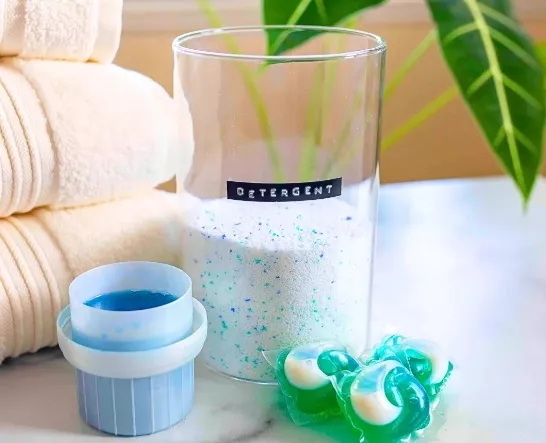
The first notable modern liquid unit-dose laundry pods were introduced by Cot'n Wash, Inc. under the Dropps brand in 2005. Earlier related formats, including P&G's Salvo tablets in 1960 and European liquid capsules in the 1990s, paved the way for these products.[5][3][1][2]
Tide Pods, launched in 2012, are not the first laundry pods but are the best-known and most commercially successful. They built on prior efforts like Salvo, Tide Tabs, Dropps, and European capsule innovations, adding multi-chamber design and advanced film technology.[4][3][1][2]
Tide Pods are owned and produced by Procter & Gamble, a multinational consumer goods company based in the United States. Tide has been P&G's flagship heavy-duty laundry detergent brand since its introduction in the 1940s and remains a market leader in many countries.[15][16][3]
Early tablets such as Salvo and later Tide Tabs struggled because they did not consistently dissolve in washing machines, especially in cooler water or shorter cycles. These dissolution problems affected cleaning performance and consumer satisfaction, leading to their discontinuation and motivating research into liquid capsules and improved films.[6][4][3]
Laundry pods can reduce packaging and promote accurate dosing, which may lower total detergent use and some environmental impacts. However, their overall footprint depends on formulation, film biodegradability, wastewater treatment, and packaging design, so they are not universally greener in every context and remain the subject of ongoing environmental research.[13][12][14][8][1]
[1](https://www.ufinechem.com/when-did-laundry-pods-come-out-in-italy.html)
[2](https://en.wikipedia.org/wiki/Laundry_detergent_pod)
[3](https://en.wikipedia.org/wiki/Tide_Pods)
[4](https://www.cnn.com/2022/07/16/business/tide-pods-laundry-detergent-history)
[5](https://www.ufinechem.com/when-were-laundry-pods-invented.html)
[6](https://www.wcpo.com/news/insider/how-tide-pods-restarted-the-innovation-engine-for-procter-gamble-co-pg)
[7](https://patents.google.com/patent/US20140274859A1/en)
[8](https://www.datainsightsmarket.com/reports/laundry-pods-1293162)
[9](https://www.grandviewresearch.com/industry-analysis/laundry-detergent-pods-market)
[10](https://www.skyquestt.com/report/laundry-detergent-pods-market)
[11](https://www.businessresearchinsights.com/market-reports/laundry-detergent-pods-market-122217)
[12](https://www.polyva-pvafilm.com/environmental-impact-of-laundry-pods.html)
[13](https://www.plasticpollutioncoalition.org/blog/2022/11/18/pva-plastic-what-you-need-to-know)
[14](https://www.heysunday.com/blog/is-pva-bad)
[15](https://en.wikipedia.org/wiki/Tide_(brand))
[16](https://www.acs.org/education/whatischemistry/landmarks/tidedetergent.html)


