
Views: 222 Author: Tomorrow Publish Time: 01-22-2026 Origin: Site


Content Menu
● Why Powder Detergent Is Still Relevant
● Where to Put Powder Detergent in Front-Load Machines
● Where to Put Powder Detergent in Top-Load Machines
● High-Efficiency (HE) Machines and Powder Detergent
● Quick Reference: Where to Put Powder Detergent
● Common Mistakes When Using Powder Detergent
● Choosing the Right Powder Detergent
● Practical Dosing Guide for Powder Detergent
● How to Prevent Residues and Bad Odours
● Home User vs. Self-Service Laundry: Different Priorities
● How Brands Can Turn Usage Tips into Market Advantage
● Take Action: Partner with an Expert OEM for Powder Detergent Solutions
● FAQ: Powder Detergent Placement and Use
>> 1. Can I put powder detergent directly in the drum?
>> 2. What should I do if the detergent drawer is clogged?
>> 3. Can I use powder detergent in a high-efficiency (HE) machine?
>> 4. Why do my clothes come out with white powder marks?
>> 5. Is powder detergent better than liquid?
Knowing where to put powder detergent in the washing machine is essential to avoid residues, bad odours, and poorly washed clothes in both home and professional laundry environments. Correct placement and dosage also help prevent machine damage and reduce complaints for detergent and appliance brands.
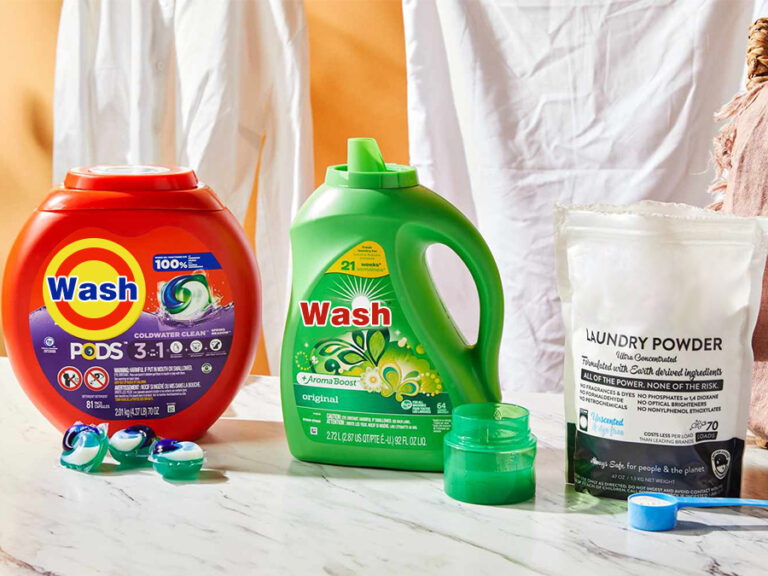
Powder detergent remains a very popular choice due to its balance between cost and performance and its excellent storage stability. It is often more economical per load than many liquid detergents and offers strong cleaning power, especially in hard water. It also has a long shelf life and can be transported more efficiently in logistics chains.
For brands working with a professional OEM detergent factory, powder formulas offer flexibility for concentrated versions, hard-water variants, and eco-focused SKUs with less water used in production.
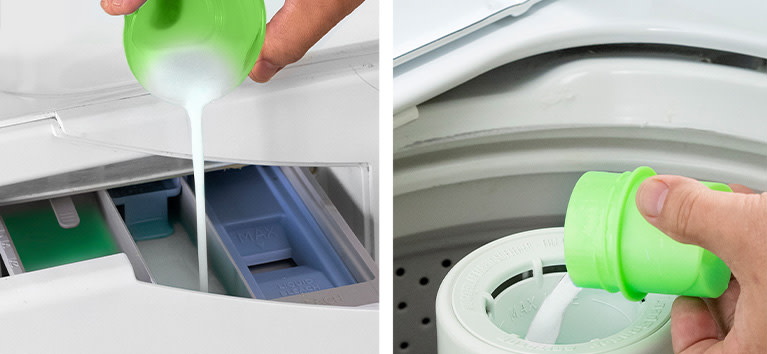
Most front-load washing machines include a drawer with three main compartments: prewash, main wash, and softener. The main wash compartment (usually marked with “II” or a tub symbol) is where detergent goes for the main cycle. The prewash compartment (marked with “I”) is for extra detergent on heavily soiled laundry. The softener compartment (often marked with a flower) is only for softener, never for powder detergent.
In many top-load machines, detergent is added directly into the drum or into a specific dispenser built into the machine, according to the manufacturer's instructions.
In a front-load washing machine, powder detergent should go into the main wash compartment of the drawer, not directly into the drum.
Basic steps:
1. Open the drawer and locate the largest compartment marked with “II” or a drum symbol.
2. Measure the recommended dose according to water hardness, soil level, and load size.
3. Pour powder detergent into the main wash compartment, without exceeding the max line.
4. If using a prewash cycle, add a smaller amount of powder to the “I” compartment.
Why you should not place powder directly in the drum in front-load machines:
- It may not fully dissolve, leaving gritty residues on clothes.
- It can build up on the drum and door seal, increasing the risk of bad odours and mould.
Using the drawer ensures the powder dissolves gradually as water flows through, improving distribution and rinsing.
In most classic top-load washing machines, powder detergent is added directly into the drum before loading the clothes.
Key points:
- Open the lid and sprinkle the detergent evenly over the empty drum.
- Then add the laundry and select the desired programme.
- If your top-load model has an integrated detergent dispenser, follow the manual and place the powder in that dispenser instead.
Adding the detergent before the clothes helps it dissolve and mix with water from the very beginning, reducing clumping and residues.
High-efficiency washing machines use less water and require more precise dosing. In most HE models, powder detergent is placed in the main wash compartment of the drawer, just like in a standard front-load machine.
Considerations for HE use:
- Use a smaller amount of detergent than in traditional machines, because there is less water.
- Prefer well-soluble or HE-compatible powder formulas to avoid residues.
- For very cool wash cycles, it can help to dissolve the powder in a small cup of lukewarm water before pouring it into the compartment, if the manufacturer allows it.
These practices help maintain HE performance, prevent buildup, and protect sensitive internal components.
Machine type | Where to put powder detergent | Key notes |
Front-load standard | Main wash compartment (“II”) in the drawer | Do not place directly in the drum to avoid residues and clogs. |
Top-load classic | Directly into the empty drum or designated dispenser | Add before the clothes for better dissolution. |
High-efficiency (HE) | Main wash compartment in the drawer | Use reduced dose; choose well-soluble or HE-compatible formulas. |
Cycle with prewash | Extra detergent in the “I” compartment | Never mix softener and detergent in the same compartment. |
Many washing issues come from incorrect dosing or using the wrong compartment. Overdosing detergent can leave visible residues on fabrics, increase the risk of blockages in the drawer, and cause unpleasant odours. Placing powder in the drum of a front-load machine often leads to poor dissolution and build-up on the door seal and drum.
Other frequent mistakes include ignoring water temperature and skipping basic maintenance. Powder detergent generally performs better in warm or hot water. If cycles are always run cold, the formula should be specifically designed for cold water or pre-dissolved before use.

The final wash result depends both on where you put the powder and on the type of powder detergent you select. For areas with very hard water, choose formulas designed to manage mineral content and prevent greyish veils on fabrics. Enzyme-containing powders are typically more effective against protein, fat, and starch-based stains.
Sustainability demands are also rising, so low-phosphate or more biodegradable powder detergents are gaining importance. Many suppliers now offer full portfolios: powder and liquid detergents, capsules, fabric softeners, oxygen-based boosters, and hygienic rinses to cover a wide range of consumer and professional needs.
Exact dosing always depends on the product label, but some general ranges are widely used.
- Small load with light soil: reduced dose according to the package recommendation.
- Full load with normal soil: standard dose indicated by the brand.
- Very dirty clothes or heavy soil: slightly increased dose or combined use of prewash, without exceeding the drawer's maximum line.
Using more detergent than recommended does not mean deeper cleaning. Instead, it often leaves residues, may require extra rinses, and increases both water and energy consumption.
Correct use of powder detergent helps extend the service life of the washing machine and reduces after-sales complaints. Regular maintenance should include cleaning the detergent drawer with warm water and a soft brush to remove powder buildup and limescale. The door seal and area around the drawer should also be wiped periodically.
Running a maintenance wash on an empty machine at high temperature from time to time, using an appropriate machine cleaner or a suitable mild cleaning solution, can help remove hidden residues. Leaving the door or lid slightly open after each wash lets moisture escape and reduces the risk of mould and odours.
These habits are particularly important in modern low-consumption machines, where the reduced water volume makes any detergent residue more concentrated.
For home users, the priority is convenience and fabric care, so clear, simple instructions are essential. When the packaging clearly explains where to put powder detergent and how much to use, it reduces misuse and customer service calls.
In self-service laundromats or professional laundry settings, standardization and cost per cycle are more critical. Highly concentrated powder detergents combined with automatic dosing systems minimize human errors, keep dose per kilogram of laundry under control, and protect machine uptime.
Brand owners and importers who work with an experienced OEM partner can adapt formula strength, dosing guidelines, and label design to each channel, from retail shelves to commercial laundries and hospitality segments.
For detergent brands, wholesalers, and private-label owners, educating customers on correct powder detergent use is more than just “help content”. It directly supports brand reputation, reduces unnecessary complaints, and strengthens loyalty over time.
Usage instructions can be integrated into label design, quick-start leaflets, QR codes linking to video tutorials, and website FAQs. By aligning product formulation, dosing recommendations, and communication, brands can deliver a more consistent user experience and clearly differentiate themselves from low-information competitors.
If you are a detergent brand owner, wholesaler, or distributor looking to grow your laundry portfolio, this is the right moment to refine both your formulations and your user guidance. Work with an experienced OEM partner who can help you develop powder detergents tailored to your markets, design clear on-pack instructions that show exactly where and how to use the product, and integrate educational content into your digital channels. Reach out to a specialist OEM factory today to co-create high-performance powder detergents and full laundry ranges that deliver clean results, protect washing machines, and build long-term customer loyalty.
Contact us to get more information!
In front-load washing machines, you should use the main wash compartment in the drawer, not the drum, to ensure even dissolution and avoid residues. In top-load machines, you can usually add powder directly to the drum, but always before loading the clothes.
Remove the drawer completely and wash it with warm water and a soft brush, paying special attention to corners and underside surfaces. Allow it to dry fully before putting it back, and consider running a maintenance wash if there has been heavy buildup.
Yes, but you must use a smaller dose and place it in the main wash compartment designed for detergent. Check both the machine manual and the product label to confirm compatibility and dosing, especially for low-temperature programmes.
This is usually caused by overdosing, very cold water, or putting the powder in the wrong place. Reducing the dose, choosing a formula that dissolves well at your usual temperature, and cleaning the drawer regularly will generally solve the issue.
It depends on your needs. Powder detergent tends to perform very well on heavy soil and in hard water, while liquid works particularly well at lower temperatures and in short cycles. Many households and professional users keep both formats on hand to match different fabrics and wash conditions.
1. https://vigour-group.com/es/insights/donde-poner-detergente-en-polvo-en-una-lavadora/
2. https://www.hoover-home.com/en_GB/blogs/news/where-to-put-softener-detergent-and-conditioner-in-your-washing-machine
3. https://www.homeserve.es/blog/2020/09/08/donde-echar-detergente-lavadora
4. https://tide.com/es-us/nuestro-compromiso/el-detergente-numero-uno-de-america/nuestros-productos/detergente-en-polvo/como-usar-el-detergente-en-polvo
5. https://www.reco.shop/blogs/reco-blog/what-are-the-3-compartments-in-a-washing-machine-drawer


