
Views: 222 Author: Tomorrow Publish Time: 11-25-2025 Origin: Site


Content Menu
● Understanding How Laundry Detergent Works
● What Happens When You Wash Laundry without Detergent
● Dirt and Odor Retain on Clothes
● Fabric Deterioration and Fading
● Washing Machine Contamination
● Shortened Lifespan of Clothing
● Alternatives When You Have No Tide Pod Or Detergent
● Impact on Different Fabric Types
● Why Water Alone Is Not Enough
● Long-Term Consequences of Skipping Detergent
● How to Recover Clothes Washed without Detergent
● Preventing Future Detergent Shortages
● FAQ
>> 1. What happens if I wash clothes without detergent?
>> 2. Can I use water alone for lightly soiled clothes?
>> 3. What household items can substitute for Tide Pods in emergencies?
>> 4. Does vinegar clean clothes as effectively as detergent?
>> 5. Can skipping detergent damage my washing machine?
Laundry is an essential part of daily life, critical for maintaining clean, fresh, and hygienic clothes. But what exactly happens when laundry is done without a Tide Pod or detergent? This article provides an in-depth understanding of the science behind laundry detergents, the consequences of skipping them, and potential alternatives to keep clothes clean despite the absence of conventional detergent.

Laundry detergents are complex formulations designed to remove dirt, oil, and stains from fabrics. The primary cleaning agents in detergents are surfactants. Surfactants have a unique molecular structure with two different ends: a hydrophobic tail that binds to oil and grease, and a hydrophilic head that interacts with water. When washing, surfactants surround oil particles on clothing, forming structures called micelles. These micelles encapsulate the dirt and grease, allowing them to be lifted from fabric and rinsed away with water.
Many detergents also contain enzymes that specialize in breaking down proteins, starches, and fats, targeting specific stains that water and surfactants alone cannot remove effectively. Additionally, detergent formulations include builders or water softeners, which neutralize hardness minerals like calcium and magnesium in the water, preventing them from interfering with the cleaning action. Bleaching agents and pH buffers further enhance stain removal and fabric brightness.[1][3][5]
Washing clothes without Tide Pods or any detergent can lead to multiple problems that affect the cleanliness, hygiene, fabric condition, and even your washing machine's health.
Water alone can remove loose dirt and some sweat but cannot dissolve oils, grease, or sebum that cling strongly to fibers. As a result, clothes washed without detergent often appear only superficially clean and tend to retain unpleasant odors caused by bacteria thriving in residual oils.
Without detergent, oil residues build up in fabric fibers, making them stiff, dull, and greasy in texture. This buildup prevents fabric from drying properly and can cause color fading and weakening of fabric integrity over time.
Residues from dirty laundry can accumulate inside the washing machine drum, gasket, and detergent dispensers when no detergent is used. This accumulation fosters the growth of mold and bacteria, creating unpleasant odors and risking contamination of future laundry loads.
Detergents contribute to sanitization by breaking down components where bacteria thrive. Washing without detergent leaves microbes on clothes, increasing the likelihood of skin irritations and infections, particularly with frequently worn or soiled garments like underwear and gym clothes.
Continuous washing without detergent causes residue buildup that can degrade fibers, ultimately shortening the useful life of garments. Friction from trapped residues also creates pilling and weak spots which lead to fabric damage.[2][3][5][1]
If you run out of detergent, some household alternatives can help improve cleaning temporarily, though they do not fully replace detergents.
- Baking Soda: Helps neutralize odors and mildly lifts dirt but has limited stain removal capability.
- White Vinegar: Acts as a natural deodorizer and fabric softener, helpful during the rinse cycle.
- Borax or Washing Soda: Improves water alkalinity and boosts cleaning power modestly.
- Lemon Juice: Provides mild bleaching and freshening effects for whites, but use cautiously on colored fabrics.
- Mild Body Wash or Shampoo: Can serve as a last-resort substitute for detergent in emergencies, but excessive amounts may harm the washing machine.[5][2]
Cotton: Highly absorbent and prone to trapping oils, cotton shows yellowing and texture changes when washed without detergent.
Synthetic Fabrics: Materials like polyester hold onto odors more intensely; detergent is critical to remove trapped bacteria for freshness.
Delicates: Silk, wool, and lace require gentle but effective cleaning agents; skipping detergent leaves damaging residues that weaken these fibers.[3]
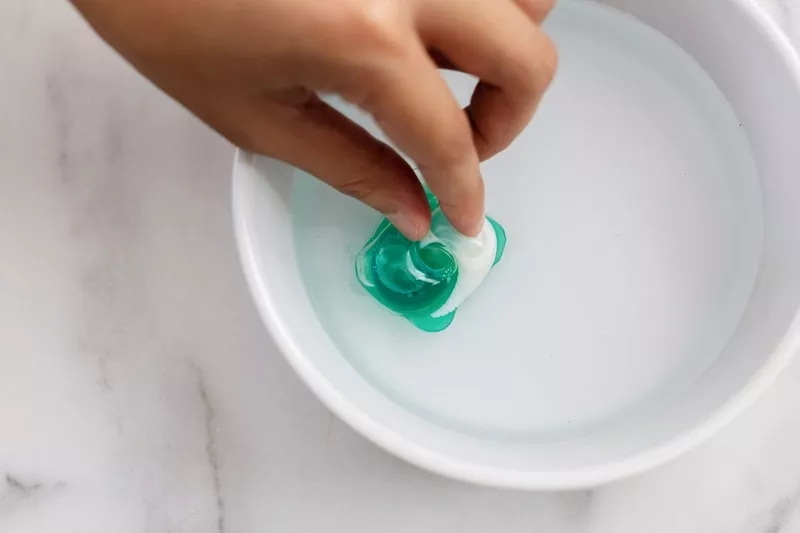
Water cannot break the surface tension that allows it to wet clothes easily. Surfactants in detergent reduce this surface tension so that water can penetrate fabric. Moreover, water cannot dissolve oils or grease, which are nonpolar substances. Surfactants' hydrophobic tails bond with oil while hydrophilic heads bond with water, lifting oils away. Without surfactants, oils remain embedded, causing buildup, odors, and stains to persist.
If washing without detergent becomes a habit, persistent bad odors, dingy fabric appearance, reduced absorbency, skin irritations, and mold buildup inside the machine become serious issues. These effects reduce the lifespan of both clothes and washing machines.
If clothes have been washed without detergent, rewashing them promptly with detergent and warm water helps restore cleanliness. Adding white vinegar in the rinse cycle and drying clothes in sunlight further disinfects and refreshes fabrics. Cleaning the washing machine drum with vinegar or baking soda prevents mold growth from residue buildup.
Maintaining a small emergency supply of detergent or pods, storing baking soda and vinegar as backups, and using automated reordering can help ensure laundry quality is never compromised.
Laundry detergents like Tide Pods play a vital chemical role in cleaning clothes beyond what water alone can achieve. Without detergent, clothes retain dirt, oils, and microbes, leading to odors, fabric damage, and potential health concerns. Temporary substitutes can assist in emergencies but do not replace the need for proper detergent. Consistent detergent use preserves fabric appearance, sanitation, and washing machine health, making it essential for effective laundry care.

Clothes may look clean but retain oils and odors, causing buildup that leads to fabric damage and unpleasant smells over time.
Water alone may remove surface dust but cannot sanitize or deodorize effectively; detergent is needed for thorough cleaning.
Baking soda, white vinegar, borax, lemon juice, or mild body wash can temporarily boost cleaning but are not complete replacements.
Vinegar deodorizes and softens fabric but does not remove stains or oils like detergent.
Yes, residue buildup promotes mold and bacteria growth inside the machine, leading to odors and reduced machine performance.
[1](https://edu.rsc.org/everyday-chemistry/how-does-washing-detergent-work/4018846.article)
[2](https://www.reddit.com/r/askscience/comments/13uzxq/how_does_laundry_detergent_work/)
[3](https://www.armandhammer.com/en/articles/how-laundry-detergents-work)
[4](https://www.reddit.com/r/chemistry/comments/179mkrd/can_someone_explain_the_principles_of_detergent/)
[5](https://thewaterchannel.tv/thewaterblog/the-science-of-clean-understanding-how-detergents-work-in-laundry/)
[6](https://www.cleaninginstitute.org/understanding-products/science-soap/how-cleaning-works)
[7](https://www.youtube.com/watch?v=F7-ie4uWX04)
[8](https://sparkleanlaundry.com/the-science-of-laundry-detergents-what-you-need-to-know/)
[9](https://home.howstuffworks.com/laundry-detergent.htm)
[10](https://pubmed.ncbi.nlm.nih.gov/17898499/)


