
Views: 222 Author: Tomorrow Publish Time: 01-23-2026 Origin: Site


Content Menu
● Target Keywords and Article Focus
● Why Washing Powder Is Still a Strong Business in 2026
● Key Ingredients in Commercial Washing Powder
>> Surfactants: The Main Cleaning Agents
>> Builders: Water Softening and Performance Boosters
>> Fillers: Cost Control and Physical Structure
>> Enzymes: Targeted Stain Removal
>> Optical Brighteners, Fragrances, and Other Additives
● Production Methods for Washing Powder
>> Washing Powder Production Methods Overview
● Step-by-Step Process to Make Washing Powder for Business
>> Step 1. Prepare and Weigh Ingredients
>> Step 2. Mix Components to Form Slurry or Uniform Powder
>> Step 3. Form Powder Particles
>> Step 4. Drying, Cooling, and Post-Blending
>> Step 5. Quality Control Tests
>> Step 6. Packaging and Labeling
● Cost Considerations for a Washing Powder Business
● When to Choose OEM Production
● OEM Washing Powder Solutions with Dongguan UFine Daily Chemical Co.,Ltd.
● Practical Tips for a Market-Ready Washing Powder
● Clear Call to Action: Turn Your Washing Powder Concept into a Real Product
● FAQs About Making Washing Powder for Business
>> 1. What is the minimum investment to start a washing powder business?
>> 2. Is spray drying always better than dry mixing?
>> 3. How can I make my washing powder more eco-friendly?
>> 4. Do I need different formulas for hard water and soft water markets?
>> 5. How long does it take to develop a custom washing powder with an OEM partner?
Launching a washing powder business in 2026 can be highly profitable if you combine the right formula, production process, and branding strategy. This guide explains how to make washing powder for business, compares production methods, and shows how an experienced OEM manufacturer like Dongguan UFine Daily Chemical Co.,Ltd. can help you scale fast with professional support.
- Primary keyword: how to make washing powder for business
- Secondary keywords:
- washing powder manufacturing process
- detergent powder formula
- washing powder business plan
- small scale detergent powder production
- OEM washing powder manufacturer China
- Search intent:
- Help entrepreneurs and buyers understand ingredients, production steps, equipment needs, costs, and OEM/private label options for washing powder.
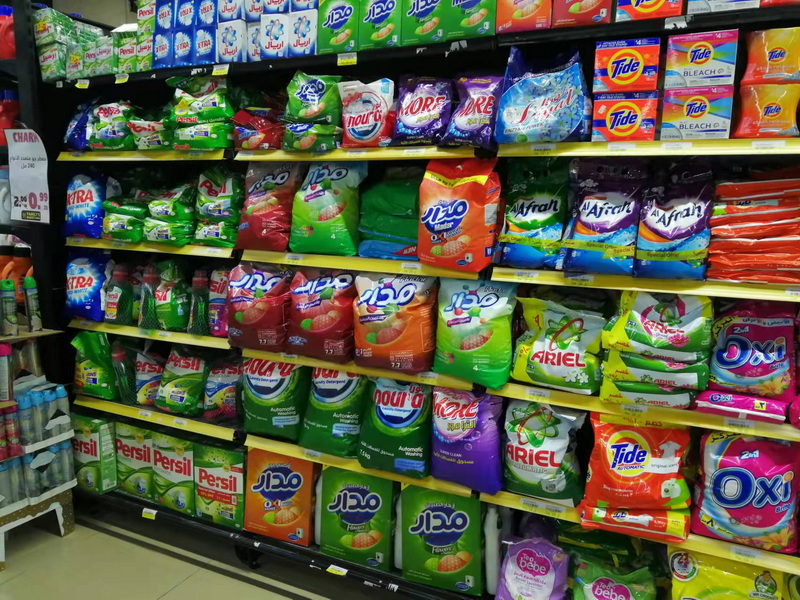
The global laundry detergent market continues to grow steadily as hygiene habits and wash frequency increase worldwide. Even though liquid detergents and pods are expanding, powder detergents remain dominant in many price-sensitive and high-volume markets because they are cost-effective, easy to transport in bulk, and stable in storage.
For brands, wholesalers, and laundries, powder offers several advantages:
- Lower cost per wash and easier bulk handling compared with many liquid formats.
- Flexible formulation, from basic economy powders to high-performance, enzyme-rich and eco-friendly products.
- Suitable for diverse channels: supermarkets, wholesale, laundromats, and online private label brands.
Understanding each ingredient group is critical for designing a professional washing powder formula that really works in the market. Below is a typical structure used in commercial detergent powders.
Surfactants are the core cleaning molecules that lift and suspend dirt and grease from fabrics so they can be rinsed away. They reduce the surface tension of water and help the wash liquor penetrate into textile fibers.
Common surfactants in washing powder include:
- Anionic surfactants (such as linear alkylbenzene sulfonate) for strong grease and particulate soil removal.
- Nonionic surfactants for better performance in cold water and oily stains, and to stabilize foam levels.
A balanced surfactant system improves stain removal, works in different water hardness levels, and supports both hand wash and machine wash formats.
Builders enhance surfactant performance by binding calcium and magnesium ions in hard water, preventing them from interfering with the cleaning process. They also help maintain an alkaline pH that encourages soil removal.
Typical builders in washing powder include:
- Sodium carbonate (soda ash)
- Sodium silicate
- Sodium tripolyphosphate (STPP) in markets where phosphates are still permitted
- Zeolites as phosphate-free alternatives
Choosing between phosphate and non-phosphate systems depends on local regulation, environmental goals, and target market positioning.
Fillers dilute the formula to a practical concentration, improve flow properties, and help manage per-load cost for consumers. In powders, fillers also help shape bulk density and appearance.
Common fillers:
- Sodium sulfate
- Talc in some specific regional formulations
An optimized filler level balances cost competitiveness, solubility, and packaging weight.
Enzymes are biological catalysts that break down specific stain types at low dosage, allowing better performance at moderate temperatures. They are especially important in mid-to-premium washing powder grades.
Typical enzyme types in laundry powder:
- Protease for protein stains such as blood and grass
- Amylase for starchy residues such as sauces and rice
- Lipase for fatty and oily stains
- Cellulase in some formulations for fabric renewal and reduced graying
Because enzymes are heat-sensitive, they are usually added after high-temperature processes like spray drying, during the post-blending stage.
To make washing powder more appealing and functional, manufacturers include several additives:
- Optical brighteners to give fabrics a whiter, brighter appearance in normal light.
- Fragrances to provide a fresh scent and increase consumer satisfaction.
- Anti-redeposition agents to keep loosened dirt from resettling on fabric.
- Defoamers or foam regulators to match machine type and local washing habits.
Color speckles and special scents can be used to differentiate private label products on the shelf.
There are three main industrial production methods for washing powder, each suited to different investment levels and capacities.
| Feature | Spray drying tower method | Dry mixing method | Agglomeration method |
|---|---|---|---|
| Typical scale | Large manufacturers, high capacity | Small to medium producers, flexible batches | Medium to large producers |
| Investment level | High (tower, heating, slurry tanks) | Low (mixers, sifters, conveyors) | Moderate (agglomerator, fluid bed dryer) |
| Bulk density | Low, “puffed” lightweight powder | High, dense powder | Medium, uniform granules |
| Product flowability | Excellent and free‑flowing | May cake if moisture is not controlled | Very good, stable granules |
| Formulation flexibility | Very high, additives after drying | Limited liquid additions | Balanced flexibility |
| Best use case | Mass‑market brands and export projects | Startups, local brands, economy lines | Visually premium granules with good cost–quality balance |
In the spray drying method, raw materials are mixed into a slurry and then sprayed from the top of a tall tower into hot air, forming dry, hollow powder particles as water evaporates. The base powder is collected at the bottom, cooled, and then post-blended with heat-sensitive additives such as enzymes and fragrances.
Key characteristics:
- Very consistent quality and excellent flow.
- Low bulk density and attractive appearance.
- High throughput for large-scale production and export markets.
Limitations:
- High capital expenditure and space requirements.
- More complex operation and higher energy usage.
Dry mixing blends accurately weighed powdered ingredients in a high-speed mixer, sometimes with small amounts of liquids like fragrance or nonionic surfactant. After blending and sifting, the powder is directly packaged.
Advantages:
- Lower equipment cost and simpler infrastructure, ideal for startups and small factories.
- Fast changeover between formulas and SKUs.
Limitations:
- Higher bulk density and more risk of caking if moisture is not well controlled.
- Limited ability to incorporate large amounts of liquid ingredients.
Agglomeration combines powders with a liquid binder to form larger granules that are then dried and cooled, resulting in a uniform granular product. This process sits between spray drying and simple dry mixing in terms of cost and performance.
Advantages:
- Visually appealing, uniform granules with good flow properties.
- Moderate investment and flexible capacity.
Limitations:
- More complex than basic dry mixing.
- Requires careful control of binder and drying conditions.
Once you choose a formula and production method, the following step-by-step workflow shows how professional manufacturers produce washing powder at scale.
The first step is to secure raw materials from reliable suppliers and inspect them according to your quality standards.
Key tasks:
- Check certificates and basic quality for surfactants, builders, and enzymes.
- Weigh each ingredient precisely using industrial scales.
- Prepare a batch sheet with target weights, tolerances, and lot numbers for traceability.
Good weighing discipline ensures consistent performance and reduces batch failures.
Depending on the chosen process, mixing will look slightly different.
For spray drying:
- Combine solid and liquid ingredients with processed water in a slurry preparation tank.
- Mix using a suitable mixer until a homogeneous slurry is achieved.
- Transfer the slurry to an aging tank to stabilize properties before spraying.
For dry mixing:
- Load surfactants, builders, fillers, and other powdered ingredients into a ribbon or similar mixer.
- Blend until the powder is uniform, then add limited liquid additives like fragrance if the equipment allows.
The goal is a homogeneous mixture where active ingredients are evenly distributed so every scoop cleans consistently.
After basic mixing, the formula is transformed into a consumer-ready powder.
Possible operations:
- Spray drying: pump slurry to the top of the tower, atomize through nozzles, and contact it with hot air to remove moisture quickly and form powder particles.
- Agglomeration: blend pre-mixed powders with a binder in an agglomerator to form granules, then dry them in a fluid bed dryer.
- Direct dry mixing: if no tower or agglomerator is used, the mixed powder goes straight to sifting and packaging.
To avoid caking and ensure storage stability, powders must be properly dried and cooled.
Typical steps:
- Dry powder particles to the specified moisture range.
- Cool the product to ambient temperature to prevent condensation issues in packaging.
- Post-blend temperature-sensitive ingredients such as enzymes, fragrance, and optical brighteners in a low-shear mixer.
This stage is key to maintaining enzyme activity, scent quality, and flow properties during shelf life.
Before packaging, a robust quality control program ensures that every batch meets your specifications.
Common tests include:
- Appearance and color uniformity.
- Bulk density and flowability.
- Moisture content and pH.
- Active matter, builder content, and enzyme activity.
- Washing performance tests on reference stains.
Documented test results are essential for compliance and for building trust with retail buyers and OEM clients.
Packaging protects your product, communicates your brand, and ensures convenience for the customer.
Popular formats for washing powder:
- Laminated bags and pouches for economy lines.
- Cardboard boxes or canisters for premium retail packs.
- Bulk 10–50 kg bags for laundries and institutional use.
Labels should clearly show dosage, safety instructions, basic ingredient information, and wash recommendations, and can highlight eco-claims or certifications if relevant.
Startup costs depend heavily on the chosen production method, capacity, and whether production is in-house or outsourced to an OEM factory.
Typical cost components:
- Raw materials: surfactants, builders, fillers, additives, and packaging materials.
- Equipment: mixers, conveyors, sifters, dryers, spray tower or agglomerator if in-house, and quality control instruments.
- Utilities and infrastructure: power, water, ventilation, waste treatment, and warehousing.
- Labor and compliance: production staff, technical team, and regulatory or certification costs for your target markets.
Many new brands reduce risk by working with an established OEM manufacturer, which allows them to focus budget on branding, marketing, and inventory instead of heavy equipment.
For many overseas brands, wholesalers, and retail chains, partnering with a professional OEM washing powder factory is more efficient than building a new plant from scratch.
OEM can be the better choice when:
- You want to launch a private label washing powder quickly with proven formulas and existing technical documentation.
- Your main strength is sales and distribution rather than chemical engineering or plant management.
- You need multiple SKUs under one brand, such as high foam and low foam, scented and unscented, or eco-focused lines.
An experienced OEM partner can provide formula customization, packaging design, sample testing, and export documentation, helping you accelerate time to market.
Dongguan UFine Daily Chemical Co.,Ltd. is a Chinese OEM and ODM factory focusing on laundry and cleaning products for overseas brands, wholesalers, and manufacturers. By collaborating with an established partner, you can leverage existing technical expertise, production capacity, and quality systems instead of starting from zero.
Typical OEM support for washing powder includes:
- Tailored formulas: high foam or low foam, hand-wash or machine-wash, phosphate or phosphate-free, scented or fragrance-free, and eco-oriented versions.
- Compliance support: documentation for different regions, including ingredient restrictions and labeling guidance.
- Flexible packaging: small retail packs, mid-size bags, and bulk industrial sacks for laundries and institutional customers.
This type of OEM cooperation lets you focus on brand building, market positioning, and sales, while the factory handles formulation, stable production, and quality control.
Beyond the technical formula, a successful washing powder business also depends on positioning, usability, and communication.
Key points to consider:
- Define your target consumer group such as mass-market, premium, sensitive skin, eco buyers, or commercial laundries.
- Align formula strength, fragrance profile, and price per wash with that audience.
- Make dosage instructions clear and simple, supported by icons for load size, soil level, and water hardness.
- Offer sample packs or trial sizes to reduce risk for new customers and collect feedback before large launches.
Consistent product performance and transparent communication will drive repeat purchase and long-term loyalty.
Building a profitable washing powder brand requires the right combination of formula, production method, cost control, and positioning. Instead of investing years into equipment and development, you can partner with an experienced OEM factory and move directly to branding, marketing, and market expansion.
If you are planning to launch or upgrade a washing powder product line, contact Dongguan UFine Daily Chemical Co.,Ltd. to discuss your target market, price range, and performance requirements. A tailored OEM solution can give you professional washing powder formulas, flexible packaging options, and reliable supply so you can focus on growing your detergent business with confidence.
Contact us to get more information!
The minimum investment depends on whether you build your own plant or work with an OEM manufacturer. Small dry mixing lines require relatively modest equipment, while spray drying towers need much higher capital. Many startups choose OEM production so they can invest mainly in brand building and inventory instead of heavy machinery.
Spray drying usually produces lighter, more free-flowing powders and supports very high capacity, which is ideal for large brands and exporters. Dry mixing is more economical and flexible for startups and small to medium producers that need lower investment and faster product changes, so the best option depends on your scale and target market.
You can move toward eco-friendly positioning by using phosphate-free builders, optimizing dosage to reduce chemical load per wash, and choosing more biodegradable surfactants where possible. Combining greener formulas with recyclable or reduced packaging and clear usage instructions also improves the environmental profile of your washing powder.
Hard water regions often require stronger builder systems and sometimes higher active levels to handle mineral interference. In soft water areas, milder builder levels and adjusted surfactant blends may be sufficient, which can help control cost per wash while still maintaining good cleaning performance.
If you select an existing base formula and adjust only fragrance and packaging, pilot samples can often be prepared in a relatively short time. Completely new performance profiles or special regulatory requirements usually take longer because they require stability testing, performance trials, and full documentation before large-scale production.
1. https://vigour-group.com/insights/how-to-make-washing-powder-for-business/</p>
2. https://yeserchem.com/the-ultimate-guide-for-detergent-powder-formula-and-production-methods/</p>
3. https://indpro.com/blog/detergent-powder-manufacturing-process-spray-drying-method/</p>
4. https://www.stellarmr.com/report/Laundry-Detergent-Market/372</p>
5. https://www.mmrstatistics.com/reports/896746/global-laundry-detergent-market</p>


