
Views: 222 Author: Tomorrow Publish Time: 01-14-2026 Origin: Site


Content Menu
● Why Homemade Laundry Detergent Is Still Popular in 2026
● Essential Ingredients and Their Roles
>> Optional Boosters and Additives
● Safety, Skin Sensitivity, and Machine Compatibility
● Homemade Laundry Detergent Recipe 1: Classic Powder
● Homemade Laundry Detergent Recipe 2: Liquid Castile Soap Formula
● Homemade Laundry Detergent Recipe 3: Borax-Free Powder
● Homemade Laundry Detergent Recipe 4: Super-Concentrated Liquid
● Homemade Laundry Detergent Recipe 5: Gentle Formula for Sensitive Skin and Baby Clothes
● Homemade Laundry Detergent Recipe 6: Simple Laundry Pods
● Practical Usage Tips for Better Results
● When Homemade Detergent Is Not Enough
● Partner with a Professional OEM Manufacturer
● FAQs About Homemade Laundry Detergent and Professional Production
>> 1. Is homemade laundry detergent suitable for HE washing machines?
>> 2. Does homemade detergent clean as well as commercial detergent?
>> 3. Is borax required in homemade laundry detergent?
>> 4. How long can homemade laundry detergent be stored?
Homemade laundry detergent is growing in popularity in 2026 as more households look for safer, eco-friendly, and cost-effective alternatives to conventional detergents. This guide shares six proven homemade laundry detergent recipes, expert safety tips, and key considerations for brands that want to move beyond DIY and develop professional products at scale.

- Main reasons homemade laundry detergents remain popular in 2026
- Essential ingredients and their functions
- Six detailed recipes: powder, liquid, borax-free, sensitive-skin, concentrated liquid, and pods
- Practical usage, safety, and machine-compatibility tips
- A clear path for brands and wholesalers that need professional OEM production
Homemade laundry detergents attract users who want more control over what touches their skin and clothes. Many households are also reacting to higher retail prices and seeking simple formulas with recognizable ingredients.
Key motivations include:
- Cost control: Bulk ingredients such as washing soda, borax, and bar soap can lower cost per load compared with many branded detergents.
- Transparency: Users can avoid dyes, optical brighteners, and strong synthetic fragrances.
- Sustainability: Making detergent at home can reduce plastic waste from single-use bottles and packaging.
At the same time, homemade detergent is not always the best option for very heavy soiling, extremely hard water, or professional users who require strict, repeatable performance.
Understanding what each core ingredient does helps in choosing the right recipe and adjusting it safely.
- Washing soda (sodium carbonate): Raises water pH and helps break down oils and embedded dirt.
- Baking soda (sodium bicarbonate): Deodorizes and provides gentle cleaning support, especially useful for sportswear and pet items.
- Borax (sodium borate): Traditionally used as a water softener and cleaning booster in many DIY formulas.
- Bar soap (Castile, coconut oil soap, laundry bar, etc.): Supplies surfactants that lift dirt off fabrics and keep it suspended in the wash water.
- Liquid Castile soap: Plant-based surfactant source often used in liquid recipes for a milder profile.
- Oxygen-based stain boosters: Help whiten and brighten clothes in some powder blends.
- Additional baking soda: Often added when odor control is a priority.
- Essential oils: Provide light fragrance; commonly used oils include lavender, lemon, and eucalyptus. Use sparingly, as they can irritate very sensitive skin.
Homemade detergent can be safe and effective if used correctly and with proper attention to skin type and machine type.
Key points to consider:
- Skin sensitivity: Highly alkaline mixes and strong fragrances can irritate delicate skin. Many users prefer borax-free and low- or no-fragrance formulas for babies or those with eczema.
- HE (high-efficiency) machines: Most low-suds powders and liquids can work in HE washers if used in small amounts and fully dissolved. Over-dosing can lead to residue and poor rinsing.
- Residue and buildup: Undissolved powders or excessive dosing can cause film on fabrics and inside the drum. Occasional hot cleaning cycles help keep the machine clear.
- Storage safety: Always label containers clearly and keep all detergents, especially pods and concentrated liquids, out of reach of children and pets.
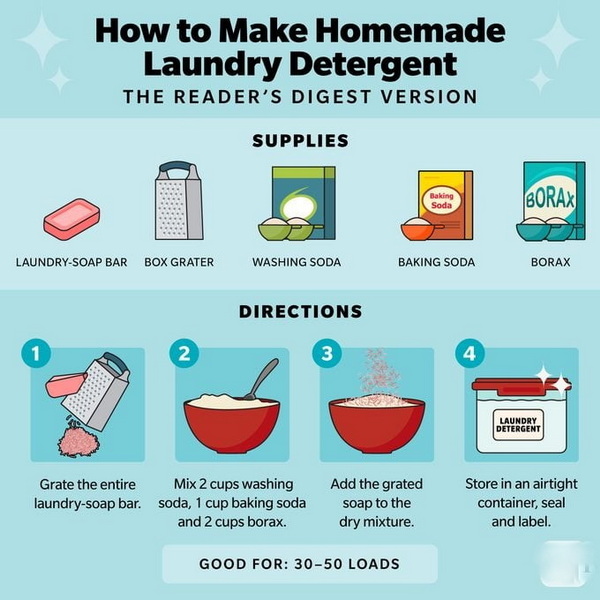
This is a straightforward powder recipe that uses only three main ingredients and stores well in a sealed container.
Ingredients:
- 1 cup washing soda
- 1 cup borax
- 1 bar grated Castile or laundry soap
Instructions:
1. Grate the bar soap into fine shavings with a grater or food processor.
2. Combine grated soap, washing soda, and borax in a large dry container.
3. Stir thoroughly until the mixture is uniform.
4. Store in an airtight jar or tub to keep out moisture.
5. Use 1–2 tablespoons per load, adjusting for load size and water hardness.
This simple powder suits everyday laundry and users who prefer a minimal ingredient formula.
This liquid recipe is convenient for those who like a pourable detergent and want a relatively mild, plant-based option.
Ingredients:
- 1 cup liquid Castile soap
- 1 cup washing soda
- 10–20 drops essential oil (optional)
- About 3 gallons warm water
Instructions:
1. In a large bucket, mix the liquid Castile soap and washing soda until the powder fully dissolves.
2. Slowly add warm water while stirring to prevent clumping.
3. Add essential oil if desired and mix again for even distribution.
4. Transfer the mixture into jugs or large containers and allow it to cool.
5. Shake well before each use and dose 1/4–1/2 cup per load depending on soil level.
Because this detergent is relatively dilute, it is easy to use and suitable for families who prefer gentler cleaning.
This recipe is aimed at users who prefer to avoid borax and keep the ingredient list short.
Ingredients:
- 2 cups washing soda
- 2 cups baking soda
- 1 bar coconut oil or Castile soap, grated
Instructions:
1. Grate the soap bar and, if possible, pulse it in a food processor to obtain fine particles.
2. Combine the grated soap, washing soda, and baking soda in a large container.
3. Mix well until the powders and soap are evenly distributed.
4. Store in an airtight container away from humidity.
5. Use 1–2 tablespoons per load, starting with a smaller amount for HE machines.
This borax-free powder focuses on reduced irritants and can be a good starting point for people with more sensitive skin.
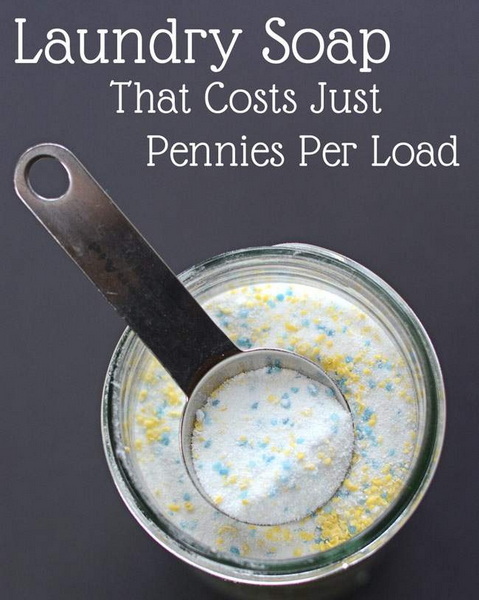
Users who wash frequently and have limited storage space may prefer a more concentrated liquid formula.
Ingredients:
- 1 bar grated Castile or laundry soap
- 1 cup washing soda
- 1/2 cup borax
- About 2 gallons hot water
Instructions:
1. Place several liters of hot water in a large pot and add the grated soap.
2. Heat on low and stir continuously until the soap completely dissolves.
3. Add washing soda and borax, stirring until all powders dissolve and the liquid is uniform.
4. Pour the concentrated mixture into a large bucket and top up with more hot water to reach about 2 gallons.
5. Allow the mixture to rest for several hours until it thickens or gels slightly.
6. Transfer into bottles, shaking before each use, and dose 2–3 tablespoons per load.
Handle this concentrated liquid carefully and store it securely, as it is stronger per milliliter than standard homemade liquids.
This recipe is designed for users who prioritize mildness and simplicity for delicate skin or baby garments.
Ingredients:
- 1/2 cup washing soda
- 1/2 cup baking soda
- 1/4–1/3 cup unscented liquid Castile soap
- 4 cups hot water, plus additional cool water to fill a 1-gallon container
Instructions:
1. Add washing soda and baking soda to a heat-safe container and pour in the hot water.
2. Stir until both powders dissolve completely.
3. Add the unscented liquid Castile soap and mix gently to reduce foaming.
4. Transfer the mixture to a 1-gallon container and top up with cool water, leaving a little space at the top.
5. Shake before each use and start with about 1/4 cup per load.
For extra caution, users often test this formula on a few garments first and may use an extra rinse cycle to limit any residue.
This solid pod recipe offers convenient, pre-measured doses and reduces the need for separate measuring tools.
Ingredients:
- 2 cups washing soda
- 1 cup grated Castile soap
- 1 cup baking soda
- Approximately 1/2 cup water (added gradually)
Instructions:
1. Mix washing soda, grated soap, and baking soda in a large bowl until evenly combined.
2. Add water slowly, one tablespoon at a time, stirring until the mixture becomes a thick, moldable paste.
3. Press the paste firmly into silicone molds or ice cube trays.
4. Let the pods dry for at least 24 hours, or until completely hardened.
5. Remove the pods from the molds and store them in an airtight container away from moisture.
6. Use 1 pod per regular load; for heavily soiled laundry, 2 pods may be used.
These pods provide portion control and convenience, but they must be clearly labeled and kept away from children.
Even with good recipes, daily practices determine how well homemade detergents perform.
Helpful habits include:
- Pre-dissolve powders in warm water before adding to cold or HE cycles to minimize residue.
- Avoid over-dosing, as too much detergent can leave clothes dull or stiff.
- Pretreat stains with bar soap or a dedicated stain remover for best results on heavy spots.
- Run periodic maintenance cycles on the machine with hot water to reduce buildup of soaps and minerals.
These practices can help keep clothes cleaner and machines running more smoothly over time.
Homemade recipes work well for personal use in many households, but they have limits when more demanding situations are involved.
Scenarios where homemade detergents may fall short:
- Regularly dealing with industrial, professional, or very heavy stains.
- Operating in regions with very hard water where basic ingredients do not achieve consistent results.
- Supplying laundry products to customers who expect standardized, repeatable performance and clear technical documentation.
- Selling products through formal distribution channels that require regulatory compliance, safety data, and quality control.
In such cases, professionally developed and manufactured detergents are better suited to ensure performance, stability, and long-term customer trust.
For personal use, homemade laundry detergent recipes provide flexibility and insight into which ingredient combinations work for different preferences. For brands, importers, and wholesalers, however, long-term success usually depends on professionally designed formulations, reliable production, and regulatory compliance.
If your goal is to build or expand a laundry care product line with consistent quality, scalable supply, and tailored performance, the next step is to collaborate with an experienced OEM manufacturer. A professional partner can:
- Develop custom liquid, powder, pod, and sheet detergents based on your market positioning and target customers.
- Support product testing, safety documentation, and labeling that align with your sales regions.
- Offer flexible packaging options and production capacity adapted to your growth plans.
Take action now: clearly define your market, performance requirements, and brand positioning, then connect with a capable OEM laundry detergent manufacturer to turn these ideas into finished products. A well-structured partnership can transform consumer interest in cleaner, more transparent detergents into a stable and profitable business.
In many cases it can be, especially when using low-suds powders or liquids and dosing carefully. Users should avoid over-dosing and ensure powders are fully dissolved to reduce residue.
For light and moderate everyday loads, homemade detergents can work effectively. Commercial detergents often perform better for very heavy stains, complex fabric types, and demanding conditions such as cold washes and very hard water.
It is not required. Many recipes rely on washing soda, baking soda, and bar soap instead, particularly for users who prefer borax-free formulations for personal reasons or perceived skin benefits.
Powdered detergents can generally be stored for several months in a dry, airtight container. Liquid detergents may separate or thicken over time and typically perform best when used within a few months.
A business should move to professional production when it needs stable batch quality, documented safety and compliance, reliable supply capacity, and tailored formulas that meet the expectations of retail or institutional customers.


