
Views: 231 Author: Jessica Publish Time: 09-18-2026 Origin: Ufine Daily Chemical


Content Menu
● Why Laundry Detergent Pods and Sheets Are Growing
● Laundry Pods vs. Laundry Sheets: Which Format Is Better?
● 3. Fragrance and Skin-Contact Expectations
● 4. Packaging and Moisture Protection
● Step 1: Define the Commercial Brief
● Step 2: Develop and Compare Samples
● Step 4: Test Packaging in Realistic Conditions
● Step 5: Prepare for Scale Production
● Concentrated and Flexible-Dose Formats
● Product Families Across Laundry and Dish Care
● Evidence-Based Sustainability Positioning
● 1. Are laundry detergent pods better than laundry sheets?
● 2. Can laundry detergent pods be used in a dishwasher?
● 3. Do laundry detergent sheets dissolve in cold water?
● 4. Are laundry detergent pods safe around children?
● 5. What information does an OEM factory need to create a sample?
● 6. Can Dongguan Ufine customize packaging and formulas?
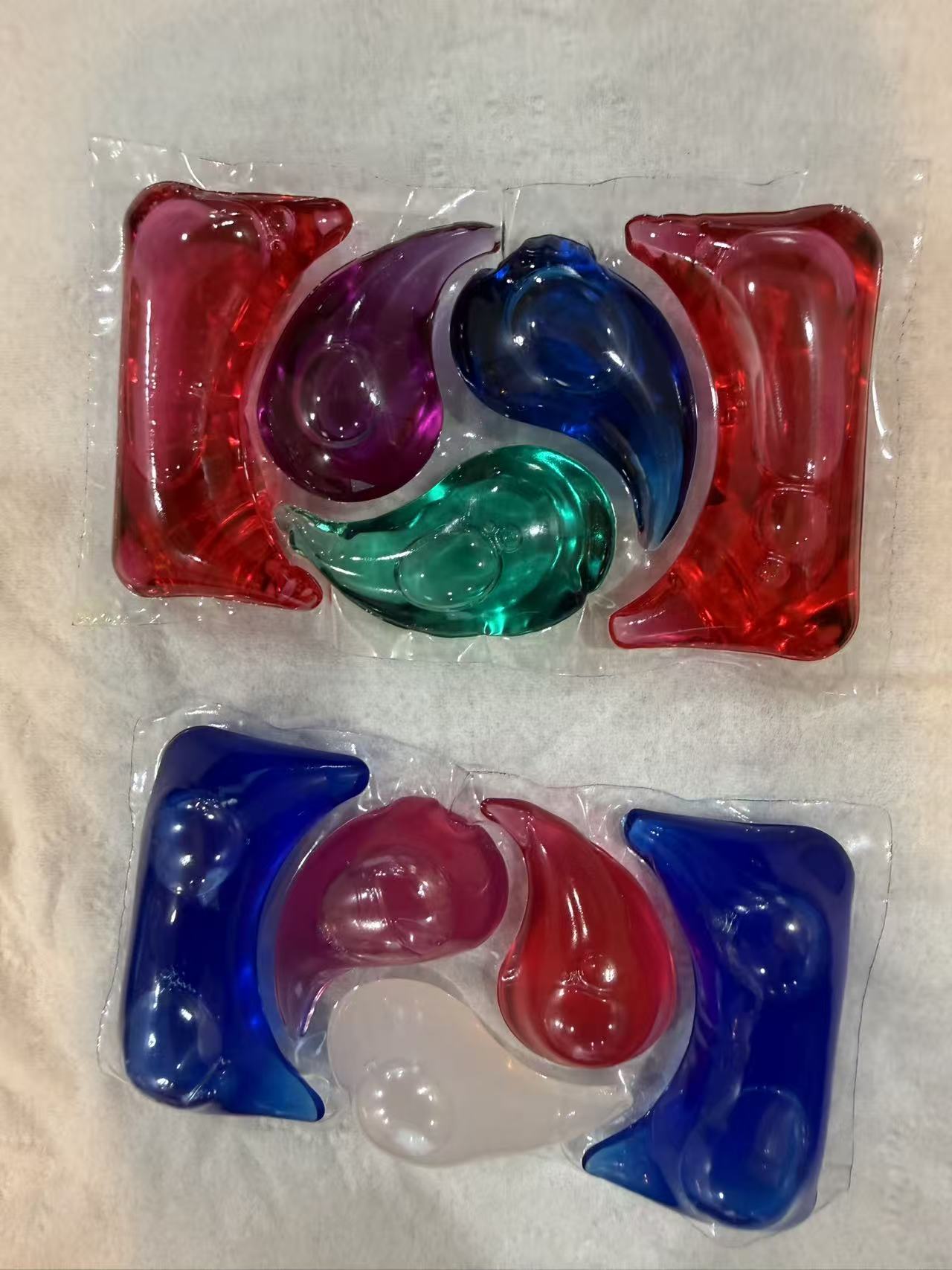
Laundry detergent pods and laundry sheets are reshaping the home-care market. They offer convenient dosing, compact packaging, and strong potential for private-label differentiation. For brands, wholesalers, and manufacturers seeking reliable laundry detergent OEM services**, the key challenge is no longer simply producing a dissolvable product. It is developing a formula, package, claim strategy, and user experience that consumers can trust.
At Dongguan Ufine Daily Chemical Co., Ltd., we support international partners with OEM and private-label solutions for laundry pods, laundry detergent sheets, dishwasher pods, and dishwasher tablets. This article explains how these formats differ, what buyers should evaluate, and how brands can build safer, more credible, and more competitive products.
> Editorial note: Product claims such as "eco-friendly," "biodegradable," "hypoallergenic," or "plastic-free" should be verified against the final formula, packaging, test reports, and the regulations of each target market.
Consumers increasingly value cleaning products that are:
- Easy to measure
- Compact to store
- Less messy than liquid detergent
- Suitable for e-commerce shipping
- Compatible with private-label branding
- Available in concentrated formats
Laundry sheets are lightweight and generally packaged in cardboard or other compact formats. Consumer Reports notes that their concentrated, low-water format can reduce package size compared with traditional liquid detergent containers. However, cleaning performance varies by product, stain type, water temperature, and washing conditions. [consumerreports](https://www.consumerreports.org/appliances/laundry-detergents/laundry-detergent-sheets-review-a8916087070)
Laundry pods also simplify dosing because one unit is designed for a defined washing load. This can reduce over-pouring, but the format requires robust child-safety packaging and clear warnings. Detergent pods have been associated with serious exposure risks for young children, making packaging and consumer education essential parts of product development. [consumerreports](https://www.consumerreports.org/cro/magazine/2015/07/the-problem-with-laundry-detergent-pods/index.htm) [consumerreports](https://consumerreports.org/cro/magazine/2015/07/the-problem-with-laundry-detergent-pods/index.htm)
| Evaluation factor | Laundry detergent pods | Laundry detergent sheets |
|---|---|---|
| Dosing | Pre-measured unit | Usually one sheet per load, with partial-sheet options |
| Packaging | Commonly uses a moisture-resistant container or pouch | Often uses paperboard cartons or envelopes |
| Convenience | Very simple for standard loads | Flexible for travel, small loads, and lightweight shipping |
| Moisture sensitivity | Must be protected from humidity | Must also be kept dry to prevent premature dissolution |
| Safety considerations | Requires strong child-resistant packaging and prominent warnings | Lower liquid-exposure concern, but still requires safe storage |
| Brand differentiation | Fragrance, color, formula, and packaging | Sheet size, texture, dissolution, formula, and packaging |
| Best commercial fit | Mainstream convenience and premium performance | Travel, minimalist, subscription, and low-plastic-positioned brands |
There is no universal winner. Pods are often attractive for maximum convenience, while sheets can be compelling for lightweight logistics and minimalist packaging. The correct choice depends on the target consumer, washing habits, pricing strategy, and regulatory requirements.
## What Makes a High-Quality Laundry Detergent Pod or Sheet?
A successful product should be evaluated across the entire user journey—not only in a laboratory formula review.
The product should dissolve effectively under the intended washing conditions. Testing should include:
- Cold-water cycles
- Warm and hot cycles
- Short washing programs
- High-efficiency machines
- Low-water environments
- Different water-hardness levels
Incomplete dissolution may leave residue on clothing, inside the washing machine, or on the product packaging. This is particularly important for pods, which use a water-soluble film, and for sheets, which must disperse quickly without leaving visible fragments.
A formula should be tested against representative stains, such as:
- Body oils
- Food and beverage stains
- Grass and soil
- Protein-based stains
- Makeup and sebum
- Odor from sportswear
Performance claims should be based on documented testing rather than general language. A product designed for everyday clothing may require a different enzyme system from a heavy-duty formula for workwear or activewear.
Fragrance is a major purchase factor, but not every market wants the same scent profile. OEM buyers may request:
- Fresh cotton
- Floral
- Citrus
- Fruity
- Unscented
- Sensitive-skin positioning
Terms such as "hypoallergenic" or "for sensitive skin" should not be used casually. They require appropriate substantiation, formula review, and market-specific compliance. Brands should distinguish between "fragrance-free," "dye-free," "dermatologically tested," and "suitable for sensitive skin," because these claims communicate different things.
Moisture is one of the main enemies of dissolvable cleaning products. Packaging should protect the product during:
- Factory handling
- Container loading
- International transportation
- Warehouse storage
- Retail display
- Consumer use in humid homes
For pods, the package should also help prevent accidental access by children. For sheets, the package should preserve flexibility and prevent sticking or premature dissolution.
A Better OEM Development Process
A professional OEM process should begin with the brand's market requirements—not with a generic formula.
Before sampling, clarify:
1. Target country or region
2. Product format
3. Expected retail price
4. Fragrance preference
5. Packaging concept
6. Target washing temperature
7. Private-label requirements
8. Required certifications or testing
9. Minimum order quantity
10. Launch timeline
This prevents unnecessary reformulation later.
A useful sample program should include multiple options rather than only one formula. For example:
- Standard everyday formula
- Premium concentrated formula
- Sensitive-skin-oriented formula
- Fragrance-free formula
- Color-care or sportswear formula
Samples should be compared using the same washing conditions. Brands should document stain removal, dissolution, scent intensity, residue, package stability, and consumer feedback.
Every front-of-pack claim should be reviewed before mass production. Potential supporting documentation may include:
- Ingredient information
- Safety Data Sheet
- Stability testing
- Dissolution testing
- Cleaning-performance reports
- Packaging compatibility testing
- Microbiological or dermatological testing where relevant
- Certification documentation when applicable
A claim such as "biodegradable" can refer to different materials and testing conditions. Polyvinyl alcohol, commonly called PVA, is used in some detergent pods and sheets, but its environmental behavior depends on the specific polymer structure and testing context. Consumer Reports highlights that biodegradability discussions around PVA remain technically complex and debated. [consumerreports](https://www.consumerreports.org/environment-sustainability/what-is-polyvinyl-alcohol-what-is-pva-used-for-a1054051485) [consumerreports](https://www.consumerreports.org/environment-sustainability/what-is-polyvinyl-alcohol-what-is-pva-used-for-a1054051485?msockid=297928aec0c06a330e853e7ac10b6b5c)
Packaging should be evaluated under realistic temperature and humidity conditions. Recommended checks include:
- Seal strength
- Moisture ingress
- Film sticking
- Color migration
- Compression during transport
- Drop resistance
- Label durability
- Child-safety performance where required
A beautiful package that fails in a humid warehouse can create customer complaints, product waste, and costly returns.
Before full production, the buyer and factory should approve:
- Master artwork
- Final formula
- Finished-product specification
- Inspection standards
- Packing quantity
- Carton dimensions
- Batch coding
- Shipping marks
- Quality-control procedures
The production sample should become the reference standard for future batches.
Safety Should Be Part of the Brand Experience
Detergent performance attracts consumers, but safety protects the brand.
Laundry pods should be stored in their original packaging, kept closed, and placed out of reach of children. Consumers should not handle them with wet hands because moisture can damage the dissolvable film. Pods should never be cut, punctured, or opened.
Laundry detergent and dishwasher detergent are not interchangeable. Consumer Reports explains that laundry pods and dishwasher products may look similar, but their formulas are designed for different applications; using laundry detergent in a dishwasher can create excessive suds and potentially cause problems. [consumerreports](https://www.consumerreports.org/appliances/dishwasher-detergents/use-laundry-detergent-pods-in-a-dishwasher-a3050736634)
Clear packaging communication should include:
- Correct dosage
- Storage instructions
- Moisture warnings
- First-aid guidance
- Child-safety warnings
- Machine compatibility
- Contact information
- Local regulatory labeling
For international brands, packaging artwork should be reviewed for language, symbols, warnings, and legal requirements in each destination market.
New Product Opportunities for International Brands
The most attractive OEM opportunities are not limited to basic laundry detergent.
Brands can create products for different household sizes:
- One unit for standard loads
- Two-unit option for heavily soiled or larger loads
- Half-sheet option for small loads
- Travel-size packs
- Subscription refill formats
Dose flexibility should be communicated carefully so consumers do not underdose or overdose.
A unified product family can improve brand recognition. For example:
- Laundry pods
- Laundry sheets
- Dishwasher pods
- Dishwasher tablets
- Fabric-care products
- Stain removers
- Refill packaging
Consistent colors, typography, fragrance names, and packaging architecture can make the range easier to shop and more efficient to market.
Instead of relying on vague green language, brands can communicate specific attributes:
- Reduced package volume
- Lower shipping weight
- Concentrated formula
- Paperboard packaging, where applicable
- Refillable or reduced-plastic packaging
- Documented material information
- Verified manufacturing standards
Sustainability claims should be precise and supported. A smaller package does not automatically prove a lower total environmental impact, and "plastic-free" claims may be inaccurate if the product uses polymeric dissolvable film or plastic-based components.
Placement: Beside the "Pods vs. Sheets" comparison section.
A Clear CTA for B2B Buyers
Are you developing a private-label laundry or dishwashing product line?
Dongguan Ufine Daily Chemical Co., Ltd. can help international brands, wholesalers, and manufacturers move from concept to finished product through:
- Formula customization
- Laundry pod and laundry sheet development
- Dishwasher pod and tablet OEM
- Packaging coordination
- Sample evaluation
- Private-label production
- Export-oriented documentation
Contact our team to discuss your target market, product format, packaging requirements, and desired launch schedule. Request an OEM consultation and product sample plan today.
Frequently Asked Questions
Not universally. Pods offer simple pre-measured dosing, while sheets are lightweight and flexible. The better option depends on cleaning expectations, packaging goals, customer preferences, and target-market regulations.
No. Laundry and dishwasher detergents are formulated for different machines and cleaning conditions. Using laundry detergent in a dishwasher can create excessive suds and operational problems. [consumerreports](https://www.consumerreports.org/appliances/dishwasher-detergents/use-laundry-detergent-pods-in-a-dishwasher-a3050736634)
Many sheets are designed to dissolve in cold water, but performance depends on the formula, sheet construction, water hardness, and washing-cycle conditions. Brands should request cold-water dissolution testing before making a broad claim.
They require strict precautions. Pods should remain in their original closed packaging and be stored out of children's reach. Exposure can cause serious harm, so child-resistant packaging and clear warnings are essential. [consumerreports](https://www.consumerreports.org/cro/magazine/2015/07/the-problem-with-laundry-detergent-pods/index.htm) [consumerreports](https://consumerreports.org/cro/magazine/2015/07/the-problem-with-laundry-detergent-pods/index.htm)
At minimum, provide the target market, product type, preferred fragrance, package concept, performance expectations, dosage, estimated order quantity, and required claims or certifications.
OEM projects can typically be developed around the buyer's desired formula profile, fragrance, product format, package design, and market requirements. Final options depend on technical feasibility, testing, regulations, and production conditions.
References
1. [Consumer Reports — What Is PVA and What Is It Used For?](https://www.consumerreports.org/environment-sustainability/what-is-polyvinyl-alcohol-what-is-pva-used-for-a1054051485) [consumerreports](https://www.consumerreports.org/environment-sustainability/what-is-polyvinyl-alcohol-what-is-pva-used-for-a1054051485)
2. [Consumer Reports — What Is PVA and What Is It Used For?](https://www.consumerreports.org/environment-sustainability/what-is-polyvinyl-alcohol-what-is-pva-used-for-a1054051485?msockid=297928aec0c06a330e853e7ac10b6b5c) [consumerreports](https://www.consumerreports.org/environment-sustainability/what-is-polyvinyl-alcohol-what-is-pva-used-for-a1054051485?msockid=297928aec0c06a330e853e7ac10b6b5c)
3. [Consumer Reports — The Problem With Laundry Detergent Pods](https://www.consumerreports.org/cro/magazine/2015/07/the-problem-with-laundry-detergent-pods/index.htm) [consumerreports](https://www.consumerreports.org/cro/magazine/2015/07/the-problem-with-laundry-detergent-pods/index.htm)
4. [Consumer Reports — Can You Use Laundry Detergent Pods in a Dishwasher?](https://www.consumerreports.org/appliances/dishwasher-detergents/use-laundry-detergent-pods-in-a-dishwasher-a3050736634) [consumerreports](https://www.consumerreports.org/appliances/dishwasher-detergents/use-laundry-detergent-pods-in-a-dishwasher-a3050736634)
5. [Consumer Reports — Do Laundry Detergent Sheets Work as Well as Liquid?](https://www.consumerreports.org/appliances/laundry-detergents/laundry-detergent-sheets-review-a8916087070) [consumerreports](https://www.consumerreports.org/appliances/laundry-detergents/laundry-detergent-sheets-review-a8916087070)
6. [Consumer Reports — Laundry Detergent Pods and Chemical Eye Burns](https://www.consumerreports.org/product-safety/laundry-detergent-pods-sharp-increase-chemical-eye-burns-in-children) [consumerreports](https://www.consumerreports.org/product-safety/laundry-detergent-pods-sharp-increase-chemical-eye-burns-in-children)


