
Views: 198 Author: Jessica Publish Time: 09-15-2026 Origin: Ufine Daily Chemical


Content Menu
● Dosage should reflect more than weight
● Best practices for laundry pods
● Best practices for detergent sheets
● Step 1: Define the target machine type
● Step 2: Confirm the formula concentration
● Step 3: Test multiple load conditions
● Step 4: Validate consumer-facing claims
● Suggested consumer instruction
● Image recommendation 1: Dosage chart
● Image recommendation 2: Correct laundry-pod usage
● Image recommendation 3: OEM quality-control process
● 1. How much detergent should I use for a 5 kg laundry load?
● 2. How much detergent is needed for a 10 kg washing machine?
● 3. Can I use more detergent for heavily soiled clothes?
● 4. Should laundry pods go in the dispenser or directly into the drum?
● 5. Are laundry detergent sheets suitable for cold-water washing?
● 6. Why does too much detergent leave residue on clothes?
● 7. What information should an OEM dosage label include?
## How Much Laundry Detergent Should You Use? A Practical Dosage Guide for Laundry Pods and Detergent Sheets
Choosing the correct laundry detergent dosage is essential for clean clothes, efficient washing, and a better customer experience. Whether you are developing laundry pods, laundry detergent sheets, liquid detergent, or powder detergent, the right dosage must match the load size, soil level, water hardness, washing-machine type, and product concentration.
For standard laundry products, the following dosage guide provides a practical starting point:
| Washing-machine load | Recommended detergent dosage |
|---|---|
| 4–5 kg | 8 g |
| 5–7 kg | 10 g |
| 7–9 kg | 12 g |
| 9–12 kg | 15 g |
| 12–18 kg | 20 g |
These quantities are suitable as a baseline formulation and packaging reference. However, the final recommendation should be confirmed through product-performance testing because detergent concentration varies significantly between formulas.
## Why Correct Laundry Detergent Dosage Matters
In my experience working with laundry-product development and OEM customers, dosage is one of the most important details on a product label. Consumers often assume that more detergent means cleaner clothes, but this is not always true.
Using too much detergent may cause:
- Excessive foam
- Poor rinsing
- White or greasy residue
- Fabric stiffness
- Longer wash cycles
- Unnecessary product consumption
- Higher packaging and transportation costs
Whirlpool also advises consumers to follow the manufacturer's dosage instructions because excess detergent can lead to oversudsing, longer cycle times, poor rinsing, and reduced cleaning performance.
Using too little detergent can also create problems, including:
- Visible stains remaining on garments
- Body oils and odors not being fully removed
- Dull-looking fabrics
- Poor performance in hard water
- Customer complaints about product effectiveness
For this reason, dosage should be treated as a performance specification, not simply a marketing claim.

This table should not automatically be converted into a fixed number of pods or sheets unless the active detergent weight per unit is known.
For example:
- An 8 g pod may be designed for a 4–5 kg load.
- A 10 g pod may be designed for a 5–7 kg load.
- A single detergent sheet may contain a different amount of active ingredients depending on its concentration.
- A highly concentrated product may deliver equivalent cleaning performance at a lower dosage.
One pod does not always equal one standard load. Product concentration and formula performance must be evaluated together.
## How Load Size Changes the Required Dosage
Load size is the first factor consumers should consider. A larger load contains more fabric, more dirt, and usually requires more detergent to suspend soil in the wash water.
However, consumers should avoid filling the drum too tightly. Clothes need enough space to:
1. Move freely in the wash water
2. Release soil and body oils
3. Receive adequate mechanical action
4. Rinse properly
A useful practical rule is to leave enough space for the laundry to move rather than compressing garments into the drum. Overloading can reduce cleaning performance even when the correct amount of detergent is used.
A 7 kg load of lightly worn shirts may need less detergent than a 7 kg load of:
- Towels
- Sportswear
- Children's clothing
- Work uniforms
- Bedding
- Clothing exposed to grease or heavy perspiration
For this reason, a strong product label should explain that the recommended dosage may need adjustment according to soil level and water hardness.
## Water Hardness and Soil Level: Two Commonly Missed Factors
Hard water contains higher levels of minerals such as calcium and magnesium. These minerals can reduce the efficiency of some surfactants and may require a higher dosage or a formula with stronger water-softening support.
In regions with hard water, consumers may notice:
- Less foam
- Dull fabrics
- Mineral deposits
- Reduced stain-removal performance
- Rougher-feeling towels
A detergent manufacturer should therefore consider regional water conditions when creating dosage instructions for international markets.
A simple three-level structure is often easier for customers to understand:
| Soil level | Suggested adjustment |
| Lightly soiled | Use the lower end of the dosage range |
| Normally soiled | Follow the standard dosage |
| Heavily soiled | Consider a higher dosage or pre-treatment |
For heavily stained garments, increasing detergent alone may not be the best solution. Pre-treating the stain, selecting an appropriate cycle, and using a suitable water temperature may deliver better results.
## Laundry Pods and Laundry Sheets: How Should Dosage Be Communicated?
Laundry pods and detergent sheets are popular because they simplify measuring and reduce mess. The American Cleaning Institute describes liquid laundry packets as concentrated, single-dose products that offer convenient dispensing and can help reduce over-dosing and transport volume.
Consumers should generally:
1. Handle pods with completely dry hands.
2. Place the pod in the empty drum before adding clothes, unless the product label states otherwise.
3. Add laundry after the pod.
4. Use the number of pods specified on the label.
5. Keep the package tightly closed after use.
Whirlpool similarly recommends determining the load size, using dry hands, and following the specific product instructions because pod concentration and dosage differ by brand.

Detergent sheets should include clear instructions regarding:
- How many sheets to use per load
- Whether sheets can be torn into smaller portions
- Compatibility with cold-water washing
- Use in standard and high-efficiency machines
- Storage in humid environments
- Recommended handling for heavily soiled laundry
A sheet that dissolves quickly in cold water may be more suitable for modern low-temperature washing. However, this should be supported by dissolution and cleaning-performance testing, rather than assumed from appearance alone.
## How OEM Manufacturers Can Improve Dosage Instructions
For an OEM or private-label product, dosage guidance should be developed through a structured process.
Confirm whether the product is intended for:
- Front-load washing machines
- Top-load washing machines
- High-efficiency machines
- Commercial or semi-commercial machines
- Hand-washing applications
High-efficiency machines generally use less water, so excessive detergent can be more difficult to rinse.
Record the following product information:
- Total detergent weight per pod or sheet
- Surfactant level
- Enzyme system
- Builder system
- Fragrance concentration
- Moisture content
- Dissolution time
- Recommended storage conditions
At minimum, test:
- Small, medium, and large loads
- Light, normal, and heavy soil
- Soft, medium, and hard water
- Cold, warm, and hot cycles
- Front-load and top-load machines
- Cotton, synthetic, and blended fabrics
Claims such as "one pod cleans a full load", "works in cold water", or "deep stain removal" should be supported by appropriate performance data.
The EPA's Safer Choice program evaluates ingredients against human-health and environmental criteria, while products carrying the label must also meet product-performance requirements.
An OEM supplier should not use certification language or environmental claims unless the product has completed the relevant certification and approval process.
## Packaging and Label Recommendations
A well-designed label should make dosage instructions visible within seconds.
Recommended label elements include:
| Load condition | Suggested label communication |
|---|---|
| Small or regular load | Use 1 pod |
| Large load | Use the dosage stated on the pack |
| Heavily soiled load | Use the heavy-soil dosage or pre-treat stains |
| Hard water | Follow the hard-water recommendation if validated |
> Use 1 standard dose for a normal load. Adjust the dosage according to load size, soil level, water hardness, and product instructions. For best results, place the laundry pod directly into the empty drum before adding clothes. Do not handle with wet hands.
For children's safety, liquid laundry packets should be stored securely and kept out of sight and reach. The American Cleaning Institute's voluntary guidance emphasizes safe storage, handling, and use of concentrated laundry packets.
## Suggested Visual Content for Better User Experience
Placement: Immediately below the introduction.
Purpose: Help readers understand the relationship between load size and detergent quantity.
AI image prompt:
> Create a clean, modern infographic showing laundry detergent dosage by washing-machine load size: 4–5 kg = 8 g, 5–7 kg = 10 g, 7–9 kg = 12 g, 9–12 kg = 15 g, 12–18 kg = 20 g. Include a realistic front-load washing machine, neatly folded laundry, clear metric labels, white and blue color palette, professional product-instruction style, high readability, no brand logos.
Placement: In the "Laundry Pods and Laundry Sheets" section.
AI image prompt:
> Create a realistic step-by-step product instruction image showing dry hands placing one laundry detergent pod into an empty washing-machine drum before clothes are added. Include three numbered steps, child-safety storage visual, clean laundry-room background, professional commercial photography, soft natural lighting, no brand names or logos.
Placement: In the OEM testing section.
AI image prompt:
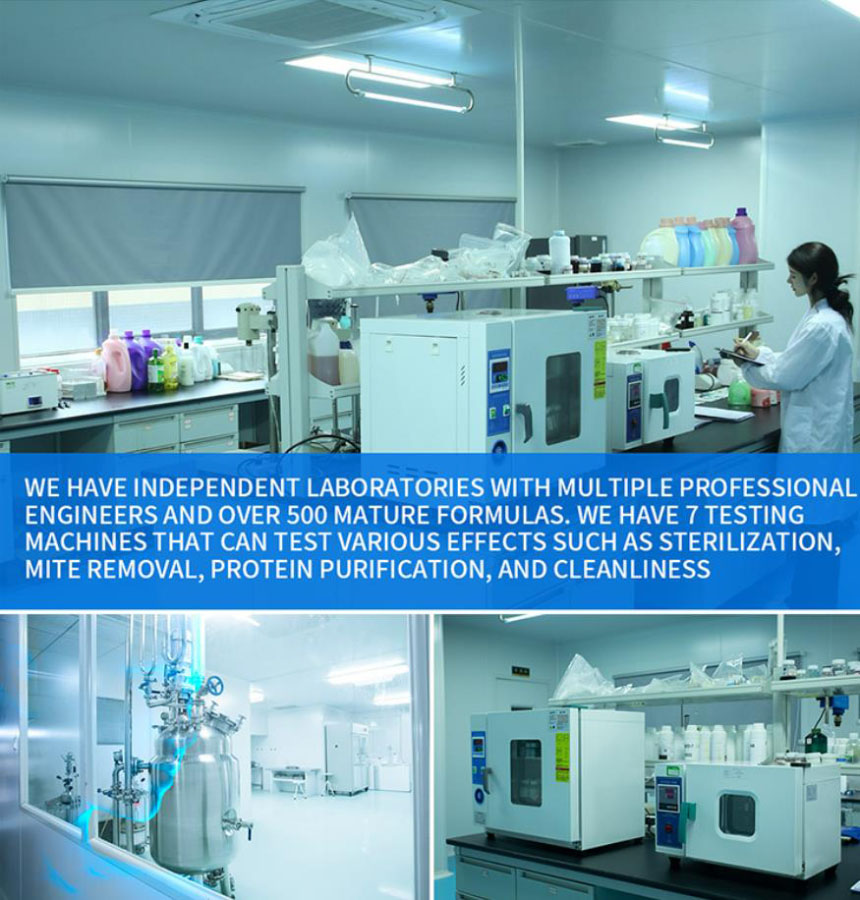
> Create a professional factory quality-control scene for laundry detergent pods and detergent sheets, showing technicians checking dosage weight, dissolution performance, packaging quality, and washing-machine testing. Modern Chinese daily-chemical manufacturing facility, clean laboratory environment, realistic documentary photography, safety equipment, no identifiable brand logos.
A short 30–45 second dosage explainer video could demonstrate:
1. Identifying the laundry load size
2. Selecting the correct dosage
3. Placing the pod correctly
4. Closing the package safely
5. Choosing the appropriate wash cycle
---
## Why Partner with Dongguan Ufine Daily Chemical Co., Ltd.?
For international brands, wholesalers, and manufacturers, a successful cleaning product requires more than attractive packaging. It requires:
- Stable formulation quality
- Consistent unit weight
- Reliable dissolution
- Flexible OEM and private-label support
- Packaging customization
- Clear dosage communication
- Performance testing
- Export-ready documentation
Dongguan Ufine Daily Chemical Co., Ltd. specializes in laundry pods, laundry sheets, dishwasher pods, and dishwasher tablets for overseas business customers.
A strong OEM development process should begin with the customer's target market, machine types, water conditions, preferred fragrance profile, packaging format, dosage requirements, and compliance expectations.
Contact Dongguan Ufine Daily Chemical Co., Ltd. to discuss your private-label detergent project, request a product recommendation, and develop a dosage system suited to your target market.
---
## Frequently Asked Questions
For a 4–5 kg load, the suggested dosage is 8 g. Adjust the amount if the laundry is heavily soiled or if the water is hard.
For a 9–12 kg load, the suggested dosage is 15 g. Always compare this amount with the product's concentration and label instructions.
You may need a higher dosage, but more detergent is not always the best solution. Pre-treatment and the correct wash cycle may improve stain removal more effectively.
For many pod products, the pod is placed directly into the empty drum before the clothes. However, consumers should follow the instructions printed on the specific product packaging.
Some detergent sheets are designed for cold-water use, but performance depends on the formula and dissolution technology. Manufacturers should confirm this through cold-water dissolution and cleaning tests.
Excess detergent may not rinse completely, especially in low-water or high-efficiency machines. It can contribute to residue, odors, oversudsing, and poor rinsing.
A complete label should include load size, recommended dosage, soil-level guidance, machine compatibility, storage instructions, safety warnings, net weight, and manufacturer information.
## References
1. Whirlpool – How Much Laundry Detergent Should You Use?
https://www.whirlpool.com/blog/washers-and-dryers/how-much-laundry-detergent-should-you-use.html
2. Whirlpool – HE Detergent Use in a Washer
https://producthelp.whirlpool.com/Laundry/Washers/Product_Info/Washer_Product_Assistance/HE_Detergent_use_in_a_Washer
3. Whirlpool – Learn How to Use Laundry Pods Correctly
https://www.whirlpool.com/blog/washers-and-dryers/how-to-use-laundry-pods-correctly.html
4. American Cleaning Institute – Voluntary Guidance for Labeling and Packaging Liquid Laundry Detergent Packets
https://www.cleaninginstitute.org/sites/default/files/assets/1/Page/ACIVoluntaryGuidance.pdf
5. U.S. Environmental Protection Agency – Safer Choice
https://www.epa.gov/saferchoice
6. U.S. Environmental Protection Agency – Safer Choice Standard and Criteria
https://www.epa.gov/saferchoice/standard
7. U.S. Environmental Protection Agency – Safer Choice Product Performance Guidance
https://www.epa.gov/system/files/documents/2022-04/product_performance_guidance.pdf
8. U.S. Environmental Protection Agency – Learn About the Safer Choice Label
https://www.epa.gov/saferchoice/learn-about-safer-choice-label


