
Views: 256 Author: Jessica Publish Time: 09-25-2026 Origin: Ufine Daily Chemical


Content Menu
● What does "cleans different types of clothes" really mean?
● How laundry detergent capsules clean clothes
● How to use laundry pods for a better wash
● Why a capsule may leave residue—or appear not to dissolve
● What OEM buyers should evaluate before choosing a laundry capsule
● How to compare laundry capsules with other detergent formats
● Visual content recommendations
>> 1. Can laundry detergent capsules clean all types of clothes?
>> 2. Where should I put a laundry capsule?
>> 3. Do laundry pods dissolve in cold water?
>> 4. Can I use a capsule in any washing machine?
>> 5. Can I cut a capsule to use less detergent?
>> 6. What should an OEM buyer test before launch?
● Work with Dongguan Ufine Daily Chemical Co., Ltd.
Laundry detergent capsules—also called laundry pods or laundry detergent pacs—offer a pre-measured way to wash everyday clothing. But a capsule's cleaning performance depends on more than convenience: formula design, water temperature, load size, washer type, and correct use all matter. For brands and importers, developing a capsule that cleans reliably across fabrics starts with matching the formula and dose to the intended market and wash conditions.
This guide explains what laundry detergent capsules can—and cannot—do, how to use them effectively, and what to consider when developing an OEM product. It builds on the product claim that capsules can clean different types of clothing, while adding practical usage guidance and the product-development context that claim needs.
A laundry detergent capsule combines a measured dose of detergent with a water-soluble film. Depending on the formula, it may contain surfactants, enzymes, builders, polymers, fragrance, or other ingredients selected for particular cleaning and fabric-care goals. Ingredient roles and performance vary by formulation; a capsule should not be assumed to suit every fabric or stain simply because it is convenient.
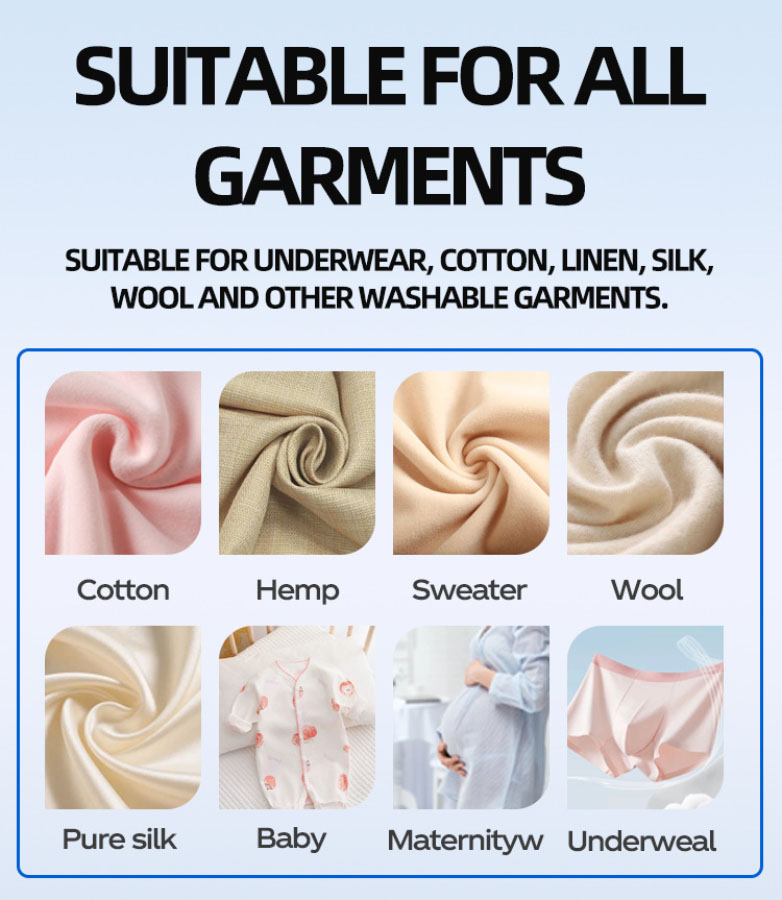
"Different types of clothes" can refer to everyday washable items such as cotton T-shirts, synthetic sportswear, towels, and mixed-fabric loads. It does not mean that every item should be washed on the same cycle or that every capsule is suitable for delicates, wool, silk, or handwashing. Users should check garment care labels and follow the detergent's directions.
| Laundry load | Practical guidance |
|---|---|
| Everyday cotton and blended fabrics | Use the care label's recommended cycle and water temperature. |
| Synthetic or sportswear | Choose a cycle suitable for the fabric; avoid assuming extra detergent improves odor removal. |
| Delicates, wool, or silk | Check the garment label and detergent directions; a capsule may not be appropriate. |
| Heavily soiled or unusually large loads | Follow the product's dose instructions; do not split or puncture a capsule. |
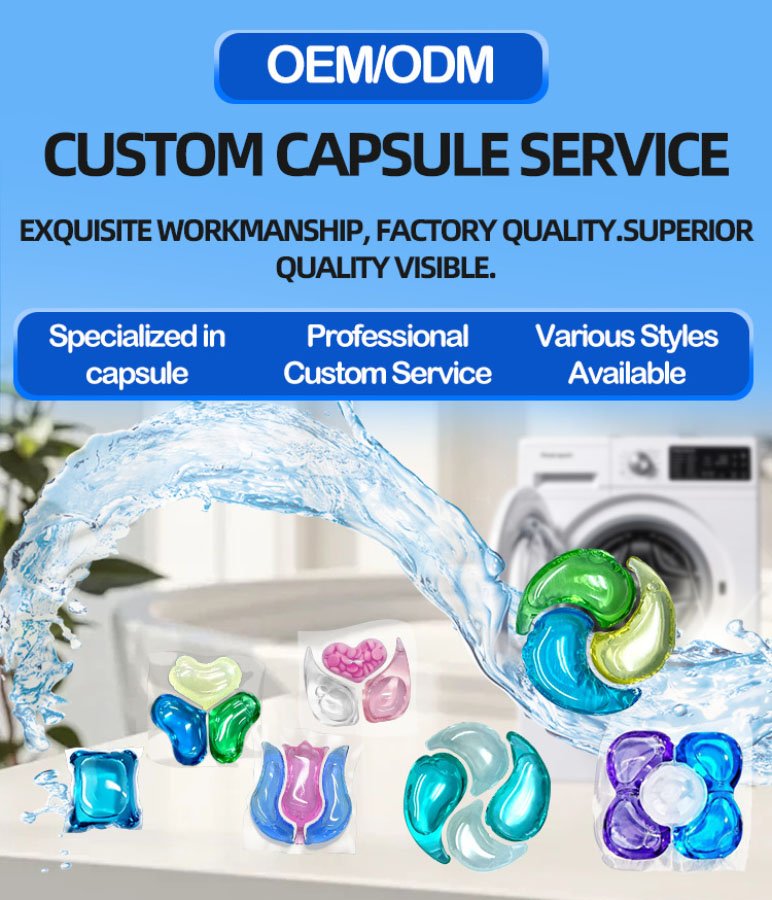
Cleaning is a coordinated process: detergent ingredients help loosen and suspend soil, while the washer's water, movement, time, and rinse remove it. Surfactants help with oily and particulate soils; enzymes, when present, may target particular stain types. The precise ingredients and claims differ by product, so buyers should refer to the manufacturer's specification and substantiation.
Capsules are designed to release detergent when their film contacts water. A product may be designed for cold-water washing, but actual dissolution and cleaning can depend on factors such as the formulation, water temperature, cycle, load, and how the capsule is placed. For cold-water use, follow the product label and washer guidance rather than assuming every capsule behaves identically. UFine's article discusses these variables and offers cold-water use tips.
For consumers, correct use is straightforward:
1. Read the care labels on garments and the detergent package.
2. Place the capsule in the empty washer drum before adding clothes, unless the product directions say otherwise.
3. Add laundry without overloading the drum. Clothes need room to move and rinse.
4. Select a suitable cycle and temperature for the load and garment types.
5. Keep capsules dry and handle them with dry hands. Close the package after use and store it securely.
Do not cut, puncture, or dissolve a capsule by hand. Keep laundry capsules away from children and pets, and follow the package's safety directions. Because concentrated detergent capsules can be hazardous if swallowed or exposed to the eyes, safe storage and clear packaging instructions are important product considerations.
A capsule that does not release as expected can leave detergent on clothing or in the drum. Possible contributors include an overloaded washer, an unsuitable cycle, restricted water circulation, or conditions that do not match the product's directions. If this happens, check the washer manual and product label, then try a less crowded load and the recommended placement.
For OEM development, dissolution should be treated as a testable performance requirement, not just a marketing phrase. Product teams can define intended temperature ranges and cycle conditions, then evaluate release and residue under those conditions. UFine's overview of how laundry pods are made also covers film and formulation considerations.
A product intended for varied clothing needs a clear target profile—not an unsupported "works on everything" promise. Brand owners, wholesalers, and manufacturers can assess:
- Target market and use: household or institutional use, typical load size, and expected wash temperatures.
- Formula goals: everyday soil removal, fragrance profile, color-care positioning, or other claims supported by evidence.
- Dose and capsule size: align the dose with product directions and the intended load; do not rely on appearance alone.
- Film and release performance: specify dissolution expectations for relevant water temperatures and wash cycles.
- Packaging and handling: protect capsules from moisture and provide clear storage and safety instructions.
- Quality control: set measurable checks for capsule weight, seal integrity, appearance, and release performance.
- Claims and compliance: review ingredient, labeling, safety, and environmental claims for each destination market.
The right test plan should reflect the conditions customers will actually encounter. This may include multiple water temperatures, load sizes, cycle settings, and fabric types. Claims such as "cold-water dissolving," "color safe," or "suitable for all fabrics" should only be used when the finished product has been evaluated to support them.
Capsules are one format among several. The best choice depends on the user's priorities and the product's validated performance.
| Format | Potential advantage | Consideration |
|---|---|---|
| Laundry capsules/pods | Pre-measured dose and convenient handling | Dose is less adjustable; safe storage and correct placement matter. |
| Liquid detergent | Flexible dosing and potential pretreatment use | Users need to measure the dose and avoid over-pouring. |
| Powder detergent | Familiar format and adjustable dosing | Handling and dissolution depend on product and wash conditions. |
| Laundry sheets | Lightweight, compact format | Performance and dose suitability should be evaluated for the intended use. |
These are general format considerations, not a guarantee that one format will clean better in every situation. A fair comparison uses equivalent conditions, such as matched soil types, water temperature, load size, and wash cycle.
Visuals can help users understand both correct use and the product-development process. Use original, product-accurate images and avoid implying test results or certifications that have not been verified.
- Placement: after "How to use laundry pods."
AI image prompt: "Photorealistic step-by-step laundry scene showing a hand placing one intact detergent capsule into an empty front-loading washing machine drum before adding clothes, clean bright laundry room, neutral colors, no visible brand labels, instructional product photography."
- Placement: after "Why a capsule may leave residue."
AI image prompt: "Clear educational infographic comparing a correctly loaded washer with good garment movement and an overloaded washer with restricted movement, simple labeled arrows, laundry capsules shown intact, clean modern design, no performance claims or brand logos."
- Placement: in the OEM section.
AI image prompt: "Professional detergent product development laboratory, technician in protective equipment inspecting water-soluble laundry capsules and packaging samples, clean controlled environment, realistic industrial photography, no readable brand names, no implied certification."
- Optional video: a short demonstration showing capsule placement, loading, cycle selection, and safe storage. Keep instructions aligned with the product label and washer guidance.
No single capsule should be assumed suitable for every fabric. Check garment care labels and product directions, especially for delicates, wool, and silk.
Follow the package instructions. Many products direct users to place the capsule in the empty drum before adding clothes, but directions can vary.
Some products are designed for cold-water use, but results depend on the capsule and washing conditions. Check the label and washer instructions; UFine's guide discusses factors affecting dissolution.
Check both the detergent packaging and washer manual. Do not assume compatibility or the correct dose without product-specific directions.
No. Do not cut, puncture, or split capsules. Use the detergent only as directed.
At minimum, define and evaluate capsule integrity, dose consistency, film release, residue, packaging protection, and any specific cleaning or fabric-care claims under relevant use conditions.
A dependable laundry capsule is developed around a defined customer, use case, formula, film, dose, and test plan. Dongguan Ufine Daily Chemical Co., Ltd. provides OEM services for laundry pods, laundry sheets, dishwasher pods, and dishwasher tablets for overseas brands, wholesalers, and manufacturers.
If you are planning a private-label laundry capsule, share your target market, preferred format, fragrance direction, package concept, and performance requirements with our team. We can discuss an OEM brief and the product specifications needed for your project.
1. UFine, — background on dissolution factors and practical use.
2. UFine, — overview of capsule components and manufacturing considerations.
3. UFine, — general information on formulation and capsule composition.
4. PackWorld, — industry coverage of detergent-pod safety standards.
Source note: The supplied source copy was the claim "LAUNDRY DETENGENT CAPSULES can clean different types of clothes." No user reviews were included, so this article does not present fabricated customer quotations or review-derived claims. Product-specific performance and compliance statements should be confirmed against your own test data and destination-market requirements.


